Spoke Route Planner Puts Delivery Drivers in Control of the Day

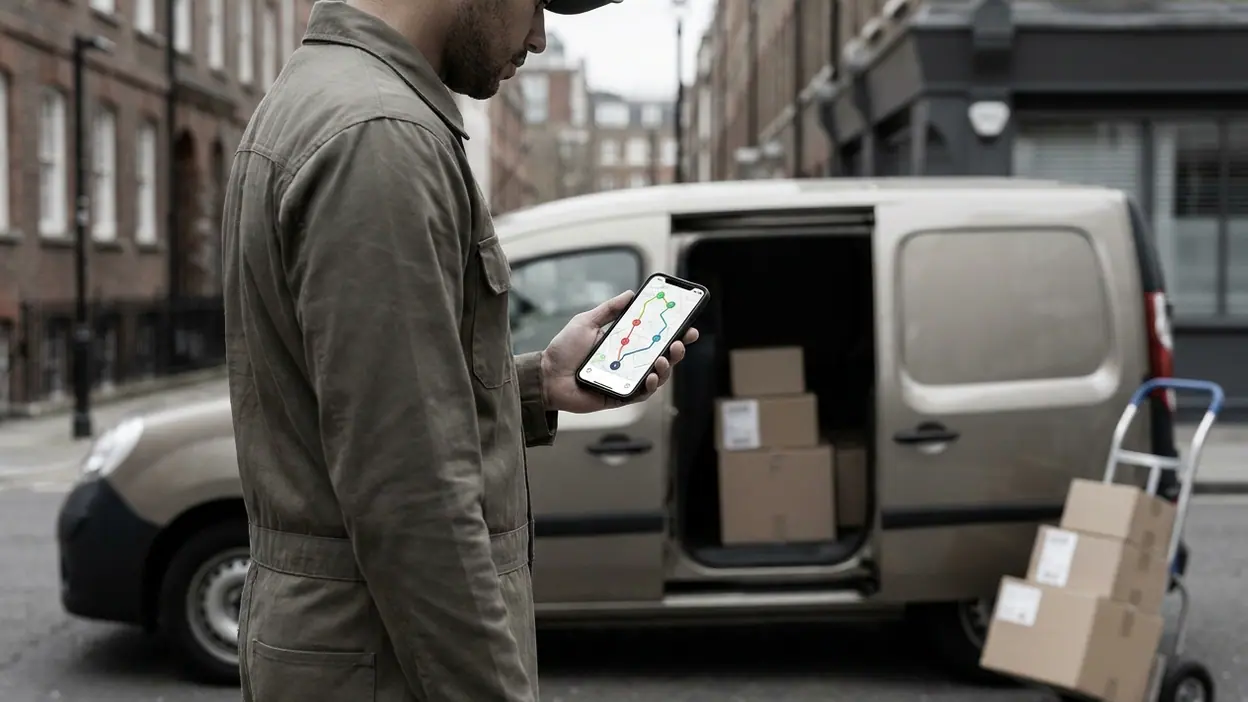
A delivery route is not just a line on a map. It is a sequence of decisions made under pressure: which stop comes next, whether an address is reachable, and how much time a detour will cost. Spoke (Circuit) Route Planner takes those decisions and puts them inside a mobile workflow. That makes it useful, but also revealing: the app’s real power lies in becoming the place where a driver’s working day is organized, not merely displayed.
Spoke is built for people making multiple deliveries, rather than for anyone who simply wants directions from A to B. It helps arrange stops, plan a route, and navigate through a workday that can change as parcels are delivered or plans shift. The interface is practical rather than theatrical. Its appeal is the promise of less backtracking and less mental bookkeeping. My central reservation is also the strategic point: once an app becomes the daily planner for a driver, convenience can turn into dependence.

Spoke (Circuit) Route Planner
Circuit Routing Limited4.5Maps & Navigation
See More Apps Related to Spoke (Circuit) Route Planner


The route is the product, and the habit is the strategy
1. The big-picture thesis
Spoke demonstrates how mobile software can gain influence by owning a narrow but repeated task. A general map helps people find places; a delivery planner helps a worker decide what to do next, repeatedly, across a shift. That distinction matters. The more often the app organizes the user’s decisions, the less it behaves like a disposable utility and the more it becomes part of the job itself.
This is not the same kind of ecosystem power exercised by a phone maker or a giant advertising platform. Spoke’s leverage is closer to the ground: it can shape the working rhythm of independent drivers and small delivery operations. Its promise is concrete enough to earn regular use, while each completed route reinforces the sense that the next shift should start in the same place.
2. The company power behind the app
Spoke is the current name associated with Circuit, a route-planning product developed around the needs of delivery drivers. That history matters more than any grand claim about a sprawling technology empire. The company’s power comes from understanding a specific job and making software for it, not from controlling a phone operating system, a major app store, or a universal map service.
That focused position can be an advantage. A specialist product can concentrate on the awkward details that broad navigation apps often treat as edge cases: multiple destinations, stop ordering, and the need to keep moving through a list of tasks. But specialization also puts pressure on the company to keep its core product dependable. Drivers are unlikely to forgive a planner that saves a few taps but repeatedly creates confusion on the road.
3. How it fits the ecosystem
Spoke sits between a delivery worker and the wider mobile stack. The phone supplies location services, a screen, and network access; navigation and mapping capabilities provide the geographical foundation; Spoke adds the work-specific layer that turns a collection of addresses into an actionable run. It is not trying to replace every map app. It is trying to make the map answer a more particular question: what is the sensible order for today’s stops?
Worth Reading Next

OpenTable’s OS Update Makes Booking Smoother, but Search Still Leads

Cash App by Use Case: Who Should Trust It With Their Money?

Clash of Clans Makes Every Raid the Start of a New Plan

Stickman Warriors Is Built for Quick Fights, Not Deep Competition

Downloader’s One-Tap Promise Comes With Real Limits
More From Our News Desk
View All


That middle position is strategically useful and inherently fragile. Spoke can deliver value without owning the underlying operating system or every mapping asset, but it depends on those foundations behaving well. A phone’s location permission, battery life, connectivity, and map availability all become part of the experience. The app’s intelligence is only as useful as the system it runs on and the information the driver feeds it.
4. Distribution advantage
Mobile distribution gives a specialized planner a route into the worker’s pocket without requiring a dedicated navigation device or a complicated office setup. A driver can reach for a phone already used for communication and navigation, then make it the command center for a shift. App-store discovery and word of mouth among people doing similar work can help a focused tool find its audience more efficiently than a broad consumer campaign.
But Spoke does not enjoy the built-in reach of Apple or Google, whose apps arrive alongside the operating system or benefit from default placement. Nor can it assume that every delivery company will adopt it as a standard. Its distribution advantage is therefore conditional: the product has to be useful enough that drivers choose it, and clear enough that a small business can see why it belongs in its workflow. This is earned distribution, not platform privilege.
5. Habit-forming decisions
The daily loop is simple: add or review stops, arrange the route, follow it, and move on to the next delivery. That repetition is exactly what can make Spoke sticky. It removes small decisions from a shift and gives a driver a consistent starting point. The habit is not built on badges or entertainment. It is built on the relief of not having to reconstruct the day from scratch at every turn.
That relief depends on trust. Route order is a suggestion, not a guarantee of the fastest or easiest real-world journey. Traffic, access restrictions, parking, building entrances, and customer availability can overturn a tidy plan. A good planner has to make correction feel natural rather than treating the route as unquestionable. The app can reduce cognitive load, but it cannot take responsibility for the street-level judgment a driver still needs.
6. What this means on phones
On a phone, a route planner becomes more than a map because it competes for attention in the same place as calls, messages, delivery updates, and everything else that interrupts work. Spoke’s value is strongest when the driver can glance at the next task and act without wrestling with a crowded interface. A clean sequence of stops is a meaningful design choice when someone is working outdoors, moving between addresses, and trying to keep a shift on schedule.
The limits are just as physical. A phone can overheat, lose signal, run low on battery, or become difficult to use in bright light. A driver may also need to switch between Spoke and another navigation or delivery app. These are not minor edge cases; they are the conditions under which the product has to function. The best mobile design here is not clever animation. It is legibility, predictable controls, and a recovery path when the plan changes.
7. How rivals respond
General navigation apps can copy pieces of the workflow, and delivery platforms can build planning directly into their own driver tools. That creates pressure from both sides. A broad map has enormous reach and a familiar interface; a delivery company’s app may know the assigned jobs already. Spoke has to justify the extra place it occupies between those services by being better at organizing the route, not simply by showing another map.
Other navigation products make the contrast clear. DiDi Rider is centered on arranging rides, while GPS Satellite Live Earth Map and MarineTraffic focus on different kinds of location information and movement. Their existence does not make them direct substitutes; it shows how many different products can claim a place in a phone’s location stack. Spoke’s defensible niche is the repeated work of sequencing delivery stops. If that task becomes a built-in feature elsewhere, its independent value will depend on how much better it handles the details.
8. Where users benefit
Drivers benefit most when a route contains enough stops for manual ordering to become a genuine burden. The app can give structure to a busy day, reduce unnecessary backtracking, and make the next action easier to identify. Small operators may also appreciate having a dedicated planning tool without building their own logistics software. In that setting, Spoke’s specialist focus is not a limitation; it is the reason to consider it.
There is a quieter benefit too: the driver can spend less attention on remembering the plan and more on the delivery itself. That does not necessarily mean every route will be shorter or every shift easier. It means some of the administrative friction can move from the driver’s head into a repeatable process. For people who do this work day after day, even modest reductions in that friction can matter.
9. Where users lose leverage
Dependence brings costs. A driver who builds a routine around one planner may have to rebuild it if the app changes, becomes unavailable, or no longer fits the job. The route data and work history can also become difficult to move between tools, depending on what the product supports. Before relying on Spoke for an operation, users should check current pricing, plan limits, supported integrations, and the practical options for exporting or retaining their information.
There is also a difference between helping a worker organize a route and giving that worker control over the work. A planner can make a day more efficient without determining pay, delivery targets, customer expectations, or how much time a stop deserves. The software may influence the shape of the shift, but the driver still bears the consequences when a planned sequence meets a locked gate or an inaccessible address. Digital efficiency should not be mistaken for a transfer of responsibility away from the people who set the workload.
10. Final verdict
Spoke (Circuit) Route Planner is most compelling as a focused work tool: it takes a repetitive, mentally demanding task and gives it a manageable structure on the device a driver already carries. Its platform story is not about owning the whole phone. It is about winning a dependable place in a worker’s daily routine, one route at a time. That is a smaller kind of power, but a real one.
I would judge Spoke by the quality of its route planning, the ease of correcting a plan, and how reliably it handles the messy conditions of delivery work, rather than by the breadth of its feature list. Its promise is valuable, though it cannot erase the limitations of mobile navigation or the imbalance between planning software and the worker expected to follow the plan. For drivers with many stops, it is a sensible specialist to test. For everyone else, it is a sharp example of how an app can gain influence not by owning the map, but by becoming the place where the day begins.