OZON Is Turning Everyday Errands Into Shopping Habits

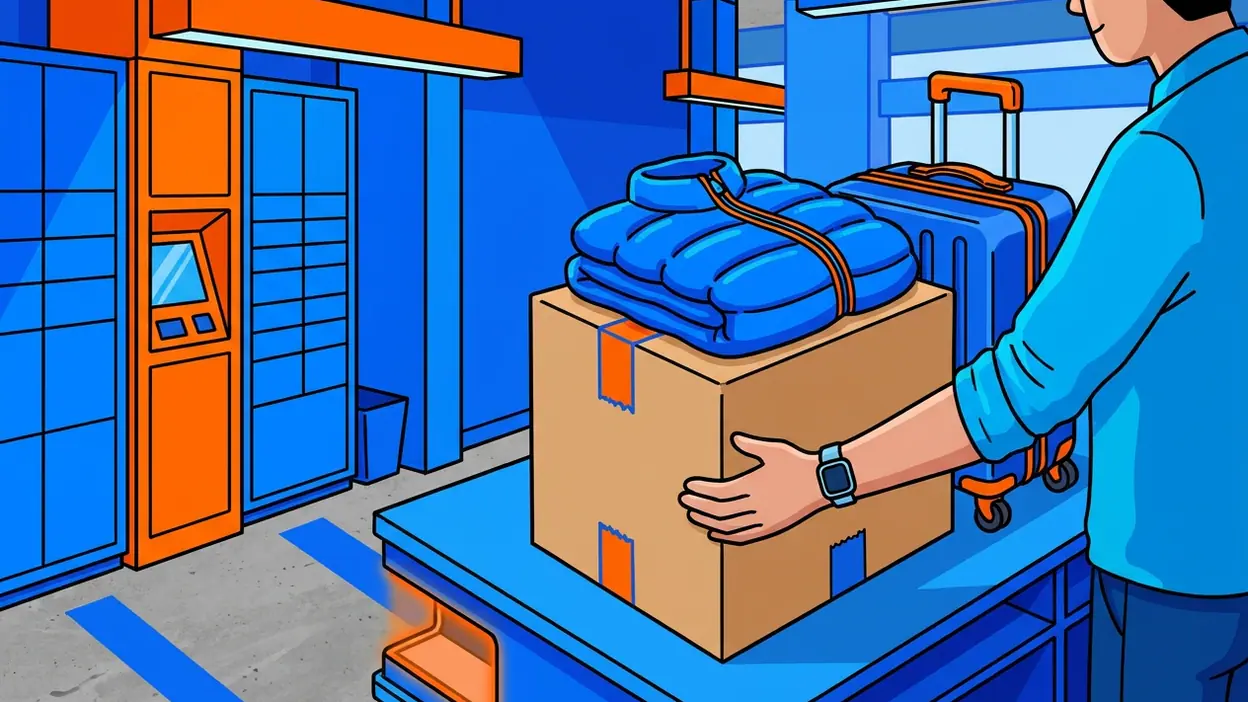
OZON’s momentum is not just about persuading people to buy more online. It is about becoming the place they check first for more kinds of errands: a household refill, a new jacket, a ticket for the next trip. That shift gives OZON: товары, одежда, билеты a wider role than a conventional shopping app, and helps explain why its growth matters now. The strongest case for the service is practical rather than glamorous: it keeps adding reasons to return, then ties those reasons to a delivery network people can use in daily life.
That thesis needs a qualification. An expanding marketplace can make an app more useful, but size alone does not make it better. Search quality, dependable delivery, seller standards and clear prices still decide whether a customer comes back. OZON’s opportunity is to turn breadth into habit without letting the experience feel like a crowded bazaar. In my view, that tension is the real story behind its market momentum.

OZON: товары, одежда, билеты
Internet Solutions LLC3.7Shopping
See More Apps Related to OZON: товары, одежда, билеты


From marketplace to everyday utility
The timing is favorable for an app built around repeat purchases. Online retail has matured beyond the early thrill of ordering anything from anywhere. Shoppers now expect a familiar routine: find an item, compare options, choose a delivery method, and know when the parcel will arrive. A marketplace that handles those ordinary steps reliably can earn a place in the week, not just in a one-off search.
OZON has a strong foundation for that routine because its range spans the unremarkable essentials that create repeat visits as well as the occasional larger purchase. Clothing and other lifestyle categories broaden the basket, while travel tickets push the app toward a different kind of planning. Those uses do not need to be equally prominent to reinforce one another. A person may open the app for a practical reorder and discover a reason to browse; another may arrive with a specific product in mind and use the same account for a future journey.
This is a more concrete growth story than simply saying that a marketplace has many listings. The useful measure is how often the app becomes relevant at moments that used to send a customer to a separate service. Every successful cross-category visit lowers the friction of the next one. But that only works if each task remains easy to understand. A ticket purchase should not feel like searching through an endless product catalog, and a routine household order should not require learning a new interface.
What has changed around the product
The product’s evolution is best read as a change in scope. OZON is no longer only a digital shelf; it increasingly connects discovery, ordering and fulfillment. That last piece matters. A broad catalog has little persuasive force if the delivery promise feels uncertain, while a convenient pickup option can make a purchase viable even when home delivery is awkward. The app’s value therefore depends on the physical service behind the screen as much as on its interface.
For customers, the change is visible in the range of decisions the app can support. Product pages and search remain central, but the larger proposition includes choosing how and when to receive an order, managing purchases and moving between shopping categories. Travel tickets extend the idea further: the app is asking to be useful before a journey as well as during the normal cycle of buying goods. That is an ambitious expansion, and it gives OZON more opportunities to become habitual. It also raises expectations. Once one app takes responsibility for more errands, customers judge it by the weakest of those experiences.
Worth Reading Next

Facebook Is Useful Again for the Small Logistics of Daily Life

Ludo King Keeps Its Simple Appeal as Phone Updates Change the Routine

Google Photos, Used Well: Find, Protect, and Manage Your Photos

Free Fire’s Ninth Anniversary Makes Familiar Matches Matter Again

Ceiling Fan Balancer Makes a Common Fix More Methodical
More From Our News Desk
View All


The behavioral signals behind the rise
Install counts can tell a market story, but they do not explain whether an app has become part of anyone’s routine. More telling signals are repeat searches, saved items, completed purchases and the willingness to return after delivery. In a marketplace, a customer who opens the app with a specific need is valuable; a customer who returns without one is more revealing. That second visit suggests the service has earned some trust as a place to browse, compare and plan.
OZON’s breadth gives it several paths to that return. A customer can come back for another everyday order, look for a particular clothing item, or check travel options. This is not proof that every category is equally strong, and the app should not be treated as a single uniform experience. Still, the range matters: it gives the company more chances to meet people at different points in their lives and spending cycles. The momentum feels strongest when usefulness is repeated, not when the catalog merely looks enormous.
There is also a revealing difference between discovery and completion. A shopper may enjoy browsing a wide selection but still abandon a purchase if delivery fees, arrival dates or seller information appear late in the process. The most meaningful behavioral signal is therefore not time spent in the app. It is whether OZON can convert a quick, purposeful visit into a confident order, then make the customer comfortable doing it again.
A crowded field, with different kinds of pressure
OZON competes in a market where shoppers already understand the basic marketplace bargain. AliExpress is associated with a vast cross-border assortment, SHEIN with fashion-led browsing, and Mercado Libre with a broad regional commerce ecosystem. Alibaba.com serves a different, more business-oriented role. These competitors sharpen the question OZON must answer: why should a customer use this app for the next purchase rather than simply open whichever service is most familiar for that category?
The answer cannot be assortment alone. Large catalogs are easy to claim and hard to make navigable. OZON’s stronger argument is the combination of a wide range with a locally grounded delivery and pickup experience. A familiar network of collection points can matter more than another page of product listings, especially for customers who want a predictable handoff. That is a competitive advantage only when the service is convenient in practice and the status of an order stays clear.
Category pressure also cuts both ways. Adding more departments can keep customers inside one ecosystem, but specialist rivals may still deliver a sharper experience in a focused niche. Fashion shoppers care about fit, returns and presentation; ticket buyers need confidence in dates and booking details. OZON has to make its generalist scale feel like convenience, not compromise. That is a harder task than adding another category tab.
Where the momentum feels strongest
The clearest strength is the link between digital selection and the practical business of receiving an order. In an online marketplace, convenience is not a button labeled “buy.” It is the whole chain: finding the right listing, understanding the seller and terms, paying without confusion, then collecting or receiving the item when promised. OZON’s wider ambition makes this chain especially important. If it works, the app can serve both planned shopping and small, unplanned needs without requiring a customer to start from scratch each time.
That kind of utility is easy to overlook because it is not dramatic. It is a parcel arriving when expected, a collection point fitting into a normal route, or a product search returning options that make sense. Those small wins are what make a marketplace sticky. I would rather see a retailer improve the reliability of these moments than add another flashy feature that has no bearing on whether the order gets done.
The other promising area is cross-category convenience. A customer does not necessarily want a single app for every aspect of life, but reducing app-switching has a real appeal when the basics are handled well. Shopping for goods, browsing clothing and arranging travel are distinct tasks; they become a coherent proposition only if the app keeps each one legible. OZON’s momentum is strongest where a broader range saves time instead of demanding more attention.
What ordinary users notice
Most people will not think in terms of marketplace strategy. They will notice whether a search brings up relevant products, whether prices and delivery terms are easy to compare, and whether the app keeps them informed after checkout. They will notice when an order can be collected nearby, and when the route from product page to purchase is short. They will also notice the opposite: duplicate-looking listings, uncertain quality, confusing choices or a delivery estimate that seems to shift.
That is why trust is a daily interface feature, not a brand slogan. A clean-looking product page cannot compensate for weak information, and a low price loses appeal if the customer cannot tell who is selling the item or when it will arrive. A marketplace has to help people make decisions, not just present them with more decisions. OZON’s scale makes clarity more important, because a larger range increases the chance that shoppers will encounter both excellent listings and mediocre ones.
The app’s broad promise can feel particularly useful to customers who already know what they need. For them, a reliable search and a familiar checkout are more valuable than endless inspiration. Browsers may appreciate discovery, but they need filters and sensible sorting to keep that discovery from becoming work. The best shopping app respects both modes: it lets a decisive buyer finish quickly and gives a curious one room to explore.
The fragile edges
OZON’s first vulnerability is the standard problem of marketplace quality control. The company can host a huge range of goods, but customers experience individual listings, sellers and parcels. Inconsistent descriptions or quality can weaken confidence in the entire platform, even when most orders go smoothly. Clear seller information, dependable returns and useful product details are not back-office niceties; they are part of the product customers believe they are buying.
The second risk is overload. More categories can make an app feel like a convenient hub, or like a department store whose signs keep multiplying. Search and navigation have to protect the main task from the weight of the catalog. The interface should not make customers work harder simply because the business has more to sell. Travel bookings bring an additional demand for precise dates and terms, while clothing asks for confidence around sizing and returns. Each category has its own failure points, and a general marketplace cannot assume one solution fits all.
There is also a broader dependence on fulfillment. Local pickup and delivery can be a persuasive advantage, but they require consistent operations, accurate estimates and sensible options. A strong app experience cannot rescue a weak handoff. For OZON, the more everyday life it hopes to occupy, the less room it has for a purchase that feels unpredictable.
The larger mobile lesson
OZON’s story reflects a wider shift in mobile commerce: the winning app is not necessarily the one with the most features, but the one that connects enough useful jobs without making each job feel harder. The phone is already where people search, compare and track orders. The next contest is over whether a service can turn that convenience into a dependable relationship across categories and over time.
That distinction matters for the whole shopping sector. A marketplace can grow its reach through new departments, but lasting momentum comes from lowering the cost of returning. Trust, fulfillment and clear product information are less visible than a headline expansion, yet they determine whether the expansion pays off. The best evidence of progress is not that an app contains more of life; it is that people can complete ordinary tasks with less doubt.
OZON: товары, одежда, билеты is compelling because it is pursuing that broader role with a practical foundation: a large marketplace connected to the routines of ordering and receiving goods. Its ambition is easy to see, and so are the risks. It still has to keep discovery manageable, quality dependable and each category worthy of the same trust. The newsroom read is that OZON’s momentum is real as a strategic direction, but its durability will be decided in the ordinary moments after the download: the search that works, the delivery that arrives, and the next visit that feels worth making.