Switching to Pou: When a Small Daily Routine Beats Another Level

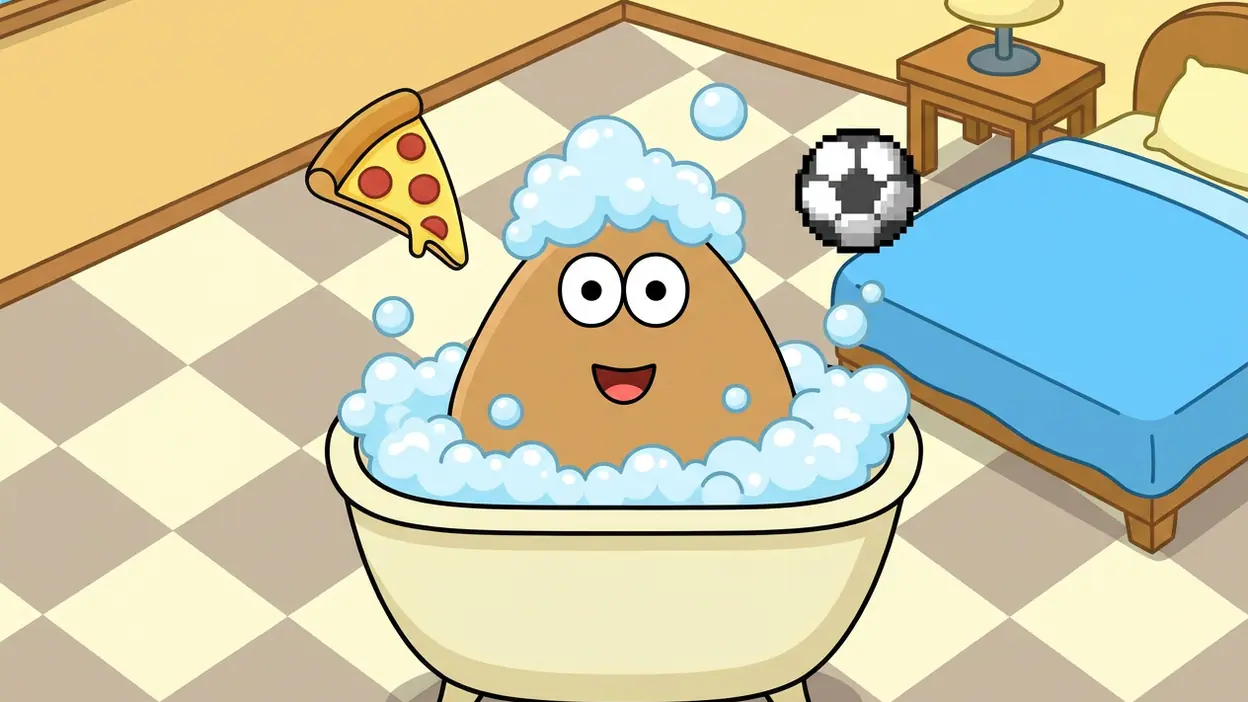
Switching to Pou is less like moving to another big mobile game and more like changing the small ritual you reach for when you have a spare minute. If your current habit is chasing the next Candy Crush Saga level or checking in on My Talking Tom 2, Pou asks for a different kind of attention: feed a little alien, clean up after it, play a quick game, and see what you can afford next. The appeal is its compact, hands-on routine. The catch is that there is no equivalent of a puzzle campaign or a highly animated pet performance waiting to replace what you already enjoy.
That makes this a switch worth considering only if your old game’s rhythm has started to feel like work. Pou is a good fit for players who want ownership and small, repeatable tasks rather than an endless sequence of levels. It is not a direct substitute for every part of a rival game, and there is no reason to pretend that it is. The useful question is not whether Pou has more content, but whether its daily loop feels better suited to your spare moments.

See More Apps Related to Pou


What changes when you make the switch
Why consider leaving a familiar game?
Each alternative builds a habit around a different reward. Candy Crush Saga is structured around boards, goals, and the satisfaction of clearing a difficult level. My Talking Tom 2: Pet Game and My Talking Angela lean into expressive virtual-pet play, where dressing, caring, and watching a character react are central pleasures. Pou narrows the focus to a simple creature and a handful of needs. You feed it when it is hungry, give it attention, clean it, and use mini-games to earn coins for food, clothing, and other customisation.
That narrower focus can be a relief. There is less pressure to remember a level strategy or chase a chain of milestones. The game’s charm is the little change in state: Pou is dirty, so clean it; it is hungry, so feed it; you have a minute, so play. The loop makes even brief visits feel complete. If you are tired of a game turning every session into a test of progress, this gentler, more domestic rhythm can feel refreshingly low-stakes.
But the same simplicity limits the reason to switch. Pou does not recreate the suspense of a tricky board, and its care routine does not have the same theatrical personality as a more animated pet game. Consider moving because you want a calmer, more repetitive companion game, not because you expect a richer version of the one you already own.
The first habit that changes
The first thing you will notice is that your attention shifts from goals to needs. In a puzzle game, you open the app with a clear objective: beat a level, collect a reward, or try again after a failure. In Pou, you tend to check the creature’s condition first. Care is not a prelude to the “real” game; it is the game’s organising principle. Mini-games sit inside that relationship as a way to earn coins and break up the routine.
That creates a softer cadence, but it can also make sessions feel less purposeful. If you are used to a board that gives you a neat finish line, caring for Pou may feel like a sequence of chores with no dramatic payoff. I found the rhythm works best when I treat a visit as a short check-in, then leave. Trying to turn every visit into a long session exposes how modest the activities are.
Worth Reading Next

OpenTable’s OS Update Makes Booking Smoother, but Search Still Leads
Cash App by Use Case: Who Should Trust It With Their Money?
Clash of Clans Makes Every Raid the Start of a New Plan
Stickman Warriors Is Built for Quick Fights, Not Deep Competition

Downloader’s One-Tap Promise Comes With Real Limits
More From Our News Desk
View All


There is also a different kind of replay value. Candy Crush Saga invites you to replay a board until you solve it; Pou invites you back because the pet’s needs and your customisation choices make the routine personal. That is a quieter hook. It can be sticky precisely because it asks for so little, though it is less compelling for players who need a fresh challenge each time they open a game.
Setup and migration facts
Approach this as starting a separate game, not transferring your old one. Do not assume your progress, currency, purchases, outfits, or account details from another title can be imported into Pou. The games are separate products, and this guide cannot promise any account-transfer or compatibility feature. Before leaving a game you have invested in, check its own account and save options directly; keep the old game installed until you know what you want to preserve.
Getting started with Pou is straightforward: install it, begin its care-and-play loop, and learn the available rooms and activities as you go. The practical friction is less about setup than about rebuilding a routine. Your existing game may already have a long-running streak, familiar controls, and a store of progress. Pou begins from its own starting point, so the first visits are about learning its needs, earning in-game currency, and deciding what you want to customise.
Device availability, current features, and purchase details can vary by platform and version, so check the listing for your own device rather than relying on assumptions. More importantly, do not uninstall a familiar game as a symbolic commitment. There is little to gain from making the switch harder than it needs to be.
The relearning cost
Pou’s controls and basic needs are easy to grasp, so the learning curve is not the main cost. The adjustment is learning what makes a satisfying session. There is no need to plan a sequence of moves through a puzzle board. Instead, you learn the pace of caring, how mini-games fit into earning coins, and which customisation options are worth working toward. It is a small system, but it takes a few visits to feel less like tapping through chores and more like keeping a tiny companion in good shape.
Players coming from My Talking Tom 2 or My Talking Angela may also need to reset expectations about presentation. Pou’s appeal is not built on elaborate character acting. Its simple shape and direct interactions are part of its identity, but they leave less room for spectacle. If animated reactions and a strong sense of character are the reason you play a virtual-pet game, the relearning cost may turn into a disappointment rather than a pleasant adjustment.
What improves immediately
The clearest immediate gain is breathing room. Pou’s care loop does not demand that you master a difficult level before a session can feel worthwhile. A quick visit can cover a basic need and give you a small moment of play. That makes it easy to fit into a break, and the familiar cycle of feeding, cleaning, playing, and customising has a tactile simplicity that puzzle progression cannot quite match.
The mini-games matter because they give the routine some variation and a reason to earn coins. They are not a deep arcade collection, and they should not be judged against a dedicated action or puzzle game. Their job is to make care feel connected to play: you earn, then spend on things that make Pou more your own. That modest economy gives a short session a visible outcome without turning it into a large progression system.
There is a genuine comfort in that scale. You can dip in, do a few things, and leave without feeling that you have abandoned an unfinished level. For anyone who wants a gentle game to open between more demanding sessions, that low-pressure quality is Pou’s strongest argument.
What you may lose
Switching your attention to Pou can mean giving up the precise progression and puzzle tension of Candy Crush Saga. If you enjoy studying a board, planning moves, and finally clearing a stubborn level, a pet-care loop will not scratch the same itch. Pou’s mini-games add variety, but they do not supply the same long-term challenge or the steady ladder of goals that makes a level-based game compelling.
You may also miss the richer animation and performance of My Talking Tom 2 or My Talking Angela. Pou is more stripped back, which helps it feel approachable but can make its interactions seem repetitive. Its routine depends on your willingness to care about small changes in one pet’s state. Without that attachment, feeding and cleaning can quickly feel like maintenance rather than play.
There is a practical loss too: time already invested does not automatically become useful in the new game. Your existing progress belongs to the game where you made it. Keeping the old title around is sensible if it still provides something Pou does not, whether that is a favourite level mode, a collection, or a character you have grown attached to.
A sensible parallel-use strategy
There is no need to make this an all-or-nothing decision. Keep your familiar game available and try Pou as a second routine for a week or two. Use Pou for short, low-energy breaks; open the puzzle or pet game when you specifically want its challenge, animation, or progression. This test reveals more than an immediate uninstall would, because it lets you compare what each game does well in the moments when you actually want to play.
Pay attention to which app you reach for without prompting. Do you open Pou because you enjoy checking on the pet, or only because you feel obliged to keep it cared for? Do you miss your old game’s goals, or does its familiar routine now feel more demanding than satisfying? Those answers are better evidence than a first-session impression, especially because Pou’s appeal comes from repetition and familiarity rather than a grand opening sequence.
If you are concerned about purchases or saved progress, verify the details within the original game and its official listing before changing anything. Do not treat keeping two games installed as a failure to choose. Parallel use is a sensible way to discover whether Pou adds a useful kind of play or merely duplicates a habit you already have.
Reasons to stay put
Stay with Candy Crush Saga if the puzzle itself is the point: the board, the pressure of limited moves, and the satisfaction of solving a layout. Stay with My Talking Tom 2 or My Talking Angela if their character animation and broader pet-game presentation are what keep you returning. Those are not minor features that Pou can simply replace. They shape the whole reason each game feels rewarding.
Stay put, too, if your current game still fits your schedule and makes you happy. A familiar title has value in its accumulated progress and learned habits. Switching only because you have heard that another game is popular is a weak reason to abandon a loop that still works for you. Pou earns attention through a different mood, not through an argument that every other mobile game is outdated.
The best switching candidate
Pou is most likely to suit someone who wants a low-pressure virtual pet, enjoys small acts of care, and likes having a simple reason to return each day. It is especially appealing if you have been using a demanding game as a default time-filler but no longer want every spare minute converted into a challenge. The pet’s needs create an easy entry point, while mini-games and customisation give the routine enough variety to hold together.
It is a weaker choice for players who need constant novelty, a deep campaign, or expressive character performances. If a game only holds your attention when each session offers a new objective, Pou may run out of surprise quickly. The right candidate is not simply someone bored with Candy Crush Saga or curious about a virtual pet. It is someone who wants a small, familiar loop and likes the feeling of tending to something over time.
Switch or stay?
Switch for a calmer ritual, not a bigger game. Pou makes the strongest case when you want a brief, personal routine built around care, mini-games, and modest customisation. It is easy to pick up, quick to understand, and pleasant in small doses. Its limitations are just as clear: it cannot replace the puzzle depth of Candy Crush Saga or the more animated companionship of My Talking Tom 2 and My Talking Angela.
My verdict is to try Pou alongside your current favourite before you move on for good. If checking, feeding, cleaning, and playing with one simple pet becomes the visit you look forward to, then the switch makes sense. If you find yourself missing clear goals or livelier character interactions, keep your old game and let Pou remain a side visit. The best choice is the one that suits the break you actually want to take.