Earn to Die 2 Still Delivers the Zombie Road Trip, but the Grind Catches Up

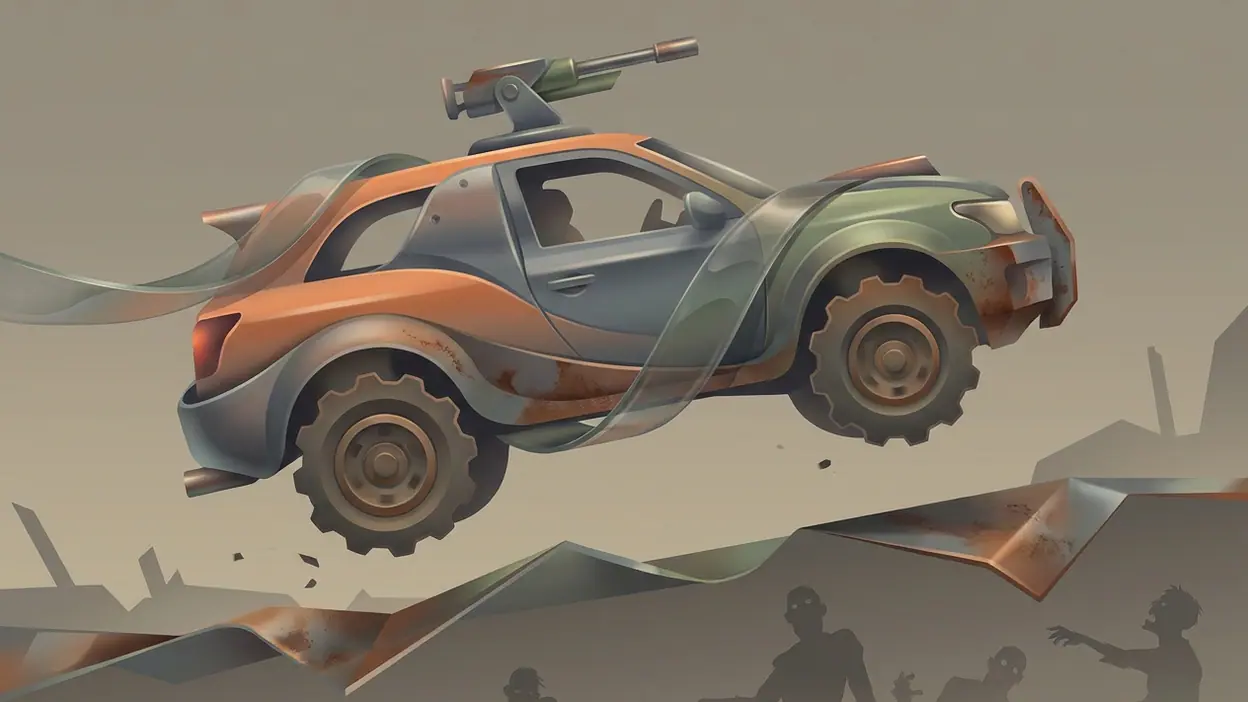
A car with one battered wheel, a boot full of fuel, and a wall of zombies between you and the next checkpoint: Earn to Die 2 can explain its appeal before the engine even turns over. It is a compact, messy spectacle built around a clear promise: drive as far as you can, crash spectacularly, then spend the wreckage’s earnings on a better attempt. That loop travels well through clips and recommendations, but its staying power depends on whether upgrades keep feeling like progress rather than chores. For me, the answer is mostly yes, with a familiar caveat: the game’s best moments arrive early, and its later grind can flatten the thrill.
Why this zombie road trip keeps resurfacing
Earn to Die 2 is not a new release riding a launch-week wave. Its visibility comes in cycles, helped by a premise that remains instantly legible on a small screen. A vehicle launches over broken ground, zombies tumble under the wheels, and a run ends in a crumpled stop. No lore briefing or tutorial essay is needed. Someone watching over your shoulder understands the joke and the goal at once.

Earn to Die 2
Not Doppler4.5Racing
See More Apps Related to Earn to Die 2


That clarity gives the game a useful second life whenever a clip, a recommendation, or a nostalgic replay brings it back into conversation. It also suits the broader appetite for short mobile sessions with visible consequences. Each attempt produces a little story: a van that nearly cleared a gap, a roof-mounted weapon that bought a few extra seconds, a final collision that turned a promising run into scrap. It feels shareable because the action makes its own punchline.
There is a difference, though, between renewed attention and a genuine breakout. Earn to Die 2’s buzz is less about a sudden cultural takeover than about a durable, easy-to-recommend game returning to the feed. That is a quieter kind of momentum, and arguably a healthier one. Players can discover it without needing to follow a seasonal event or join a conversation that will be over by next week.
What players react to
The most immediate pleasure is physical. The car lurches forward, its suspension bucks over rough terrain, and a badly judged landing can turn a promising run into a slow, helpless crawl. Zombies are both obstacles and comic punctuation: they spill around the vehicle, while the road’s wreckage and gaps force you to decide how much speed you can safely carry. The game sells impact through simple, readable animation rather than elaborate spectacle.
That readability matters for mobile play. The controls ask little of you, but the run still has enough timing to keep your attention. Throttle, balance and momentum shape how far you travel; a vehicle that is underpowered can stall on a slope, while a better-tuned machine turns the same stretch into a launch ramp. The satisfaction comes from noticing the difference. You are not just driving farther; you are learning what the road and your current setup will let you get away with.
The humor helps, too. Earn to Die 2 treats the apocalypse as an excuse for increasingly absurd automotive problem-solving. It is not trying to make zombies frightening. They are part of the course, a ragged crowd to plow through on the way to the next upgrade. That lightness keeps failure from feeling grim, even when a run ends with the vehicle stranded just short of a checkpoint.
Worth Reading Next

Facebook Is Useful Again for the Small Logistics of Daily Life

Ludo King Keeps Its Simple Appeal as Phone Updates Change the Routine

Google Photos, Used Well: Find, Protect, and Manage Your Photos

Free Fire’s Ninth Anniversary Makes Familiar Matches Matter Again

Ceiling Fan Balancer Makes a Common Fix More Methodical
More From Our News Desk
View All


The retention hook is visible progress
The game’s core retention trick is wonderfully plain: every failed run still earns currency. Spend it on engine power, fuel capacity, tires, suspension, armor or weapons, then go again. A short attempt rarely feels entirely wasted because the next upgrade is close enough to picture. That small promise is what converts a one-minute experiment into a string of retries.
There is a pleasing rhythm to the loop. First comes the eager run, where you push too hard and discover a hill or gap you cannot yet handle. Then comes the garage decision: do you need more fuel to extend the trip, stronger tires for the climb, or an engine that can turn a stalled crawl into a jump? After that, you return to the same stretch and feel the change immediately. The upgrade system makes the road itself a measuring stick.
That structure is more effective than a pile of upgrades with no clear consequence. Earn to Die 2 usually lets you connect a purchase to a better attempt, and the visible transformation of the vehicle gives that progress character. A battered starter car gradually becomes a louder, tougher machine. Still, the game can lean too heavily on incremental improvement. When a run is short and the next meaningful upgrade costs more than the last, repetition starts to feel like waiting for the numbers to catch up.
Why it works in clips, and where the chatter sits
Earn to Die 2 is naturally streamable in miniature. A run has a beginning, escalation and crash, all within a tight window. The best clip needs no narration: a car clears a gap, hits a zombie pile, flips, and slides to a stop a few metres from safety. The visual joke lands even if the viewer has never touched the game. That makes it easy to send to a friend or fold into a quick gaming roundup.
Its social spread is less about competitive bragging than shared surprise. Players compare how far a vehicle can get, laugh at a spectacular wipeout, or point out the upgrade that made a previously impossible stretch manageable. The game does not need a deep player-versus-player scene to travel. In fact, its self-contained runs are a strength: people can enjoy the same basic spectacle without matching schedules or learning a complicated meta.
The conversation around it tends to sit in the practical middle ground: nostalgia, quick-play recommendations, and the pleasure of upgrading a ridiculous car. That is a different lane from a polished racer such as Beach Buggy Racing, where tracks and competitive racing provide the central appeal, or the precision-driven challenge of Mad Skills Motocross 3. Earn to Die 2 is less about mastering a clean lap than turning a broken vehicle into a mobile battering ram. Mini Car Racing Game Legends and Motorcycle Real Simulator make useful contrasts in their focus on racing or simulation; this game’s identity is the crash-and-upgrade loop.
What newcomers should expect
New players should expect a side-on driving game with a campaign structure, not an open-world zombie adventure. The route is staged, the goal is straightforward, and the vehicle’s limits are part of the challenge. You will make repeated attempts, return to the garage, and revisit familiar ground with a slightly better machine. If you want a story-heavy survival game or a realistic driving model, this is not that.
It is also worth knowing that the first impression can be misleading in both directions. Early runs may feel almost too simple, because the game is teaching you its basic rhythm: push forward, manage the vehicle, collect enough distance and cash to improve. Later, the road asks more of your setup, and planning purchases becomes more important. The game remains accessible, but progress does not mean every attempt will be a free ride.
Compared with the clean lap-based structure of a conventional racer, this is a deliberately scruffy experience. You are not chasing a perfect line so much as trying to preserve momentum through uneven terrain. That gives the action personality, though it can also make control feel blunt when the vehicle is weak. If you enjoy seeing a machine evolve through use, that roughness is part of the fun; if you want precise handling from the opening minute, it may grate.
How durable is the trend?
Earn to Die 2 has the ingredients for durable low-level attention: an evergreen premise, short sessions, clear upgrade feedback, and a visual language that reads well in a feed. It does not need a live-service calendar to give players a reason to return. The next attempt is always available, and the campaign’s staged progression supplies a basic sense of direction.
But there is a ceiling. Once the novelty of mowing through zombies wears off, the game has to lean on the pleasure of incremental vehicle improvement. Some players will happily chase that next engine or tire upgrade; others will notice that the broad shape of a run changes less than the numbers suggest. There is no endless variety of racing modes here, and the social side is more naturally clip-friendly than community-dependent.
The trend is therefore durable as a recommendation, not necessarily as a daily ritual. It is the sort of game people can return to for a few satisfying attempts, pass along to someone looking for an uncomplicated mobile diversion, then put down without feeling they have missed a limited-time event. That modest footprint may be why it keeps resurfacing: the game asks for attention, but it does not demand loyalty.
What could cool it down
Repetition is the obvious risk. If the distance gained from a run starts to feel dictated by the upgrade menu rather than by a clever decision, the loop loses its snap. A player can tolerate retrying when each attempt reveals a new tactic or produces a satisfying change in the vehicle. It is harder to stay engaged when the only answer is to earn more currency and buy the next tier.
The other risk is expectation. Clips make the game look like uninterrupted zombie-smashing chaos, but much of the actual play is measured progress across repeated attempts. That gap can make a newcomer quit before the upgrade curve pays off. The solution is not a more elaborate tutorial; it is simply understanding what kind of reward the game offers. The spectacle is the hook, while the gradual transformation is the reason to keep going.
The editorial take
What gives Earn to Die 2 its lasting pull is not a giant feature list or a complicated social ecosystem. It is the neat alignment of failure, reward and comedy: a run ends badly, the garage offers a concrete fix, and the next attempt has a chance to become a better story. Few mobile games explain their appeal so quickly, and fewer make even a failed drive feel like useful progress.
Its limitations are real. The loop can become grind-heavy, the handling is not built for precision, and the game’s shareability does not automatically create an enduring community. But those are constraints of scale, not fatal flaws. As a compact arcade game, it knows exactly what to do with a few spare minutes: make you believe that one more upgrade will get the car over the hill. The strongest reason to play is the promise of a better run, not the promise of a trend. The buzz may ebb and return, but that small, satisfying engine is still running.