Prime Video Wants to Be a Daily Mobile Habit, but Its Storefront Gets in the Way

Prime Video’s mobile rise is not simply a story about people watching more television on smaller screens. It is a bid to make a streaming service feel like a daily entertainment hub, even as its growing catalogue and commercial extras complicate the simplest promise: open the app, find something good, and press play. That tension is the most revealing thing about its current momentum.
The timing makes sense. Streaming households have settled into a crowded routine: subscriptions come and go, new seasons compete for attention, and the phone is often where viewers decide what to watch before the television ever turns on. Amazon has a built-in advantage that most services would envy: Prime Video sits inside a broader membership relationship, rather than asking every viewer to approach it as an isolated subscription. That can bring the app into consideration more often, even when a user did not open it with a particular show in mind.

Prime Video
Amazon Mobile LLC3.1Entertainment
See More Apps Related to Prime Video


Momentum, then, is not just a chart of downloads or a spike after a hit premiere. It is a shift in the app’s role. Prime Video wants to catch the moment between “I have ten minutes” and “What are we watching tonight?” If it can make that moment easy, its mobile presence becomes valuable well beyond viewing time. If it cannot, a large catalogue merely gives users more scrolling to do.
From streaming library to daily destination
The product has changed around that ambition. The current experience brings together included titles, rentals and purchases, live programming, add-on subscriptions and other kinds of video in one broad storefront. That breadth is commercially useful: Amazon can place more entertainment in front of a customer and create more ways to watch. But it also changes the basic feel of browsing. A viewer is not always choosing among shows they already pay for; sometimes they are looking at a title that requires another payment or subscription.
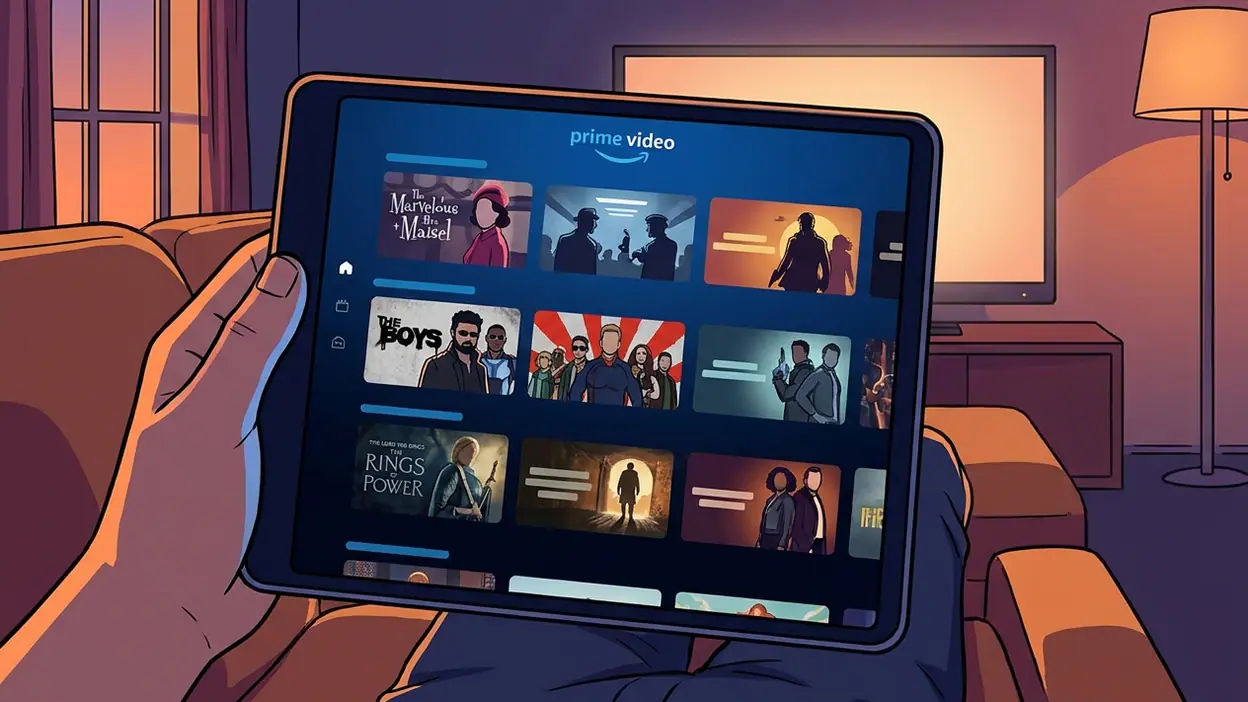
That distinction matters especially on a phone, where attention is short and a screen can show only so many choices at once. The app’s recommendations, category rows and artwork have to do the sorting work that a viewer might otherwise do on a television with time to spare. When the right series appears quickly, the layered catalogue feels like range. When it does not, the same range can feel like a shop floor with too many aisles.
Prime Video’s strongest product move is therefore not simply adding more material. It is making the available choices legible: what is included, what is live, what can be rented, and what belongs to an add-on service. The easier those distinctions are to understand, the more the larger catalogue helps. The harder they are to spot, the more browsing becomes a small exercise in checking terms.
Some of the app’s appeal also comes from how it connects a mobile session to a longer viewing habit. A person can browse during a commute, start an episode during a break, or save a choice for the living room. Downloads add practical value for travel or unreliable connections, while watchlists give a show discovered in passing somewhere to wait. These are familiar streaming tools, but they matter because they give the phone a clear job beyond being a tiny television.
Worth Reading Next

OpenTable’s OS Update Makes Booking Smoother, but Search Still Leads

Cash App by Use Case: Who Should Trust It With Their Money?

Clash of Clans Makes Every Raid the Start of a New Plan

Stickman Warriors Is Built for Quick Fights, Not Deep Competition

Downloader’s One-Tap Promise Comes With Real Limits
More From Our News Desk
View All


The real growth test is whether discovery turns into a repeatable habit. A hit can bring people in; a reliable path from browsing to watching gives them a reason to return. On that measure, the app’s momentum depends less on any one launch than on whether its interface keeps making good decisions feel effortless.
What viewer behavior says
Streaming behavior has become fragmented. A viewer may follow one prestige drama, watch a live event, put on a familiar comedy, and then move between services depending on what friends are discussing. Prime Video is well placed to benefit from this mix because it can serve both deliberate viewing and casual exploration. The app can be opened for a specific title, but its rows and recommendations also invite the viewer to see what else is available.
The most persuasive signal of stickiness is not a long session by itself. It is the return visit: the viewer who checks a release, resumes an episode, or searches for something to watch without needing a reminder from a separate app. Watch history and Continue Watching are useful precisely because they reduce the cost of returning. A good resume point makes a series feel close at hand; a cluttered or inaccurate one makes the service feel forgetful.
It is easy to overstate what public install figures can prove. A download does not tell us whether someone watches weekly, keeps the app after a free trial, or pays for an additional channel. For Prime Video, the more meaningful behavior is a chain of small actions: browsing, sampling, returning, and eventually treating the app as part of the household’s regular viewing rotation. That is a more demanding measure than a burst of curiosity, but it better explains the business value of mobile usage.
Pressure from every side
The competitive field is not limited to paid streaming apps. YouTube has trained viewers to expect immediate, highly personalized video, while YouTube Kids serves a distinct family need with clearer boundaries. iQIYI has a more focused identity around dramas and anime. Steam belongs to gaming rather than video streaming, but it is a useful contrast in one respect: its audience arrives with a strong sense of what the platform is for. Prime Video has a broader proposition, and breadth can make it harder to explain at a glance.
That ambiguity is both a strength and a risk. A viewer may value having films, series, live content and paid options together, but each new layer competes for visual attention. Meanwhile, rival services can build a sharper identity around originals, a genre, or a particular kind of viewing. Prime Video cannot win every comparison by being bigger. It has to make its range feel coherent rather than simply extensive.
The pressure is also economic. Subscription fatigue makes customers more alert to what their membership actually includes. If a title appears prominently but turns out to require another payment, the discovery experience can feel less like a recommendation and more like an upsell. Clear labeling is not a minor interface detail in this environment; it is part of the trust users bring to the whole service.
Where the momentum feels strongest
Momentum feels most convincing in the transition between screens and situations. The mobile app is a handy place to decide what the household will watch, check a new episode, or catch up away from home. Its value rises when it makes those jobs feel connected: a title found on the phone is easy to pick up later, and a show already in progress is easy to resume. These small conveniences give a large platform a personal scale.
There is also a cultural advantage in being close to a steady flow of releases and conversation. When a series becomes a group-chat topic, viewers want to find it quickly and know whether it is available to them. A useful mobile storefront can convert that impulse into an actual viewing session. The less time spent untangling availability, the more likely the conversation turns into a play button rather than a search elsewhere.
For ordinary users, the app’s best moments are refreshingly mundane. You remember a film someone recommended, search for it, and get a clear route to watch. You have a few minutes before leaving, resume an episode, and do not have to reconstruct where you were. You download something before a flight and are glad you did. Those are not spectacular product demonstrations, but they are the habits that make an entertainment app worth keeping.
The weaker moments are just as familiar: rows that make a catalogue feel endless, a recommendation that misses the mood, or uncertainty about whether a title is included. On a television, viewers may tolerate more browsing because choosing something is part of settling in. On a phone, every extra tap competes with messages, social feeds and everything else waiting for attention. Friction that seems small on a large screen can become the reason someone closes the app.
There is a broader product question here, too. As streaming services add live offerings, channels and paid access, a single home screen risks becoming a map of the company’s revenue model rather than a guide to what the viewer wants. Prime Video has to balance discovery with clarity, and commercial ambition with the feeling that the service is working for the customer. The catalogue can keep expanding; trust is harder to scale.
That is where the current momentum still looks fragile. A major release can draw attention, and membership integration can bring the app within reach, but neither guarantees satisfaction after the first visit. Viewers can switch services, cancel subscriptions, or rely on free video if the path from interest to playback feels too complicated. The app’s growth story will be stronger if it is measured not only by how many people arrive, but by how often they find something worth returning for.
My read is that Prime Video is becoming more consequential on mobile because it occupies a useful position between subscription library and everyday video destination. Its breadth is a genuine advantage, and its practical tools make it easy to carry a viewing habit from one place to another. But the same breadth can blur what is included and bury the next good choice beneath too many options. The service’s next phase depends on turning scale into clarity: if it can make discovery feel personal and availability feel obvious, mobile will deepen its place in the household routine. If not, momentum may remain visible in attention without becoming loyalty.