Cash App by Use Case: Who Should Trust It With Their Money?

Cash App is easiest to judge by the job you need it to do: it can make splitting dinner or sending a friend money feel almost frictionless, but it is not a universal replacement for a bank account. That gap matters. The app’s speed is its appeal, and also the reason users need to understand its controls, fees, and limits before tapping send. My verdict depends less on how often you use mobile payments than on who is on the other side of the transaction.
A casebook for choosing Cash App
The decision premise
Think of Cash App as a payment tool with optional financial features, not as one complete financial home. Its core promise is direct: connect a payment method, find a person, and move money through the app. Depending on eligibility, location, account status, and current product terms, users may also see features such as a Cash App Card, direct deposit, investing, or Bitcoin. Those extras can make the app more useful, but they do not erase the distinction between a payment service and a traditional bank.

See More Apps Related to Cash App


That distinction gives us a fair test. Does the app remove enough friction from your actual routine to justify another account, another balance to monitor, and another place where a mistake can be costly? For occasional personal transfers, the answer can be yes. For someone who needs dependable banking access, shared household bookkeeping, or a smooth experience on an aging phone, the answer needs more qualification.
The beginner case: adopt, with one careful test
If you are new to payment apps and mostly want to reimburse a friend, Cash App is approachable. The main path is easy to understand: set up an account, link a funding source, and send or request money. A clear payment flow is valuable for beginners because it reduces the odds of getting lost in menus. Still, the most important beginner skill is not tapping quickly; it is checking the recipient and amount before confirming.
Start with a small payment to someone you know and trust. Confirm their account details with them outside the app, then review the transaction screen rather than assuming a familiar name or image proves you have the right person. Payments sent to the wrong account may be difficult to recover, and a stranger’s promise to reverse a payment is not a reliable safety net. For a beginner, the safest habit is to verify first and send second.
Adopt it if your circle already uses it and you can keep transfers modest. Skip it as a first step if you expect every mistaken payment to work like a reversible card purchase, or if you are uncomfortable managing account security and payment requests yourself.
The frequent-user case: test the routine, not the novelty
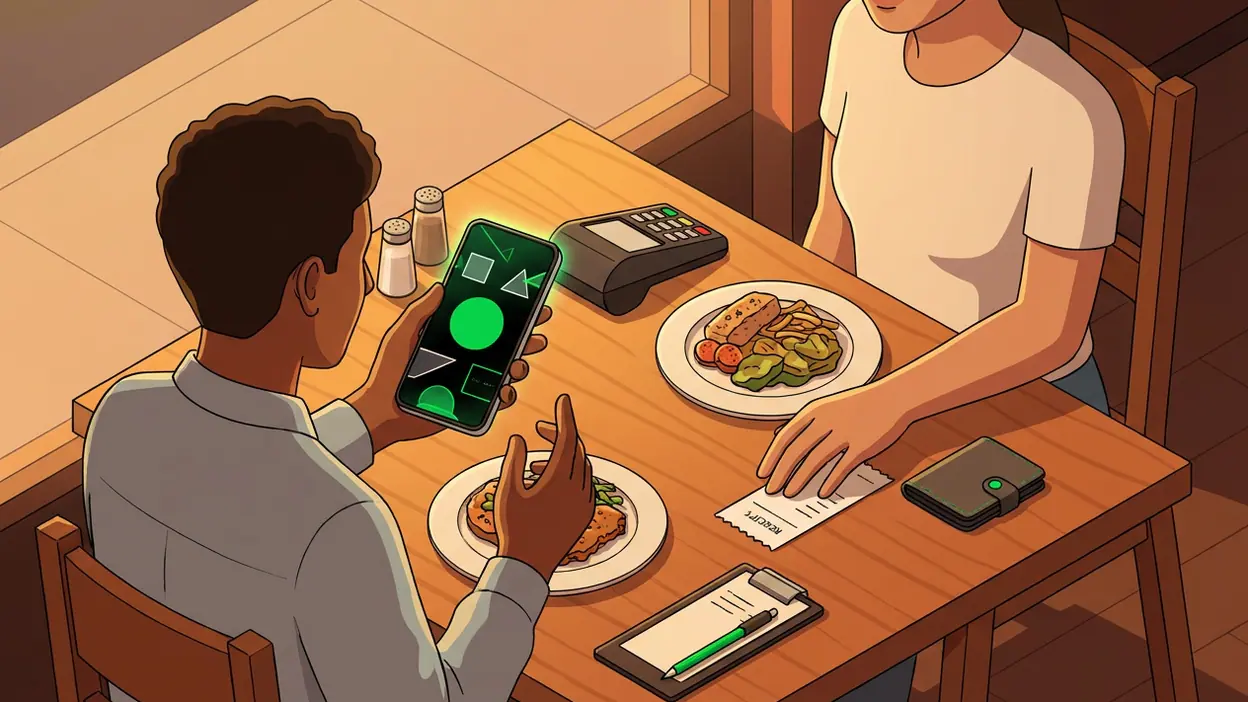
For people who send money every week, the app can earn its place through repetition. Splitting a grocery run, paying back a roommate, or collecting a share of a group expense takes less effort than coordinating cash. Requests also make the direction of the transaction clear: the person owed can ask, and the other person can review the amount before paying. That small reduction in social awkwardness is part of the product’s real utility.
Worth Reading Next

Facebook Is Useful Again for the Small Logistics of Daily Life

Ludo King Keeps Its Simple Appeal as Phone Updates Change the Routine
Google Photos, Used Well: Find, Protect, and Manage Your Photos

Free Fire’s Ninth Anniversary Makes Familiar Matches Matter Again

Ceiling Fan Balancer Makes a Common Fix More Methodical
More From Our News Desk
View All


Frequent users should look past convenience and map the full money path. Check how a payment is funded, how long a transfer to a bank takes, and what the app currently charges for any faster option. Fees and processing details can depend on the transaction and account, so read the confirmation screen and current terms rather than relying on an old screenshot or a friend’s memory. If you receive money often, make a routine of moving it where you want it and checking the activity history.
This is a test case rather than an automatic adoption. If most of your regular contacts are already there, it may become a useful shared lane for small payments. If everyone uses a different service, the convenience advantage fades; asking people to install another app can turn a quick reimbursement into a coordination chore.
The constrained-device case: check your phone before committing
Cash App depends on an up-to-date, working mobile device and a reliable connection. On a phone with little storage, an older operating system, inconsistent data, or a failing battery, the weak point may not be the payment design but the conditions needed to complete it. App requirements change over time, so check the current store listing and supported operating-system versions before making it part of your routine.
There is also a practical security cost to relying on one device. If your phone is lost, locked out, or unavailable, accessing a payment account can become a hassle at precisely the wrong moment. Keep your device protected with a passcode and available security options, and do not treat a payment app as your only way to reach money. A backup card or bank access can matter more than a slick interface when the phone is dead.
For a newer phone with steady service, adopt after checking the settings and support requirements. For a constrained device, test basic account access before depending on it for time-sensitive payments. Skip the role of primary payment method if app updates regularly leave your phone behind or connectivity is unreliable.
The shared-use case: convenient between people, not a household ledger
Cash App works best when “shared” means several individuals paying one another, not several people operating one account. A group can use requests and individual transfers to settle casual expenses, but that does not automatically create a transparent household record or a safe multi-user setup. Sharing login credentials is a poor substitute for proper account access: it blurs who approved a payment and increases the consequences of a compromised password or device.
For roommates who split takeout or utilities, the app can be a handy settlement layer, provided everyone agrees on amounts and keeps their own account secure. For partners or families managing recurring bills, savings, and spending rules, a joint bank account or a dedicated budgeting arrangement may be clearer. Cash App can move money between people; it is not, by itself, a system for deciding who owes what over a month.
Adopt it for occasional, clearly agreed reimbursements. Test it for recurring shared costs only if every participant can see and document their own activity. Skip shared credentials and avoid treating a string of informal transfers as a substitute for an agreed household budget.
The specialist case: useful extras are not a free pass
Some users arrive for the extras: a Cash App Card, direct deposit, investing access, or Bitcoin features. These can make the app relevant beyond person-to-person payments, but each changes the question. A card has its own terms and protections; direct deposit raises questions about timing and access; investing and cryptocurrency involve risk, eligibility rules, and product-specific limitations. Availability and details can change, so confirm what applies to your account rather than assuming every feature is universal.
If you want one place to handle modest everyday spending and occasional transfers, these additions may be worth testing. If you need a full-service bank relationship, specialist investment tools, or a carefully diversified portfolio, do not mistake a convenient menu of features for equivalent depth. A focused service may suit that specialist job better. Canva, for example, is built around creative work rather than money movement; the comparison is useful only in this sense: the right app is the one designed around your central task, not the one with the longest feature list.
My recommendation is to evaluate each extra on its own terms. Turn on only what you understand, check fees and eligibility, and do not put money into an investment or cryptocurrency feature just because it is adjacent to a familiar payment screen.
Where recommendations diverge
The same app earns opposite verdicts because people bring different constraints. A student splitting meals with friends may value speed more than a broad banking feature set. A freelancer receiving client payments may care more about recordkeeping, transfer timing, and whether the service fits their business needs. A parent supporting a family member may prioritize clear controls and predictable access. A person with an unreliable phone may need a dependable fallback before any mobile-only convenience.
That is why “Is Cash App good?” is the wrong standalone question. Ask what you will use it for, how much money will pass through it, who will pay you, and what happens if a transfer is delayed or sent incorrectly. If your answers are small amounts, trusted contacts, and an existing bank backup, the app’s speed can be a real advantage. If the answers involve essential income, complex shared finances, or no alternative access, test more cautiously.
The common deal-breaker: trust is not the same as reversibility
The biggest risk is assuming that a fast digital payment behaves like a purchase protected by a familiar checkout process. Person-to-person transfers can be hard to undo, and scams often exploit urgency, impersonation, or a convincing story. A payment request is not proof that the requester is legitimate. The app’s convenience cannot verify a stranger’s intentions for you.
Use a strong, unique sign-in method and enable the security controls available to you. Do not share verification codes, pay someone who pressures you to act immediately, or use a transfer to secure a deal you cannot independently verify. Review the recipient and amount every time. If a transaction looks wrong, contact support through the app’s official channels and follow the current guidance; do not trust a phone number or link sent by an unknown person.
This is not a minor footnote. If your use case requires guaranteed reversibility, the central weakness is built into the payment relationship, not hidden in a settings screen. Choose a different payment method for purchases or situations where buyer protection is essential.
The best-fit profile
The strongest fit is someone with a modern, secure phone, a bank account or other backup, and a circle of trusted people who already use Cash App. They want to settle everyday personal payments quickly, understand that transfers need careful checking, and are willing to review fees before choosing a speedier option. For this person, the app can reduce small bits of friction without pretending to solve every financial need.
The weaker fit is someone who needs reliable banking as a single point of access, regularly deals with unfamiliar payers, shares account access with others, or cannot tolerate a payment that is delayed or difficult to recover. Those users may still try it for low-stakes transfers, but they should keep essential money and essential payments elsewhere.
The final decision rule
Use Cash App if your main job is sending or requesting modest sums from people you know, your phone and connection are dependable, and you have another way to access money. Test it with a small transfer before making it routine, and check the current terms for any extra feature you plan to use. Skip it as your sole financial hub if you need richer account management, shared household controls, or confidence that a mistaken person-to-person payment can simply be undone.
That is the fair bargain: Cash App makes familiar payments feel quick, but the user must bring the judgment and backup plan. If your situation matches its narrow strength, it is worth keeping close. If it does not, convenience is not a reason to hand it a job it was never built to do.