YouTube Music and the Cost of Listening Beyond the Song

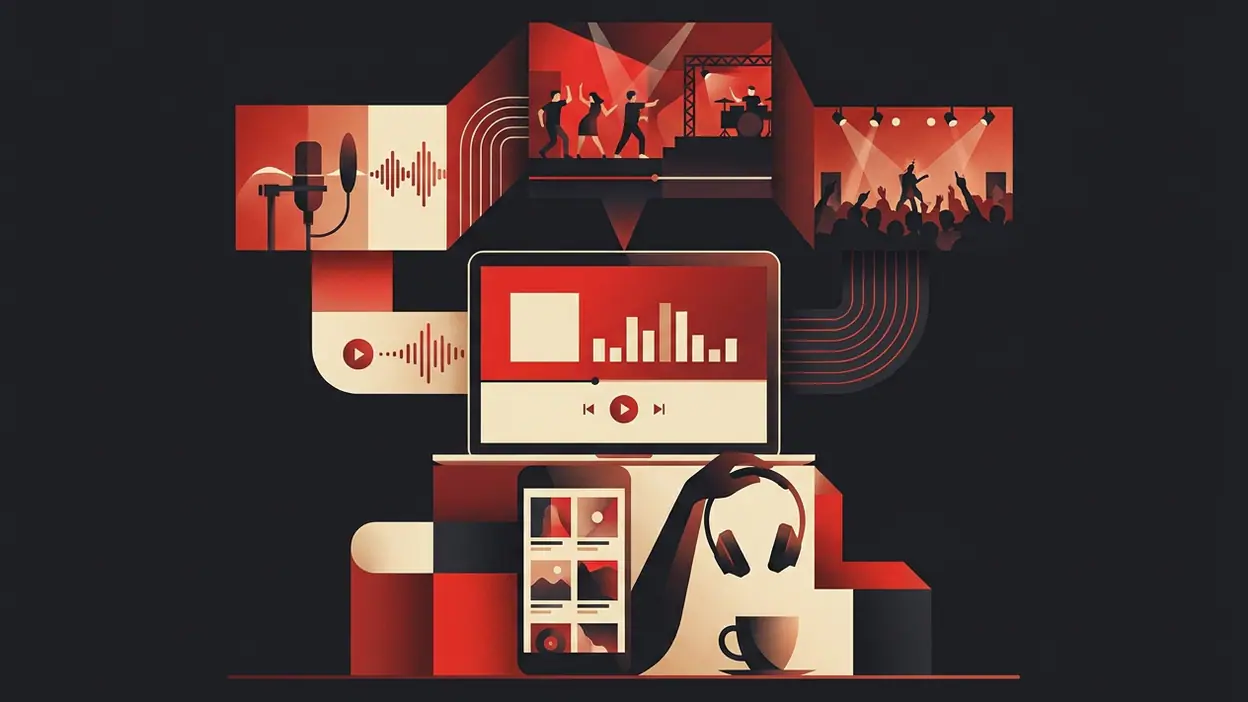
The most important change in music apps is not a prettier library or another personalized playlist. It is the erosion of the boundary between a song and everything around it: its video, live performance, alternate take, and the strange cover that the official catalog never had. YouTube Music makes that shift unusually clear. It is a capable everyday streaming service, but its larger significance is that it treats the internet’s messy abundance as part of the music experience rather than a distraction from it.
That approach sets up the category’s current tension. Listeners still expect the dependable basics—fast search, reliable playback, useful recommendations, and a library that remembers what they like. But they increasingly want the exact version they have in mind, even if it is a concert clip or an unofficial upload. The next standard will have to combine the order of a subscription catalog with the reach of an open video platform. YouTube Music gets closer to that combination than most rivals, while making its rough edges impossible to ignore.

YouTube Music
Google LLC4.4Music & Audio
See More Apps Related to YouTube Music


The music app is no longer just a shelf
A mobile music app used to be judged largely by its collection and its controls. Can it find the album? Can it keep playing? Can a listener build a playlist and return to it? Those questions still matter, but the baseline has expanded. People expect a service to understand a half-remembered lyric, resume a listening habit, assemble a sensible queue, and move from a speaker to a car without making the music feel like a file being passed between machines.
They also expect discovery to feel personal without becoming repetitive. A home screen full of familiar artists is reassuring for a while, then starts to feel like a mirror pointed at yesterday. Good recommendations should make room for the expected next track and the useful surprise: a deep cut, a new artist with a plausible connection, or a performance that changes how a song lands.
On that practical ground, YouTube Music behaves like a modern streaming app. Search and personalized mixes give regular listeners quick routes back into familiar territory, while the library and playback tools support ordinary daily use. The service is easy to understand at first glance. Its more distinctive value appears after the first search, when the results may lead somewhere a conventional catalog would not.
Its strongest signal is version choice
The service’s sharpest idea is the relationship between the official recording and the wider universe of performances. A song can be more than one album track: there may be a music video, a live rendition, an acoustic session, a remix, or a fan-uploaded version. YouTube Music’s connection to YouTube gives it an unusually broad pool to draw from, and the option to move between audio and video makes that breadth feel relevant rather than merely enormous.
That matters in a specific, familiar way. Someone who wants the polished studio track can listen to it; someone who remembers a particular concert version may be able to find that instead. A listener can follow a song’s trail rather than accept the one canonical entry chosen by a catalog team. This is not just more content. It is a different assumption about what listening means: the recording is a starting point, not always the final destination.
Worth Reading Next

Google Maps Go Review: Quick to Orient, Harder to Recover

F-Secure Mobile Security Makes Everyday Phone Protection Practical
More From Our News Desk
View All
The advantage is cultural as well as practical. Music often travels through clips, performances, remixes, and memorable appearances before it reaches a listener as an album track. A service that can meet people at those entry points has a stronger claim on discovery than one that treats the catalog as a sealed collection. YouTube Music’s abundance can be noisy, but it reflects how people actually encounter music online.
The familiar conventions still matter
For all that breadth, the app follows the category’s established rules. It puts recommendations close to the surface, makes repeat listening easy, and relies on playlists and mixes to turn a vast catalog into something manageable. Those conventions are not obsolete. A listener stepping onto a train or starting a run usually wants a dependable queue, not an exploration project.
Personalization is most useful when it reduces effort. A good mix gets music playing before attention wanders; familiar artists provide a comfortable landing place; saved tracks and albums make a service feel like the listener’s own. YouTube Music understands that habit. The app can function as a straightforward home for everyday playback even when its wider catalog is the more interesting editorial story.
But the familiar interface also shows where music apps can become interchangeable. Endless rows of recommendations and algorithmic playlists risk making every service look like a set of shelves arranged by prediction. If a home screen keeps returning the same moods and artists, personalization becomes a loop with no exit. The category has spent years improving the ability to suggest more. It now needs to improve the ability to suggest differently.
The convention it challenges: a clean, closed catalog
Traditional streaming services depend on a relatively tidy idea of the catalog. Tracks have stable titles, artwork, credits, and album placement; listeners search within those boundaries. That structure helps with trust and consistency, but it can leave out the version that made someone care about a song in the first place. YouTube Music challenges the tidy-catalog convention by drawing on a platform where official releases sit alongside a much less uniform body of music video and performance material.
The benefit is access; the cost is ambiguity. Search can surface content that is not equivalent in sound quality, rights status, or metadata to a formal release. A listener may find the desired performance, but also encounter duplicate entries or a result that is difficult to distinguish from the recording they meant. Vastness does not automatically make a catalog better. It makes the quality of sorting and labeling more important.
This is where YouTube Music asks more of its users than a tightly curated service might. The app’s breadth can reward curiosity, but the listener may need to judge which result is the right one. For people who care about a particular live version or obscure upload, that trade-off is often worthwhile. For someone who simply wants a reliable album track with clear credits, it can feel like unnecessary clutter.
Peers reveal what users now expect
Related apps show that “music app” no longer describes one shared job. Lark Player:Music Player & MP3 reflects the enduring appeal of direct control over local audio: people still value access to music they already have, without needing every listening choice to begin in a streaming catalog. Its role highlights a standard YouTube Music cannot replace for everyone—the simplicity and ownership associated with playing personal files.
StarMaker: Sing Karaoke Songs makes participation, rather than passive listening, the central attraction. Its karaoke focus points to a broader expectation that music software can be a place to perform and share, not just consume. Drum Pad Machine - beat maker pushes further into creation, turning rhythm and sound into material to manipulate. These are different products, but their existence matters: listeners increasingly move between hearing music, making it, and appearing within it.
JioSaavn - Music & Podcasts and Amazon Music: Songs & Podcasts show how streaming services compete by broadening the listening destination. Music sits beside other formats and habits, including podcasts, while the service tries to hold attention across more of the day. Against those peers, YouTube Music’s particular argument is not simply that it has songs. It is that music’s surrounding video culture can be part of the listening path.
Together, these products sketch a less settled category than the old “best library wins” contest suggests. Some listeners want ownership and local playback; others want to sing, make beats, follow spoken audio, or move from a clip to a full track. The useful benchmark is no longer the number of tracks in isolation. It is how well an app supports the role a listener has chosen for music at that moment.
The emerging standard is continuity with control
The category’s next standard should not be unlimited content at any cost. It should be continuity with control: the freedom to move between formats and versions, paired with clear information and a predictable way to return to the intended recording. A platform should make discovery feel open without making the library feel unreliable.
YouTube Music points toward that standard because its reach makes version-hopping a natural behavior. Yet the experience also shows why transition alone is not enough. When a listener moves between audio and video, the app should preserve context and make the choice legible. When search produces a crowd of near-matches, better distinctions become essential. The next improvement is not simply another recommendation row; it is helping people understand what they have found.
The category still lags on that balance. Recommendation systems can be hard to steer, and a broad catalog can blur the difference between a definitive release and a convenient upload. Music services also tend to treat discovery as a stream of suggestions rather than a conversation the user can direct. Better controls for narrowing, refreshing, or deliberately changing a recommendation would make personalization feel less like a verdict.
There is also a cost in attention. More formats and more choices can make the basic act of listening feel busy, especially when a person only wants an album to play from beginning to end. A service should not confuse abundance with usefulness. The strongest products will let listeners go deep when they want to, then get out of the way when they do not.
For users, the consequence is a more flexible but less uniform relationship with music. One app may now function as a library, a discovery engine, a video doorway, and a place to revisit performances. That can make listening feel more personal and culturally connected. It can also make expectations sharper: people will notice when search fails to distinguish versions, when recommendations circle the same ground, or when an app does not respect the difference between browsing and simply pressing play.
YouTube Music is therefore most revealing not as a clean winner, but as a preview of what the category is becoming. Its connection to YouTube gives it a convincing answer to the demand for more than official album tracks, while its uneven edges show that openness needs stronger organization. Music apps are moving beyond the shelf, but they cannot abandon the shelf’s best qualities: clarity, trust, and a sense of ownership. The services that last will make the whole culture of a song available without making the listener work to find the song itself.