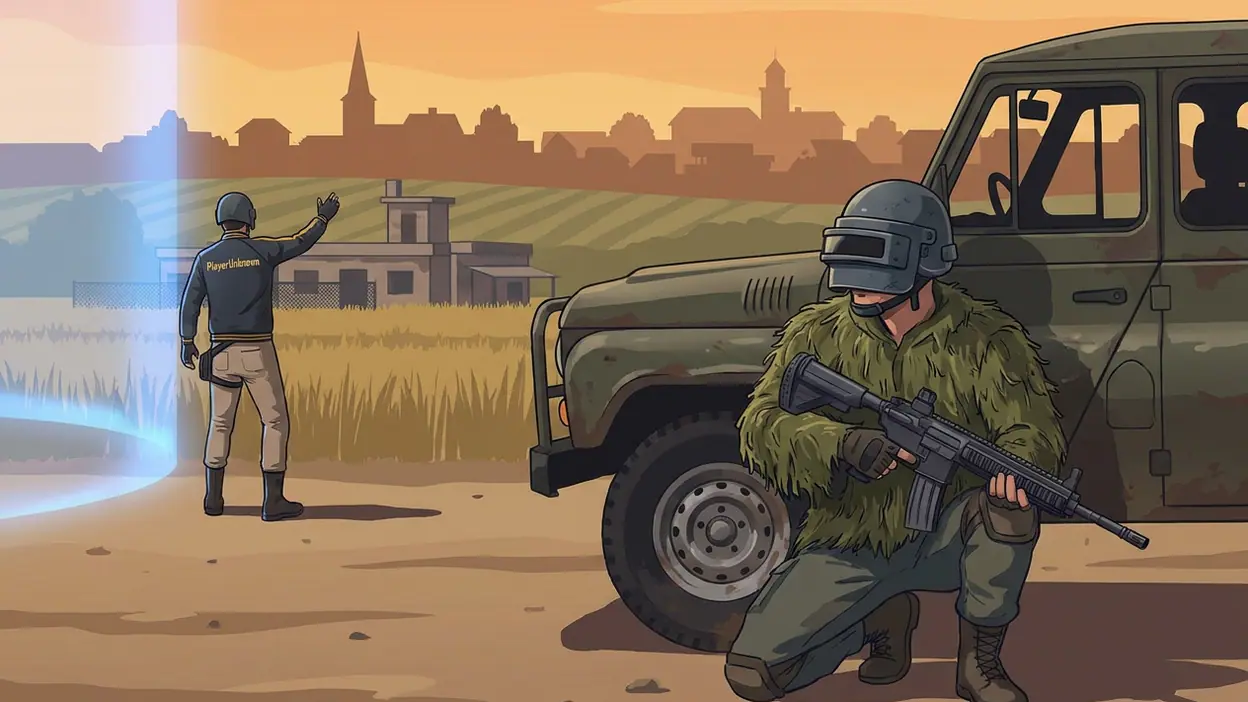
PUBG MOBILE Turns Spare Time into a Ritual of Friendship

A match of PUBG MOBILE can begin in the space between two obligations: a bus ride, a lunch break, the few quiet minutes before bed. Then the plane crosses Erangel, the map opens beneath it, and a casual check-in becomes a small appointment with danger. That shift is the game’s cultural achievement. It turns the phone into a meeting place where skill, friendship, fashion, and spare time all compete for attention.
The game is often described through its familiar premise: drop into a large map, gather weapons and supplies, survive as the safe zone contracts, and outlast everyone else. But its staying power is not simply a matter of gunfights. PUBG MOBILE gives scattered people a shared ritual with clear rules and a satisfying ending. Its most revealing feature is not the last-player-standing victory. It is how easily a group can decide, again and again, to meet for one more round.

PUBG MOBILE
Level Infinite4.3Action
See More Apps Related to PUBG MOBILE


A shrinking island, a larger social life
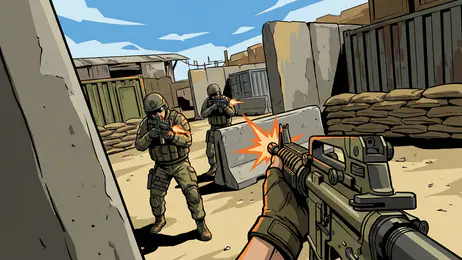
At its core, PUBG MOBILE is a game about managing uncertainty in public. The landing spot is a wager; every building might offer a useful weapon or an ambush. The distant gunfire becomes information. The blue zone keeps turning hesitation into a decision. A match moves from noisy possibility to narrowed pressure, and that rhythm is unusually good at holding attention: loot, listen, move, fight, recover, repeat.
That loop suits a period in which entertainment is expected to be both immediate and social. A player can enter a match without arranging an evening around it, yet the session still has enough structure to feel consequential. A squad’s quick “drop here” carries the weight of a plan. A revive under fire becomes a story. Even a defeat produces an obvious next step: change the landing, adjust the approach, queue again.
The game says something about now because it makes availability feel like participation. Friends do not need the same room, schedule, or even level of commitment. They need a connection and a few minutes that can stretch into an hour. Voice chat turns the match into a moving conversation, while the map gives that conversation a common problem to solve. The game’s world is a stage, but the people on the team are often the real reason to return.
Convenience with a cost
Mobile play makes this arrangement feel natural. A phone is already close at hand, and the game’s interface places movement, aiming, inventory, and communication within reach. For experienced players, that control scheme becomes muscle memory: thumbs steer and fire while eyes track the horizon. It is a compact form of coordination that can feel almost intimate, as if the whole team’s attention has been gathered into one small rectangle.
But convenience does not mean weightlessness. A full match asks for sustained concentration, and a poor connection or awkward control adjustment can matter at exactly the wrong moment. The screen can feel crowded when several opponents, alerts, map details, and squad requests collide. New players may need patience to tune sensitivity and learn the interface. PUBG MOBILE is accessible in the sense that it is close by; it is not always effortless to play well.
Worth Reading Next

Google Maps Go Review: Quick to Orient, Harder to Recover
F-Secure Mobile Security Makes Everyday Phone Protection Practical
More From Our News Desk
View All
This tension is part of its appeal. The game offers a quick route into company, but the match still demands focus. Unlike checking a weather forecast in AccuWeather or browsing listings in Mercado Libre, it does not simply fill a practical need and release the user. It asks for attention, then rewards that attention with a dramatic outcome. The convenience is the invitation, not the whole experience.
Style as a social signal
In a squad, appearance is never entirely separate from identity. Outfits, character looks, weapon finishes, and other cosmetics let players shape how they arrive in a match. They may not determine who wins a firefight, but they make a player legible before the first shot: playful, serious, extravagant, loyal to a particular look. A costume seen in the lobby can prompt a joke; a familiar item can become part of a friend’s in-game persona.
That is a status system designed for visibility. The player is not only collecting a digital wardrobe but displaying it to teammates and opponents. Some of that display is personal expression; some of it is a signal of time spent, rewards earned, or money paid. The distinction can blur, and that is precisely why the cosmetics matter. They make participation visible even when skill is hard to judge at a glance.
The strongest social signal, though, is often practical rather than ornamental. A player who marks a route, shares supplies, and returns to revive a teammate earns a reputation through behavior. That kind of status has no permanent badge. It accumulates in the group’s memory: the friend who keeps calm, the one who takes the risky drive, the one who gets everyone into the next match. PUBG MOBILE makes cooperation public, measurable, and easy to remember.
Ritual, repetition, and the next match
The daily ritual forms around small choices. Someone opens the game to collect a reward or check an event, then sees which friends are online. A squad gathers in the lobby. One person suggests a familiar landing place; another asks for a change after a string of bad drops. The first minutes are chatter and anticipation. Once the plane appears, the group’s attention tightens. Even players who began casually can find themselves making serious decisions about a ridge, a vehicle, or whether to risk a revive.
That rhythm gives a session a useful shape. It has a beginning, a middle, and an ending, unlike the endless feed of X, where one item leads indefinitely to another. A match closes with victory or elimination, but the closure is deliberately porous: the lobby is already waiting, and the squad can immediately start again. The ending resolves the round without resolving the desire to play. This is replay value built from both game design and social momentum.
There is a revealing unease in that arrangement. The game can turn spare time into a sequence of increasingly committed rounds, and its events and rewards give players reasons to check back. A short session is possible, but not always the session people actually have. Friends are persuasive, a near-win is hard to abandon, and a missed reward can make absence feel like lost progress. The game does not need to force a player to stay; it makes staying feel like the natural next choice.
A pattern other apps understand
PUBG MOBILE did not invent the idea that a digital product should become part of a routine. Duolingo: Language Lessons turns practice into a repeatable daily cue; social platforms encourage the habit of checking in; shopping apps make browsing feel available at any idle moment. The motives differ, but the underlying pattern is familiar: lower the friction of returning, give the user a reason to do so, and make the return feel personal.
What the battle royale adds is a stronger shared event. A weather app answers a question; a shopping app presents choices; a language lesson tracks individual progress. A PUBG MOBILE match creates a temporary group with a common stake. Its shrinking play space is a clock everyone can see, and its uncertain outcome gives the session emotional texture. That is why other products can imitate the cadence of daily rewards or social presence without reproducing the particular pull of a squad under pressure.
Its design mirrors a culture that treats leisure as something fitted between messages, errands, and work, but also expects leisure to produce connection. The game is portable enough to join a fragmented day and substantial enough to make that day feel shared. It does not ask players to escape their networks; it asks them to bring their networks into the match.
That blend is the real reason people keep it close. PUBG MOBILE offers a clean fantasy of consequence: land, adapt, protect your squad, and see whether your decisions carry you to the end. It can be demanding, crowded, and hard to put down after a close loss. Yet at its best, it is less a solitary test of reflexes than a recurring appointment with people who know how you play.
Read culturally, PUBG MOBILE is a pocket-sized public square disguised as a survival contest. Its island supplies the drama, its controls make participation immediate, and its squad turns repetition into ritual. The game’s most durable victory is not that it keeps players chasing a chicken dinner; it is that it gives them a compelling reason to show up for one another, match after match.