Gems Adventure-Mech Evolution Finds Its Rhythm in Short, Satisfying Runs

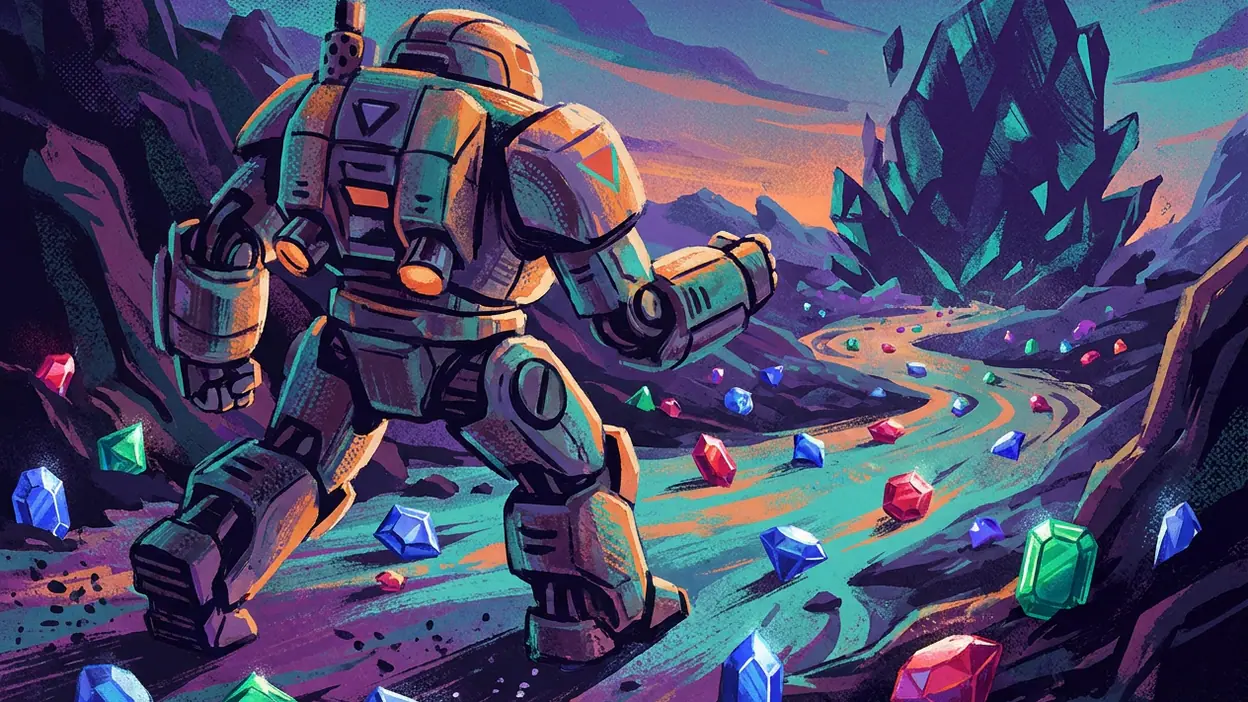
Some mobile adventures announce themselves with noise: a sprawling map, a parade of currencies, a tutorial that lasts longer than the first play session. Gems Adventure-Mech Evolution makes a quieter pitch. Its appeal lies in the clean promise of collecting gems, pushing through danger, and strengthening a mech until the next stretch of the journey feels possible. That modest loop is its real achievement: it gives each short session a reason to continue without pretending that more systems automatically mean a better game.
That distinction matters. The mobile adventure shelf is crowded with games that mistake constant rewards for lasting engagement. This one is most persuasive when it lets movement, discovery, and incremental power do the work. It is not a grand, seamless world, and it does not need to be. At its best, it feels like a compact expedition with a clear rhythm: move forward, gather what the route offers, meet resistance, then return better equipped to take another step.

Gems Adventure-Mech Evolution
Morphling3.5Adventure
See More Apps Related to Gems Adventure-Mech Evolution


Why this adventure deserves the spotlight
The case for giving this game a closer look is not that it reinvents the genre. It is that it understands the usefulness of a focused loop. A gem is more than a bright collectible when it connects exploration to improvement; an upgrade matters when it changes how confidently you approach the next obstacle. The game’s central idea has the right shape for a phone: progress arrives in understandable pieces, and a brief session can still feel like it moved the journey along.
That focus gives the experience a welcome sense of proportion. The player is not asked to keep track of a sprawling cast or absorb a dense mythology before the adventure becomes enjoyable. The immediate incentive is practical and legible: find resources, improve the mech, and see how much farther that improvement carries you. For anyone who likes a game that makes its next goal visible, rather than burying it under menus, that clarity is a genuine strength.
There is also a pleasing contrast between the delicate value of gems and the sturdy promise of a machine built to evolve. One suggests careful collecting; the other suggests force and forward motion. That pairing gives the progression a little character, even when the underlying systems remain familiar. The result is an adventure that feels more purposeful than a string of unrelated rewards.
What feels exceptional from the first sessions
The strongest early impression is the pace. The game knows that a mobile session often begins in a spare moment, so it gets to its basic pleasures quickly. You can understand what the journey wants from you without being made to study a manual first. The route provides the immediate context, the gems give you a reason to pay attention, and the mech gives those resources a destination. That is a sturdy foundation for play on a small screen.
Its pleasures are tactile in the way a lightweight adventure should be. A stretch of movement becomes more satisfying once you spot something worth collecting; a difficult encounter feels less arbitrary when you know that a stronger mech is within reach. The best moments come from that simple shift in confidence. What looked like a wall on an earlier attempt becomes a challenge you can now take seriously, rather than a reason to put the game down.
Worth Reading Next

Google Maps Go Review: Quick to Orient, Harder to Recover

F-Secure Mobile Security Makes Everyday Phone Protection Practical
More From Our News Desk
View All


The upgrade is most satisfying when it changes your sense of what is reachable. That is a better reward than a large number attached to a button. Even modest growth can make a familiar stretch feel different, and familiar stretches are where the game can quietly prove that your time has mattered. The experience does not need elaborate spectacle to create momentum; it needs each improvement to register in the next piece of play.
Its presentation supports that directness. The central ideas are easy to read: this is a world to move through, resources to gather, and a machine to develop. There is no need for the visual language to compete with a complicated interface. When the screen stays clear and the action remains easy to parse, the game feels suited to a phone rather than merely squeezed onto one.
How it earns attention beyond the first run
A first session can be carried by novelty. The harder test is whether the game gives you a reason to come back after the basic loop is familiar. Here, that reason is the gradual relationship between collection and capability. You are not only finishing one more stretch; you are building toward a version of the mech that can handle a more demanding stretch. That creates a useful forward pull without requiring every visit to be long.
The rhythm has a natural cadence: explore, gather, face resistance, then consider what to improve. When that sequence is balanced, the game avoids the two traps that often flatten mobile progression. It does not make every encounter feel trivial, and it does not make improvement feel so distant that collecting becomes busywork. The pleasure is in the gap between those extremes, where a new upgrade feels earned and the next challenge still has some bite.
There is room for replay value in this structure because progress changes the meaning of what you have already seen. A route you once approached cautiously can become an opportunity to move with more confidence. Returning to an earlier challenge can also make the growth legible: the player can feel the difference, not just read it in a stat panel. That is a small but important distinction. Good progression gives you a memory of being weaker, then lets the next attempt answer it.
Still, the long-term pull depends on variety. A collectible-and-upgrade loop can only carry so much if routes, encounters, or decisions begin to blur together. The game’s foundation is appealing, but its lasting appeal is strongest when each new phase gives the player something more than a larger target or another incremental increase. Distinct challenges and meaningful choices are what turn a pleasant routine into a habit.
The best moments in real use
The game works particularly well in short, interrupted sessions. A few minutes can be enough to make visible progress, and the basic objective is easy to recover if you return after a break. That makes it a sensible companion for a commute or a wait, provided you want an active little expedition rather than a game that disappears entirely into the background.
Its most satisfying use case is the return visit after a useful upgrade. You have collected enough to make the mech stronger, and now there is a clear question hanging over the next attempt: does that improvement open the way? The answer arrives through play rather than a lengthy explanation. That small test gives progression a dramatic beat. It is not a cinematic cliffhanger, but it is a good reason to tap in again.
Another strong moment comes when the game lets you settle into its pace. Once the controls and goals become familiar, attention can move from figuring out the rules to reading the route and deciding what matters. That is when an uncomplicated design becomes a virtue. The game stops asking for interpretation at every turn and lets the player enjoy the steady conversion of a little time into a little more capability.
Its edge over louder rivals
It would be unfair to compare this adventure with every mobile game that happens to share a screen. DOP 2: Delete One Part is built around a different pleasure: a quick visual puzzle and the reveal of a missing detail. Cytus II is a rhythm game whose intensity comes from timing, music, and performance. Those games are useful contrasts because they show how little the player needs to be doing at once for a mobile experience to feel complete. This game chooses a more gradual, exploratory pleasure instead.
Its edge is restraint. It does not need to behave like a social event platform such as Sympla: Ingressos para eventos, or a practical housing tool such as HotPads Rent Apartments; those products serve entirely different needs. The relevant comparison is not feature for feature, but attitude. A mobile game can respect a player’s attention by making its own purpose clear. Gems Adventure does that best when it puts the next stretch, the next resource, and the next improvement within easy reach.
That approach will not satisfy someone looking for a sprawling role-playing game or a constant stream of elaborate set pieces. It does not make scale its selling point. Instead, it offers a smaller unit of satisfaction: a run that makes sense, a resource that has a job, and progress that can be felt. In a market where many games shout to keep attention, a focused loop can be its own form of confidence.
Where it still needs polish
The same simplicity that makes the opening accessible can eventually expose repetition. Once the player has absorbed the collection-and-upgrade rhythm, the game needs fresh situations to keep that rhythm lively. If encounters start to feel interchangeable, or if upgrades become a predictable checklist, the pleasure of returning loses force. More variation in the demands placed on the mech would help each new stretch feel like a fresh problem, not simply a longer one.
Progression also benefits from clear feedback. A number going up is easy to understand, but the strongest upgrades should have an obvious effect on play. The game is most compelling when the player can point to a change and say, “That is why this attempt went better.” If improvement feels mostly abstract, collecting can become a chore performed for the promise of a future payoff. A little more emphasis on how the mech evolves in practical terms would make the loop easier to trust.
There is a broader polish question too: a compact adventure has fewer places to hide. Each stretch, interaction, and reward carries more weight because the game is not leaning on an enormous catalogue of systems. Tight pacing, clear feedback, and enough variety are not extras here; they are the quality bar. The central idea is sound, but the experience needs to keep earning the player’s attention as familiarity sets in.
That is a measured reservation, not a dismissal. The game’s appeal is clear, and its limitations do not erase the pleasure of a well-paced attempt or a meaningful upgrade. They simply define the audience: players who want a focused, accessible adventure are better served than those expecting a deep world with a new surprise at every turn.
Who should care most, and why now
This is a good fit for players who like visible progression, short sessions, and adventures that explain themselves through action. If you enjoy collecting resources because they lead to a practical improvement, or you like returning to a challenge with a stronger toolkit, the core loop has an easy appeal. It also suits anyone who prefers a game that can be picked up quickly without demanding a long run every time.
Players who prize elaborate stories, constant mechanical reinvention, or the competitive precision of a rhythm game should temper their expectations. The adventure’s pleasure is quieter and more incremental. It is about going a little farther, feeling a little stronger, and giving that progress another chance to prove itself. That is not a lesser kind of play; it is a different promise.
The game belongs in this moment precisely because mobile play is often fragmented. A useful adventure does not have to turn every pause into a commitment. It can offer a clear goal, a satisfying loop, and enough continuity to make the next visit feel connected to the last. Gems and mech upgrades are familiar ingredients, but arranged around a brisk expedition, they make a strong case for the value of focused design.
The title’s full name may suggest a bigger, more elaborate spectacle than the game needs to deliver. What matters is the compact experience underneath: a gem-powered journey, a mech with room to grow, and a steady invitation to test that growth. That is a solid editorial reason to give it space on a crowded home screen, even if the game still has room to sharpen its later chapters.
My verdict is an enthusiastic recommendation with one clear qualification: play it for its direct, rewarding adventure loop, not for a sprawling epic. Gems Adventure-Mech Evolution earns its Editor’s Choice attention through pace, clarity, and the satisfying link between what you collect and what you can overcome. It needs more variety and sharper feedback to sustain that promise indefinitely, but its best sessions have genuine forward momentum. For a mobile adventure that respects a short visit and makes each improvement count, it is well worth the trip.