FPS Shooting Gun Games Offline Has the Right Idea, but Old-School Gunplay

Modern Android and iOS have made it easier to pick up a game for a few minutes, then put it away without losing your place. That shift sounds tailor-made for an offline shooter: no lobby to wait through, no connection to chase, just a mission and a trigger. FPS Shooting Gun Games Offline gets the appeal of that promise right, but its old-school structure also shows how much mobile players now expect from a game that asks for their attention.
The platform story here is less about a flashy operating-system feature than a change in everyday habits. Players move between Wi-Fi and mobile data, let apps pause in the background, and expect games to behave sensibly when a call or notification interrupts. An offline-first shooter can sidestep one major source of friction, but it still has to make aiming, pacing, and progress feel good on a small touchscreen. This game’s central test is simple: can direct, solo gunplay carry the experience without the connective tissue of a modern service game?

FPS Shooting Gun Games Offline
TW Games Studios4.5Comics
See More Apps Related to FPS Shooting Gun Games Offline


Offline play gains more than convenience
The clearest advantage is that the shooting loop does not depend on a stable network. You can launch into a session in places where coverage is weak or costly, and you do not have to coordinate with a squad or wait for matchmaking. That makes the game an easy fit for a commute, a short break, or a stretch of downtime when a larger online shooter would be more hassle than entertainment.
There is a practical OS benefit in that independence. Android and iOS both encourage quick app switching, but a network-dependent game can turn an interruption into a lost match or a reconnection screen. Offline play removes that particular worry. The useful gain is not that the operating system somehow makes the game smarter; it is that the game asks less of the connection and the player’s schedule.
That trade-off has limits. A self-contained campaign cannot borrow the social energy of live teammates, the unpredictability of human opponents, or the steady stream of seasonal events that keep online shooters feeling current. Its missions have to supply their own momentum. If the objectives and enemy encounters repeat too often, the freedom to play anywhere will not by itself create a reason to return.
What the hands notice first
The first minutes are a test of touch, not spectacle. A mobile shooter has to let one thumb steer while the other aims and fires, often on a screen much smaller than a television. Clear, forgiving controls matter more than a crowded arsenal: the player needs to understand where movement happens, how to line up a target, and what a button will do without stopping to study the interface.
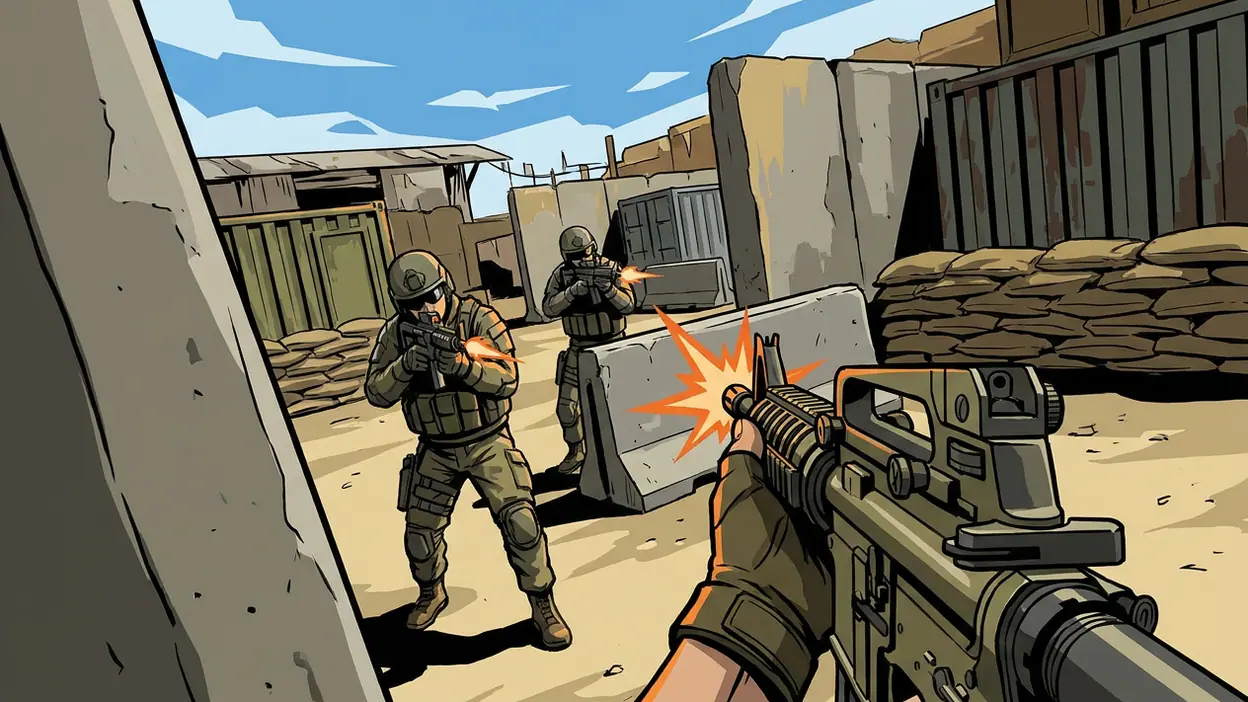
In FPS Shooting Gun Games Offline, the appeal is its immediate, familiar rhythm. You enter a mission, look for the next target, shoot, and push ahead. There is little ceremony between the player and the action, which is a real strength for brief sessions. The flip side is that a simple loop puts every rough edge in view. If aiming feels imprecise, enemies behave predictably, or encounters blur together, there is no multiplayer drama to disguise the repetition.
Worth Reading Next

Google Maps Go Review: Quick to Orient, Harder to Recover

F-Secure Mobile Security Makes Everyday Phone Protection Practical
More From Our News Desk
View All


Modern phones have bright displays and quick touch response, but those improvements do not automatically solve the ergonomics of a shooter. Hands cover part of the screen; a case can make edge controls awkward; and long sessions can feel cramped. The best mobile combat systems give players room to adjust sensitivity and button placement. If a game offers limited control tuning, the player may have to adapt to the layout rather than make the layout fit their hands.
A different day-to-day rhythm
Offline missions invite a stop-and-start routine. Rather than committing to a full multiplayer match, you can play until a mission ends, leave the game, and return later. That suits the way people use phones: a session can be interrupted by a message, a transit stop, or a change of plans. It is also a quieter kind of engagement. There is no team waiting for you to return, and no live ranking demanding one more match.
That quietness can be refreshing, especially for players who want shooting mechanics without the pressure of competitive play. But it changes what replay value means. In a competitive game, every opponent makes a familiar map feel different. In a solo shooter, replay depends on mission variety, satisfying weapon handling, and whether the challenge gives you a reason to improve. A quick clear is convenient; a memorable encounter is what brings you back.
Background behavior is part of this experience, too. Android and iOS may suspend an app when the player switches away, and a game should not assume that a phone remains devoted to it. For an offline title, the important question is whether progress and session state survive ordinary interruptions. A lightweight game can be easy to reopen, but players still notice if a pause or app switch sends them back farther than expected.
Where the mobile ecosystem helps—and where it does not
Current phones make casual play more comfortable through fast storage, capable graphics hardware, and displays that keep action legible. Those strengths can help a straightforward shooter load quickly and run smoothly on a broad range of devices. Offline design also makes the game less sensitive to poor reception and reduces the number of network-related surprises in a session.
Yet platform progress brings expectations along with it. Players are used to clear permission requests, visible privacy choices, reliable save behavior, and sensible battery use. An offline game may need fewer network permissions than a live-service title, but that does not excuse vague disclosures or intrusive prompts. The operating system can manage a game’s access; it cannot make every design decision feel considerate.
Compatibility is the less glamorous part of the update story. Android devices vary widely in screen shape, performance, and manufacturer-specific behavior. On iPhone and iPad, the hardware range is narrower, but screen sizes and current system versions still differ. A game may install successfully and still feel awkward if its touch targets are cramped, its interface does not scale well, or it drains power faster than a short-session shooter should.
Offline also needs a careful definition. A game may let you play missions without a connection while still relying on connectivity for installation, updates, ads, or optional features. That distinction matters to people choosing an offline shooter for travel or limited data. Players should check the store listing and test the installed game before relying on it in a place where downloading a patch is not an option.
What neighboring apps reveal
The related apps in a mobile library make a useful contrast, even though they solve very different problems. Perpay - Shop and Build Credit is built around transactions and account activity; Banfield Pet Hospital serves practical care needs; Bebefinn Town: Kids House Game depends on gentle, repeatable play; FreeCell Solitaire makes its appeal through a familiar puzzle that can be revisited indefinitely. Each has a clearer reason to return than simply having a spare moment.
For a shooter, that comparison sharpens the design challenge. The game cannot rely on the durable utility of a service app or the endless variation of a card puzzle. It has to make each short burst feel satisfying through action itself: responsive aiming, readable threats, and missions that change the pace before familiarity turns into sameness. Offline access is the invitation, not the whole argument.
This is also where mobile platforms are heading. The strongest phone experiences increasingly respect context: a game should work in the time and conditions a person actually has, not demand an ideal connection and an uninterrupted hour. But convenience is now a baseline. Players also expect thoughtful controls, dependable saves, and a reason to keep playing after the novelty of instant access wears off.
Who should play, and what deserves watching
This shooter is best suited to players who want a compact, solo action game and value the ability to play without a connection. It makes sense for someone who prefers direct missions to competitive matchmaking, or who wants a straightforward distraction without joining a social ecosystem. It is a less convincing choice for anyone looking for a deep campaign, elaborate tactical systems, or a steady flow of online events.
The next updates worth watching are not necessarily bigger weapons or louder effects. Better touch customization, clearer information about which features work offline, and dependable progress across interruptions would address the real conditions of phone play. Mission variety and more interesting enemy behavior would do even more for long-term replay. Those changes would make the game feel designed for current mobile habits rather than merely available on a current phone.
My verdict is that FPS Shooting Gun Games Offline earns its place as a convenient pick-up-and-play shooter, chiefly because it removes the network as a gatekeeper. Its straightforward rhythm suits short sessions, but that same simplicity places a heavy burden on mission design and control feel. For players who want solo gunplay on their own terms, it is an easy game to understand; for lasting engagement, the next step is making every return feel like more than another quick firefight.