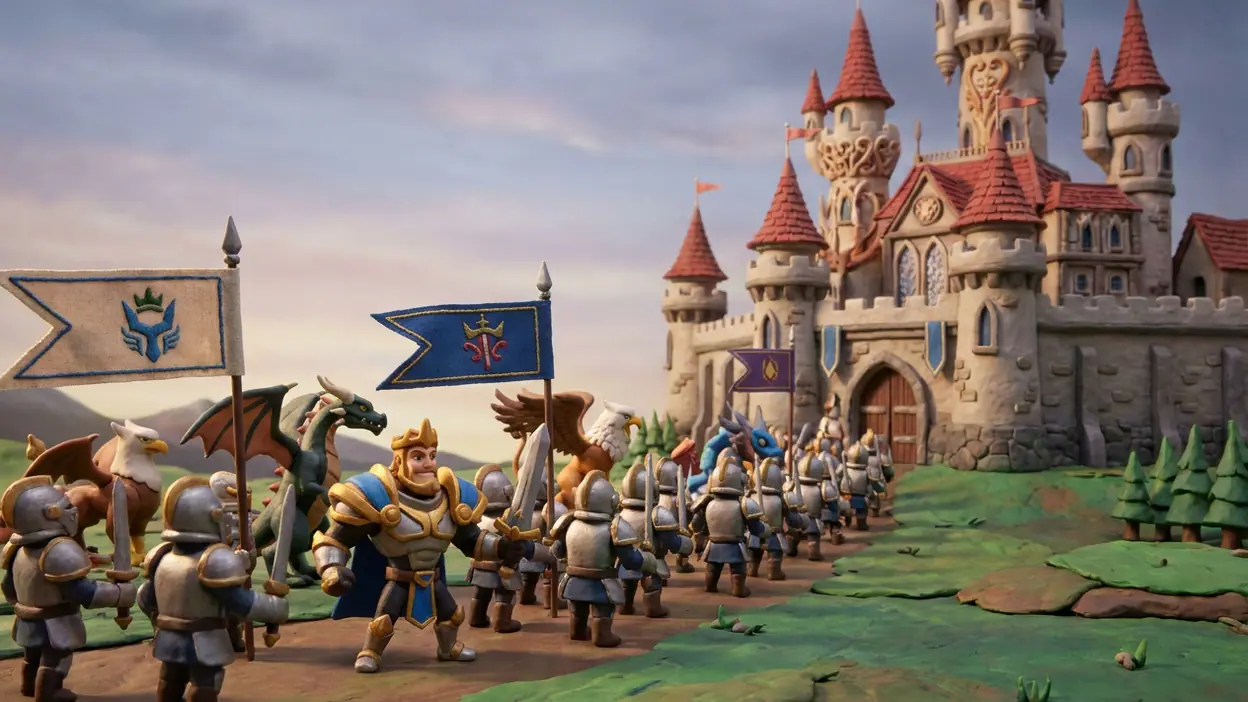
In Lords Mobile, the Rally Is the Real Battle

The most important battle in Lords Mobile: Kingdom Wars often begins before anyone reaches the enemy castle. It starts when a leader opens a rally, sets a countdown, and asks an alliance to commit troops to one coordinated strike. That simple act is the game’s sharpest design choice: it turns a familiar kingdom-building routine into a test of trust, timing, and shared attention. The rally system is where Lords Mobile stops being a collection of timers and starts feeling like a war fought by people.
A timer that turns a solo attack into a group decision
A rally is a delayed attack assembled by a player and reinforced by alliance members. The rally leader chooses a target, selects the available army and hero lineup, and starts a countdown. Allies send troops to the leader’s castle during the preparation window; once the timer expires, the combined force marches to its destination and fights as one army. The target might be an enemy player’s castle, a darknest, or another strategic objective, depending on the situation and the players involved.

Lords Mobile: Kingdom Wars
IGG.COM4.5Strategy
See More Apps Related to Lords Mobile: Kingdom Wars


That sounds like a small variation on sending troops out from a base. In practice, it changes the whole shape of an engagement. A solo march is a private calculation: check the target, estimate the risk, and accept the result. A rally is public. The leader’s choice is visible, the countdown creates a deadline, and every participant has to decide whether to contribute troops that will be unavailable elsewhere for a while. Even the decision to sit out has a cost, because the alliance may need that missing strength.
The system is easy to understand but not always easy to use well. Players need to know what they are attacking, what composition the rally needs, how much time allies require to reinforce, and whether the target could react before arrival. A powerful march sent too early can be less useful than a weaker one launched at the right moment. That tension gives the countdown genuine meaning rather than making it a decorative wait screen.
Why the rally matters more than its battle report
Lords Mobile has plenty of visible progression: build upgrades, research, gear, heroes, familiars, and troop training all push an account toward greater power. Those systems give players a steady list of personal goals. Rallying exposes the limit of that personal progress. A high might score does not automatically make someone a good rally leader, and a strong account cannot always compensate for an alliance that is disorganized or absent.
That is why the feature matters more than the number of troops on the march. It makes preparation social. The leader has to communicate a plan clearly enough that allies can respond; members have to trust the call enough to put their armies at risk. A rally that succeeds can feel like a shared achievement, not merely a victory credited to the biggest account. A failed one can reveal a problem in timing, target selection, troop composition, or basic coordination.
There is also an unusually clear lesson in the system’s limits. Sending more troops is not always the answer. The right formation and counter can matter, and the opposing side may reinforce, shield, or otherwise disrupt an attack. In a game with so many upgrade tracks, this gives practical knowledge and alliance discipline room to compete with raw spending. It does not erase the advantage of a developed account, but it makes power more interesting than a single number.
Worth Reading Next

Zoom Workplace Wants to Own Your Whole Workday, Not Just Your Meetings

My Talking Tom’s Daily Ritual: Can a Viral Pet Loop Last?

Piano Music Go Turns Quick Breaks Into a Test of Rhythm and Precision

How to Use Yelp to Find Better Places With Less Scrolling

Temu Turns Bargain Hunting Into a Daily Habit
More From Our News Desk
View All


The best use case is a coordinated window, not constant warfare
The rally feels strongest when an alliance has a specific opportunity and a shared reason to act. A guild leader might identify a vulnerable target, announce the plan, and give members enough time to move troops into place. During the countdown, the group can check who has joined, adjust the force, and react if the situation changes. When the march finally departs, the preceding coordination gives the battle a satisfying sense of consequence.
This is also where Lords Mobile’s mobile rhythm works in its favor. Members do not all need to be online for a long session from the beginning. They can check in, send troops, and return near the launch or impact time. The game’s timers make that kind of staggered participation possible, while the rally gives people a reason to pay attention to the same event. For an alliance spread across different schedules, that can be more practical than expecting everyone to play continuously.
But this is not truly casual participation. A rally can tie up troops, and a poor call can expose an army or waste an alliance’s opportunity. Members who join without understanding the plan may weaken it, while those who miss the deadline may arrive too late to matter. The best scenario is a group that treats the timer as a planning window, not an alarm demanding an impulsive tap.
It changes how players behave between battles
Rallying changes the meaning of logging in. Without a collective objective, the routine can settle into collecting resources, starting upgrades, training troops, and checking timers. Those actions create progress, but they can feel like maintenance. A rally gives the maintenance a purpose: research matters because it improves the army, training matters because the alliance needs bodies, and keeping an eye on the map matters because the next target may not wait.
It also makes players more attentive to one another. Alliance chat becomes a tactical tool rather than a social extra. Members learn who responds quickly, who knows the mechanics, who can lead reliably, and who prefers to support rather than initiate. That social knowledge is not shown in a tidy progression bar, but it can determine whether an alliance feels like a team or simply a list of accounts sharing a banner.
The behavioral shift has a less comfortable side. A countdown can turn a leisure game into an obligation, especially when the alliance expects members to be available at particular times. The same feature that makes a group feel coordinated can create pressure to respond, contribute, and avoid letting others down. Lords Mobile is at its most compelling when that commitment feels chosen. It is less appealing when the timer starts to dictate the player’s day.
Smart design, with a sharp edge
The rally’s best design decision is that the leader cannot simply click “attack” and receive the full group’s strength instantly. The assembly period creates room for allies to join, but it also gives the opposing side time to notice and respond. That makes information part of the contest. A rally is not only a damage calculation; it is a visible intention, and visibility gives both teams a chance to make a decision.
The countdown also gives the interface a readable center of gravity. Players can see that an operation is forming and understand that the next meaningful moment is approaching. In a game with many menus, systems, and upgrade paths, a shared timer is a direct, legible signal. The rule is simple enough to grasp while the consequences remain varied enough to reward experience.
Still, the feature leans heavily on alliance quality. New players may not know which calls are sound, and quieter groups can struggle to gather enough reinforcements at the right time. More experienced members can end up doing the planning repeatedly, while everyone else follows instructions without learning the reasoning. The system supports teamwork, but it cannot manufacture good leadership or make a mismatched alliance feel active.
What other mobile games do differently
Most games built around personal progression keep cooperation at the level of shared rewards, friendly competition, or a quick assist. Trivia Crack, for example, turns social play into short questions and head-to-head turns; the commitment is immediate and the consequence is light. Google Play Books & Audiobooks is an entirely different kind of product, but it offers a useful contrast in pacing: reading can be paused and resumed without coordinating a group around a deadline.
Lords Mobile’s rally belongs to a more demanding tradition of alliance warfare. Its closest point of comparison is not a casual social feature but a group operation with a launch window and a shared risk. That approach creates more memorable victories than a routine donation or leaderboard score, but it also asks far more of players’ time and trust. The trade is clear: stronger collective drama in exchange for a greater chance that the game’s schedule will intrude on everyday life.
Who gets the most from it
Rallying is best for players who enjoy planning with other people, can tolerate waiting for a coordinated moment, and want their alliance to matter beyond passive bonuses. It particularly suits someone who likes taking a role: organizing the attack, studying targets, building a useful army, or reliably reinforcing a trusted leader. Even a player who never calls a rally can find a satisfying place in the system by being the person whose troops arrive on time and in the right shape.
It is less rewarding for anyone who wants every session to be self-contained. If you prefer battles that start and finish at your own pace, the rally’s waiting and dependence on other players can feel like friction rather than strategy. It is also a poor fit for someone who dislikes pressure to stay available. The feature’s social strength and its scheduling burden come from the same source, and there is no clever interface trick that removes that trade-off.
For players willing to work within that rhythm, the rally gives the larger game a stronger identity. Building an account still matters, and the many progression systems remain part of the long climb. Yet the moments that give those upgrades a purpose happen when several people commit to a plan and watch it unfold together. Lords Mobile: Kingdom Wars is at its most engaging not when one player sends the largest army, but when an alliance makes a timed attack feel deliberate. The rally system does not solve the game’s demands on time or its dependence on active allies; it makes both demands visible, and turns coordination into a genuine strategic skill.