Photomath’s Quiet Community Runs on Shared Explanations

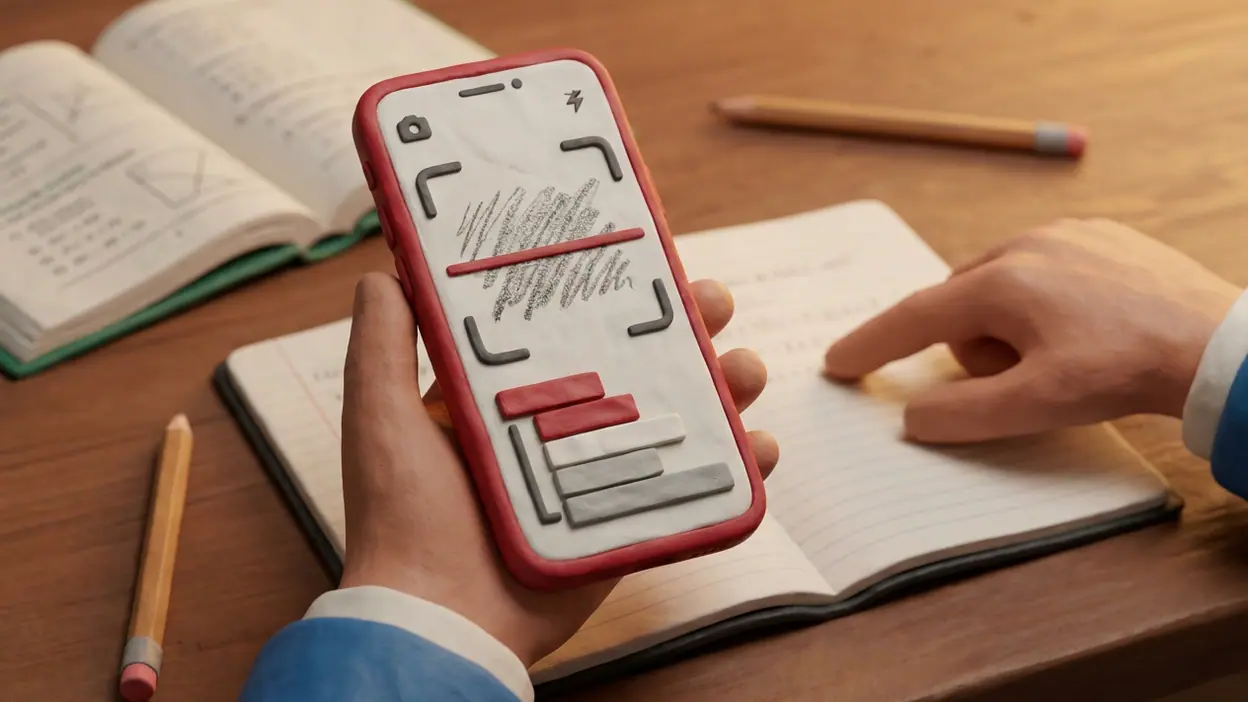
A student points a camera at an equation, gets a worked solution, and sends the result to a classmate who missed the lesson. That small handoff is the most convincing community story around Photomath: not a bustling social network, but a private study habit that can travel. The app’s value begins with individual help; its wider reach depends on what people do with that help afterward.
That distinction matters. Photomath does not need public profiles, leaderboards, or a creator feed to become part of a classroom’s routine. Its community is quieter and less visible: friends compare steps, parents try to follow a solution, and teachers may point students toward a worked example. These are plausible uses of the format, not evidence of a built-in network. The app’s strongest social feature is the portability of an explanation, while its biggest limitation is that the conversation usually happens somewhere else.

See More Apps Related to Photomath


A study tool whose social life happens off-screen
The participation model
The basic Photomath loop is personal. A learner scans a problem or enters it, reviews a solution, and follows the steps to see how the answer was reached. Depending on the problem and available features, explanations can include more than a final result. That makes the app useful not only for checking work but for finding a route through a topic that has become difficult to follow in class.
Participation does not usually mean posting work for an audience. It means deciding what to do with an explanation: retry the problem, compare methods, save a useful example, or show someone else where a calculation went wrong. Photomath’s community model is therefore sharing by explanation, not by performance. There is no obvious public stage where a student earns status for solving faster, and that restraint suits a tool meant to support learning rather than turn homework into a contest.
It also puts a ceiling on visible collaboration. A group cannot build a shared discussion thread inside the core scan-and-solve experience in the way people might in a dedicated forum or classroom platform. The app can supply material for a conversation, but it does not necessarily host that conversation. Its social life is a relay: the solution is produced in one place, then discussed through a notebook, a message, a tutoring session, or a classroom exchange.
How newcomers enter
Newcomers do not need an invitation from an established group. They can arrive with a single equation, open the app, and see what the camera can recognize. That low-friction entry is important for students who feel embarrassed asking a basic question in front of a class. A worked example can offer a private first step, letting a learner inspect the method before deciding whether to ask a teacher or friend for more help.
But the first successful scan can also create a false sense of mastery. An answer appearing on screen is not the same as understanding why it works. New users need to learn to treat the steps as a prompt for thinking, not as a receipt proving the task is finished. The best way to enter is to cover the result, attempt the next step independently, and use the explanation to check the reasoning. That habit makes Photomath more like a patient study partner and less like an answer vending machine.
Worth Reading Next

Zoom Workplace Wants to Own Your Whole Workday, Not Just Your Meetings

My Talking Tom’s Daily Ritual: Can a Viral Pet Loop Last?

Piano Music Go Turns Quick Breaks Into a Test of Rhythm and Precision
How to Use Yelp to Find Better Places With Less Scrolling

Temu Turns Bargain Hunting Into a Daily Habit
More From Our News Desk
View All


Parents and tutors have another entry route: they can use a worked solution to see how a problem is being approached, even if they have forgotten a particular procedure. Still, the app cannot read the learner’s confidence, detect every misconception, or decide when a human explanation is needed. People joining through a child or student should ask them to explain the steps back, rather than letting a screen do all the talking.
Recurring rituals and everyday contribution
The recurring ritual is modest: scan, inspect, try, check. It can happen at a kitchen table after dinner, in a library between classes, or during a late homework session when no one is available to help. Those repeated moments are the app’s real retention mechanism. There is no need to return for a daily reward; the next confusing problem brings the user back.
That rhythm has a useful social spillover. A student who understands a step can show it to a friend, or a parent can sit beside a child and use the explanation as a starting point. In a classroom, a teacher might use a solved example to compare procedures. These are ordinary human contributions, not necessarily features inside Photomath, and that distinction should stay clear: the app offers a common reference, while people supply context, encouragement, and correction.
Photomath’s creator ecosystem is less obvious than the communities built around games, video platforms, or public study forums. The core contribution appears to come from the product’s explanations and the people who teach one another how to use them. I would not assume that every user can publish a solution, alter an explanation, or gain visibility as a creator. Without a clearly surfaced public publishing layer, the more reliable description is that users circulate and interpret help rather than build a public library under their own names.
That keeps the experience focused, but it leaves less room for community-made teaching styles. A talented student cannot necessarily turn a particularly clear explanation into a widely discoverable lesson within the app. The network’s contributions are valuable but hard to see, and often disappear into private chats or conversations once the homework is done.
Social friction, moderation, and safety
The main social friction is not an argument in a comment section; it is disagreement over what counts as learning. A student may use a solution to understand a method, while a parent or teacher may worry that the same tool makes copying too easy. Both concerns are reasonable. A final answer can help someone check work, but relying on copied steps without attempting the problem can weaken practice. The difference lies less in the scan than in the habit around it.
There is also a classroom equity question. Students with reliable devices and internet access may be able to consult Photomath whenever they get stuck, while others may not have the same support. And an explanation that feels clear to one learner may move too quickly or use terminology that does not match a teacher’s approach. The app can widen access to help, but it does not make access equal or guarantee that every explanation fits the course.
Moderation and safety are hard to assess as community qualities when the central experience is not a public social space. There may be account, privacy, or content policies, but users should consult the current app and platform documentation for details rather than infer protections from the absence of a visible feed. In particular, families should check current privacy settings and age guidance before treating any educational app as automatically suitable for every student. There is little reason to expect the typical scan to expose a learner to public stranger interaction, but that is not a substitute for checking how data and account features work.
The absence of public discussion reduces some familiar hazards: there is less obvious room for pile-ons, popularity contests, or strangers steering a student’s conversation. It also means fewer visible mechanisms for peer correction. If an answer seems wrong or confusing, a learner may need to ask a teacher or compare another trusted resource; there may not be a public group ready to catch the mistake. Quiet design can lower social risk without solving the educational risks of overreliance or misunderstanding.
Where network value appears
Photomath’s network value appears when one person’s access to a solution becomes another person’s opportunity to learn. A student can bring a worked problem to a tutoring session; a sibling can use it to explain a step; a parent can see where a child got lost. This is not network value in the dramatic sense of a large community producing content together. It is a practical multiplier: one explanation can support a small circle, provided someone takes the time to discuss it.
That makes Photomath different from social and competitive apps such as Pokémon GO or Block Blast!, where shared activity or scores can be part of the main loop. It is also unlike a word-search puzzle community, where players may compare completion or challenge one another. Photomath has little reason to make learning public or competitive. Its most useful comparison is perhaps a study group: the tool helps each person reach the table with a clearer question, but it cannot replace the exchange around that table.
The trade-off is easy to miss. A private tool can be kinder to a struggling student than a public leaderboard, but it may not create the bonds that keep people involved after one assignment. Its reach depends on institutions and relationships outside the app: teachers who permit it, families who discuss its use, and classmates willing to share what they understand. The product can travel through those networks, but it does not control them.
Can the ecosystem last?
This ecosystem can last as long as the need for on-demand math support lasts, because it is built on a recurring problem rather than a social trend. New units bring new equations; homework brings fresh moments of uncertainty. A student who develops a habit of checking reasoning rather than copying answers can keep finding value in the app across topics and school years.
Its durability is also limited by the difference between assistance and instruction. The app may help a learner get unstuck, but lasting progress still needs practice, feedback, and a chance to explain ideas in their own words. Product changes, access restrictions, or shifts in a school’s policy could also affect how people use it. A community that depends on an external tool and private sharing is resilient in one sense, but hard to measure and easy to overstate.
For Photomath to deepen its network value, it would not need to imitate a social platform. Better ways to connect an explanation to a learner’s own attempt, or to bring a teacher or parent into a focused review, could strengthen cooperation without adding public popularity mechanics. Any such features would need careful privacy choices and clear boundaries. The goal should be more learning between people, not more time spent broadcasting homework.
The community verdict is that Photomath has a genuine but understated ecosystem. Its users create value by turning private explanations into shared understanding, and its low-pressure format makes it easier to ask for help without performing for an audience. Yet the app itself does not appear to provide the rich public rituals, creator channels, or peer moderation that define a full community platform. I rate its network as a helpful extension of a strong solo study tool, not a social learning destination. Use it to open the conversation, then make sure a real person and a fresh attempt are part of the lesson.