8 Ball Pool Makes Every Shot Readable, but the Menus Get in the Way

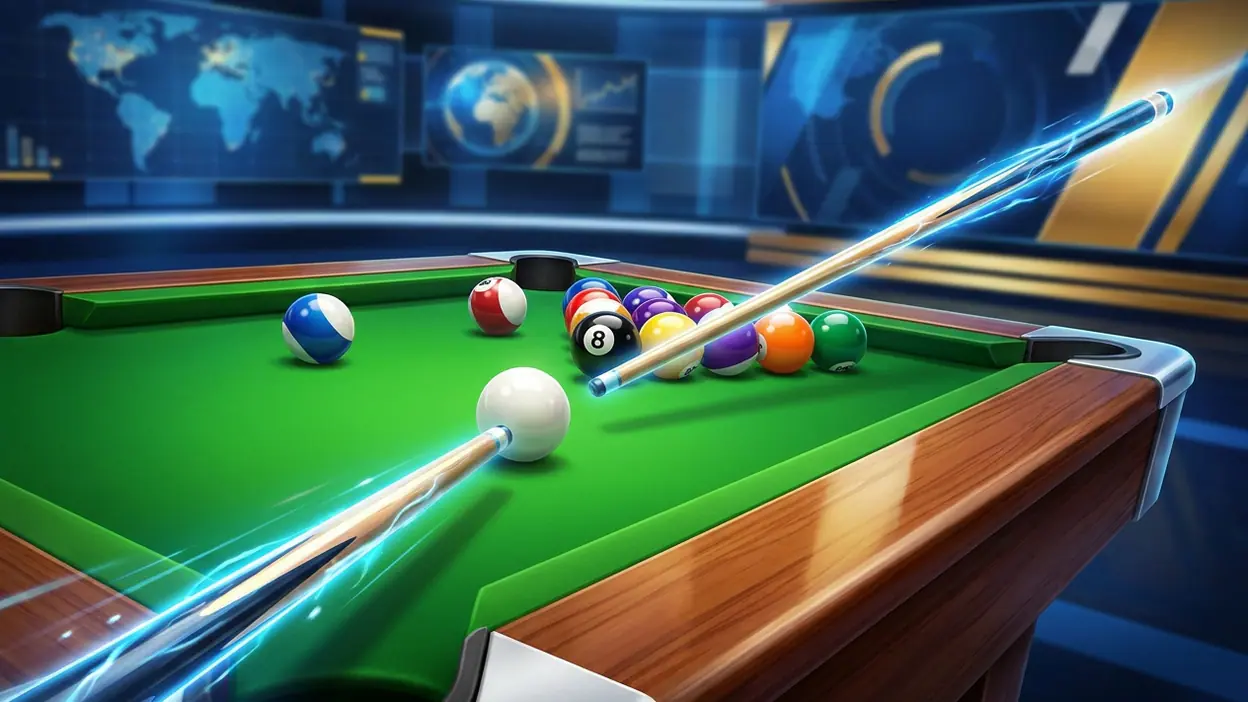
A pool shot is a tiny argument with physics: aim here, add a little spin, trust the line, and hope the cue ball behaves. 8 Ball Pool makes that argument feel unusually legible on a phone. Its best design decision is to keep the table at the center of attention, translating a real-world game into a short, tactile contest without burying the shot beneath rules or spectacle. The trade-off is that the surrounding menus can feel busier and less forgiving than the clean green felt they lead to.
The table is the interface
That contrast defines the experience. During a match, the game communicates through position, angle, power, and consequence; outside it, currencies, events, and room choices compete for the same attention. The design succeeds when it lets a player read the table and act with confidence. It falters when the path back to that clarity is cluttered or when a mistake costs more than the interface helped you understand.

8 Ball Pool
Miniclip.com4.8Sports
See More Apps Related to 8 Ball Pool


First use: learn by taking a shot
The opening is direct in the most useful way: it gets you toward a table and lets the basic action explain itself. The cue, the aiming guide, and the power control form a compact visual sentence. Move the aim and the projected path shifts; draw power and the coming hit feels more forceful. A new player does not need to absorb a long rules lecture before discovering what the game asks of them.
That first shot also establishes the game’s scale. The table occupies most of the screen, so the target is obvious and the player’s hand movement has a visible purpose. The interface treats pool as a spatial problem, not a menu of abilities. Even without knowing every rule, a newcomer can see which ball is being lined up and where the cue ball might travel. That fast orientation is a quiet strength: it makes the first match feel like an invitation rather than an exam.
But the tutorial’s confidence has a limit. Basic aiming is easy to grasp; the finer distinctions between force, spin, and cue-ball position take practice and experimentation. That is appropriate for a game with a skill ceiling, though the learning curve can feel less deliberately guided once the first few shots are over. The game shows enough to get you moving, then expects the table to become your teacher.
Navigation and hierarchy: the calm center, the noisy lobby
Inside a match, hierarchy is mostly excellent. The table commands the eye, while the controls sit near the edges where they can be reached without obscuring the important geometry. The aiming line is the key piece of information, and it receives the visual priority it deserves. As the cue angle changes, the line updates immediately, creating a direct link between hand movement and projected outcome. There is little doubt about what you are adjusting.
The lobby has a different problem. It has to serve players who want a quick game as well as regulars checking events, rewards, rooms, and progression. Those purposes can crowd one another. The central invitation to play remains understandable, but secondary panels and promotional surfaces make the screen feel more like a busy venue than a clean launch point. I found the difference noticeable: the table has one clear job, while the lobby is trying to be a shop window, a scoreboard, and a social hub at once.
Worth Reading Next

Facebook Is Useful Again for the Small Logistics of Daily Life
Ludo King Keeps Its Simple Appeal as Phone Updates Change the Routine

Google Photos, Used Well: Find, Protect, and Manage Your Photos

Free Fire’s Ninth Anniversary Makes Familiar Matches Matter Again

Ceiling Fan Balancer Makes a Common Fix More Methodical
More From Our News Desk
View All

That makes navigation less about getting lost than about sorting priorities. The route to a match is not difficult to understand, yet the visual emphasis around it can make a quick session feel less immediate than it should. Compared with the focused presentation of a single-purpose casual game, 8 Ball Pool has more to organize; the challenge is not simply adding destinations, but making the next sensible action unmistakable.
Feedback: every ball tells a story
The strongest feedback arrives at the instant of impact. Balls roll, collide, and settle in ways that make the result easy to read, while the table’s geometry turns a successful shot into a small, satisfying proof of judgment. A clean pot is not just a number changing; it is the visible end of a plan. When the cue ball drifts into a bad position, the consequence is equally clear. The game rarely needs to explain why the next shot has become awkward because the table shows you.
The rhythm depends on that clarity. Aim, adjust, commit, watch the balls travel, then reassess. Each turn has a short pause for thought followed by a burst of motion, and that alternation gives even a brief match a satisfying pulse. A strong opponent can make the quiet parts tense: while the other player lines up, you are already calculating what their shot might leave behind. The interface does not need elaborate animation to create drama; the empty space between balls does the work.
Feedback is less graceful when a result comes from a small adjustment that was hard to judge on a touchscreen. A tiny change in angle or force can have a large effect, especially when a player is still learning. The immediate result is visible, but the game does not always make the cause feel equally legible. That gap is where useful practice becomes frustration: you know the shot went wrong, but may not know whether your aim, power, or spin was responsible.
Friction and recovery: mistakes stay on the table
Pool is naturally unforgiving, and the game is right not to erase every bad decision. A missed pot or poor cue-ball position should matter; otherwise, the match loses its strategic weight. The design question is whether the player can recover from a control mistake. If a hurried touch nudges the aim away from the intended line, the table can turn that small slip into a lost turn. The pressure is part of the sport, but touch controls make precision and accidental input difficult to separate.
In practice, recovery is mostly mental: take a breath, inspect the new layout, and look for a safer route. That is satisfying when the player understands the situation, but less so when the interface has not helped explain what changed. Clearer support around shot setup and more forgiving handling of small adjustments would preserve the stakes while making the controls feel less brittle. The game should punish a risky decision, not leave a new player wondering whether the risk was intentional.
There is also a broader kind of friction between match play and the systems surrounding it. A player who loses wants a quick rematch or a clear next step; a player who wins may want to carry that momentum into another table. Any extra browsing between those impulses cools the game’s rhythm. The core loop is strongest when a result leads cleanly into another decision, not when the player has to reorient among several competing destinations.
Consistency and small-screen judgment
The game’s most coherent visual language is the one built around the table. Aiming lines, ball positions, and controls all support the same idea: understand the layout, then shape a shot. That consistency matters on a small screen, where the player has little room for decorative explanation. The game generally reserves the central area for play and places controls around it, an effective choice that keeps the board readable without making the interface feel detached from the action.
Small-screen design also makes the touch target problem unavoidable. A pool shot asks for fine control, but fingers are broad and screens are not. The aiming and power gestures do a good job of making those adjustments possible, though they cannot remove the basic tension between precision and reach. The visual guide is therefore crucial: it gives the player a way to judge an input before committing. When the line is clear, the phone feels like a workable cue; when the line is subtle or the adjustment too small to distinguish, the hardware’s limits come forward.
Outside the match, consistency is less persuasive. The lobby’s multiple priorities do not always feel as tightly organized as the playing surface, so the transition from focused table to layered menus can seem like a change of product. That unevenness is not fatal, but it affects the overall polish. A single visual hierarchy carried from lobby to match would make the game feel more intentional without stripping away its range of activities.
What experienced players notice
Once the basic aim is second nature, the interface stops being a set of controls and becomes a tool for planning. Experienced players read not only the target ball but the cue ball’s likely route afterward. They look for position, safe options, and the way one successful shot can open or close the table. The game supports this deeper reading because the table stays visible and the projected line responds quickly enough to encourage repeated adjustment.
That is where replay value comes from. The board changes every turn, the opponent introduces another mind to account for, and a shot that looked simple can become a positional puzzle. Matches are short enough to invite another attempt, yet each one can hinge on a decision that players will replay in their heads afterward. The familiar rules are not a limitation here; they are a compact framework for showing skill.
For regulars, the main design weakness is not a lack of depth but the uneven relationship between precision and certainty. The game gives room to make subtle choices, but the player’s understanding of those choices depends on reading small visual changes and controlling them with a thumb. A stronger sense of input confidence would make the skill ceiling feel earned rather than occasionally obscured by the screen.
The strongest choice, and the verdict
The strongest design choice is the table-first interaction: the game makes its central activity visible, responsive, and consequential. Every turn gives the player a clear question, and the answer arrives through movement rather than a pile of status indicators. That decision gives 8 Ball Pool its identity as a mobile game. It is not simply pool rules squeezed onto a screen; it is a steady rhythm of reading, aiming, committing, and living with the result.
The surrounding experience could be more disciplined. The lobby asks for attention in too many directions, while fine touch adjustments can make mistakes difficult to diagnose. Those weaknesses matter because they interrupt the simple promise of the core loop: get to a table, understand the shot, and play again. Still, when the balls are moving, the design is remarkably sure of itself. Clarity at the moment of choice is the quality that keeps the game compelling, and it is also the standard its menus and controls should meet more consistently.
My verdict is that 8 Ball Pool earns its staying power through a strong, readable interaction rather than novelty. Its best matches turn a few inches of screen into a convincing contest of patience and judgment, with enough room for beginners to learn and regulars to plan several shots ahead. The interface around that contest needs tidier priorities and more reassuring touch recovery, but the table remains an excellent place to spend a few minutes, then another match.