Ceiling Fan Balancer Makes a Common Fix More Methodical

A ceiling fan that wobbles is hard to ignore: the faint ticking, the shifting shadow, the uneasy sense that the whole fixture is working loose. Ceiling Fan Balancer is built for this very ordinary problem, and its appeal is precisely that it does not inflate it into something grander. It gives a household chore a clearer process. That makes it a useful, unusually focused app, though not a substitute for basic safety or sound mechanical judgment.
Home apps often try to become the control center for an entire house. This one has a narrower ambition: help make a fan run more smoothly. In that modest lane, it earns an Editor’s Choice nod for treating a common annoyance as a task worth explaining, rather than dressing it up with unnecessary features. Its best quality is not spectacle but direction: it encourages users to observe the wobble, approach the correction methodically, and check whether the result has actually improved.

Ceiling Fan Balancer
pseudomath LLC4.4House & Home
See More Apps Related to Ceiling Fan Balancer


A small job, handled with care
The premise is immediately legible. A ceiling fan is out of balance; the user wants to reduce the movement and noise without guessing at every step. A helpful companion should make the work feel manageable, keep attention on the fan itself, and discourage the kind of random fiddling that wastes time. That practical frame is what gives this app its value.
The experience feels most persuasive when it turns a vague complaint into a sequence of observations. Is the motion slight or pronounced? Does the fan wobble at every speed, or only at one setting? Is there an obvious issue with a blade, its attachment, or the fixture? These are the kinds of questions that matter before anyone reaches for a balancing weight. Even where the app cannot diagnose a physical fault with certainty, a structured check is better than an unplanned one.
That focus also makes it easier to recommend selectively. This is not a home-maintenance encyclopedia, and it should not be judged as one. It is for the person standing under a fan, wanting a sensible starting point and a way to think through the correction. A tool with such a specific remit has to make each part of the job count.
What feels immediately exceptional
The strongest impression is how grounded the task remains. There is no need to turn balancing a fan into a lifestyle project. The useful result is simple: a steadier fan, less distracting movement, and more confidence that the obvious checks have been made. The app’s narrow scope keeps that outcome in view rather than scattering attention across unrelated household features.
There is also a quiet advantage to having a guide at hand during a repair. Small home fixes can become frustrating because people lose track of what they have already tried. A measured approach helps users change one thing at a time and notice what follows. That is not glamorous, but it is exactly the sort of discipline that can prevent a simple adjustment from becoming a cycle of trial and error.
Worth Reading Next

Gmail Makes Being Reachable Feel Like the Default

Photomath’s Quiet Community Runs on Shared Explanations

Google Messages Gets the Everyday Basics Right

Art Puzzle’s Gentle Loop Needs Clearer Recovery

Switching to Uber Means Rethinking When You Travel
More From Our News Desk
View All


The real win is a more deliberate repair, not a magic diagnosis. That distinction matters. An app can help a user inspect and balance a fan, but it cannot reliably identify every bent component, loose ceiling mount, or electrical problem from a distance. Its guidance is most valuable when it helps someone decide what to check next, not when it invites them to treat a potentially serious fault as solved.
How it earns attention beyond the first wobble
Most people will not open a fan-balancing app every day, and that is no failure. Household utilities are often judged by whether they are useful at the moment they are needed, not by how well they manufacture a daily habit. In that sense, the app’s stickiness is episodic: a fan starts to shake, the guide becomes relevant, and the user returns if the adjustment needs another pass.
Its longer-term usefulness depends on whether it teaches a repeatable way of approaching the problem. Once a person understands to inspect before adjusting, to avoid changing several variables at once, and to reassess the fan after each attempt, that method can carry over to another room or another fixture. The app can become a modest reference rather than a one-use novelty.
That is a meaningful kind of staying power for a household tool. It does not need streaks, alerts, or a feed. If it leaves users better prepared to deal with a recurring rattle or wobble, it has done more than occupy a place on the home screen. Still, its lasting value will depend on clear, trustworthy instructions. In a practical app, accuracy and restraint matter more than a steady stream of new content.
The best moments happen beside the fan
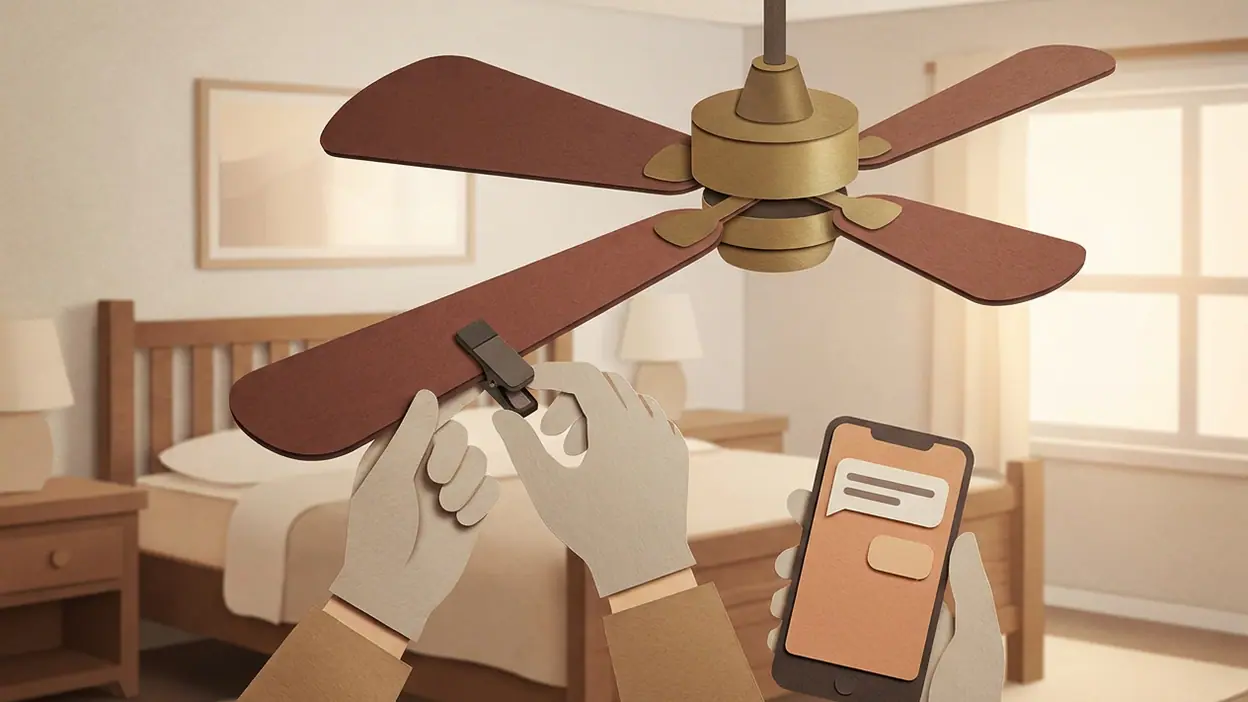
The most convincing use case is a familiar one: a fan in a bedroom or living room begins to wobble, usually just enough to be annoying but not enough to make the next step obvious. The user switches it off, looks over the blades and their fittings, then follows a more orderly path toward finding the imbalance. The app is useful as a companion to that hands-on inspection, not as a replacement for it.
There is a satisfying before-and-after built into the job. A fan that once drew the eye with every rotation can become quiet background equipment again. The improvement may be subtle, but comfort at home often rests on exactly those small corrections: a persistent sound removed, a fixture that feels more settled, a room that no longer keeps reminding you something is wrong.
It is also the kind of task where patience pays off. A quick fix that does not change the wobble can leave a user more annoyed than before. The app’s promise is strongest when it encourages a calm process: make a check, make an adjustment only when appropriate, then observe the result. That rhythm is less exciting than a one-tap solution, but it suits the actual mechanics of the problem.
A quieter edge over louder utilities
Plenty of mobile apps compete for attention with elaborate interfaces, broad feature lists, and an insistence that every small activity needs to become a hobby. Ceiling-fan maintenance does not. Compared with unrelated apps such as Virtual Hair Style Changer or Bus Escape: Traffic Jam, this is a tool for a real household interruption, not a diversion. That difference is the point: its value comes from being relevant at the right moment.
Its restraint gives it an edge, but only if the guidance remains practical and easy to follow. A home-repair app should earn trust by saying what a user can reasonably check, what requires care, and when to stop. The best version of this experience would make safety boundaries as clear as balancing steps, keeping users from confusing a blade adjustment with a fix for a loose mount or another structural issue.
That is where a focused app can feel more premium than a busier one. Not because it has more to tap, but because it respects the user’s time and the limits of its role. Useful restraint is a genuine editorial virtue here: the app does not need to pretend it can repair the fan for you. It needs to make the next sensible action easier to see.
Where it still needs polish
A narrow purpose leaves little room for fuzzy instructions. If a user cannot quickly understand the recommended sequence, the app risks adding friction to a job that should already be straightforward. Steps should be concrete, ordered, and easy to revisit while working, especially for someone who has never balanced a ceiling fan before.
It should also make the limits of a balancing guide explicit. Persistent wobble can point to more than a weight issue, and a ceiling fixture is not the place to encourage confident guesswork. Users need a clear reminder to switch the fan off before inspection, avoid unsafe access, and seek qualified help if the mounting or wiring appears damaged or loose. This is not alarmism; it is basic responsibility for a home-maintenance tool.
Finally, the app’s focused nature makes its interface and explanations carry extra weight. There is no broad library to distract from a weak instruction or compensate for a confusing moment. A polished experience should help users track what they have tried and understand when the result is good enough—or when the fan needs professional attention. Better signposting would turn a useful concept into a more dependable household companion.
Who should care, and why now
This app is best suited to homeowners and renters who want to understand a common fan wobble before deciding what to do about it. It will appeal to practical people who prefer a guided checklist to a string of hurried searches, and to anyone who likes small repairs but wants to approach them with a little more order. It is less suitable for someone expecting remote fault detection or a guaranteed repair in seconds.
It also arrives at a sensible moment for home utilities. People increasingly expect a phone to help with everyday problems, but the most valuable tools are often the ones that stay close to a real task. A ceiling fan is mundane, visible, and used for hours at a time; when it goes wrong, the irritation accumulates. Making a modest repair easier to understand is a better use of mobile software than wrapping ordinary chores in needless novelty.
For a basic household problem, that clarity matters. A steady fan can make a room feel more comfortable, and a careful approach can spare users from poking at the fixture without a plan. The app does not need to promise a transformed home. It needs to help make one small part of it work properly again.
The editor’s verdict
Ceiling Fan Balancer deserves its spotlight because it gives a practical, often irritating household problem a focused and approachable guide. Its strongest qualities are its clear purpose and the way it encourages method over guesswork. Its limitations are equally important: it cannot inspect the hardware for you, and safety-conscious instructions need to be unmistakable.
I would recommend it to anyone facing a mild fan wobble who wants a more thoughtful starting point than random adjustments. Treat it as a guide, keep the fan switched off while inspecting it, and call in a professional when the problem points beyond a simple balance issue. On those terms, this is a small but worthwhile home utility: not flashy, not universal, just attentive to a real nuisance and useful in the moment that counts.