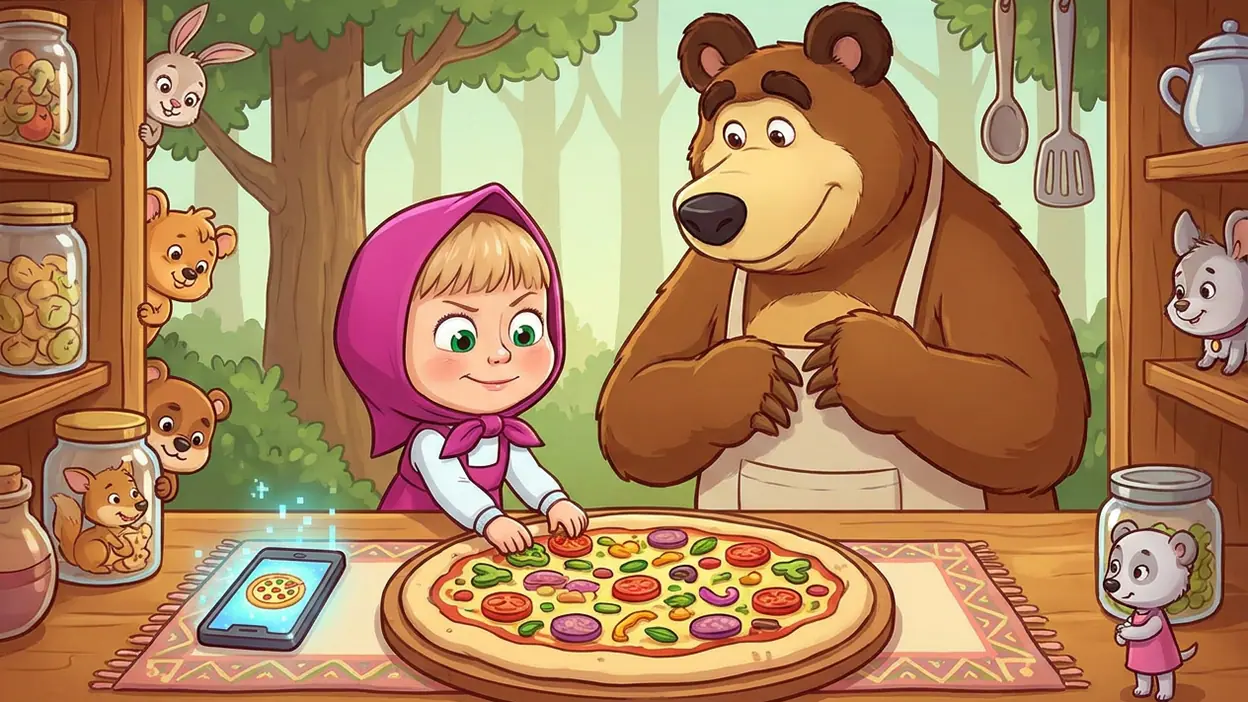
Masha and the Bear Pizza Maker Makes a Quick, Colorful Hit—But Can It Last?

There is a particular kind of mobile hit that does not need a leaderboard, a sprawling map, or a dramatic comeback story. It needs a recognizable face, a simple task, and a satisfying little payoff. Masha and the Bear Pizza Maker has all three: Masha takes charge of a pizza kitchen, ingredients turn into colorful combinations, and each order becomes a miniature performance. That is enough to make the game easy to pass around, especially among younger players and families. It is not, by itself, enough to guarantee staying power. The trend here is less about a deep game suddenly taking over and more about a familiar cartoon finding a neat new way to occupy a few minutes.
Why a pizza kitchen is suddenly an easy recommendation
The game’s appeal begins before the first topping hits the dough. Masha and the Bear is already a widely recognized children’s property, and its central dynamic is instantly legible: Masha is energetic and impulsive; the Bear is the calmer presence nearby. A pizza-making game gives that relationship a practical setting. Instead of asking newcomers to learn a fictional universe, it invites them into a task they already understand. Make a pizza, choose what goes on it, and see how the order turns out.

Masha and the Bear Pizza Maker
DEVGAME KIDS games4.6Role Playing
See More Apps Related to Masha and the Bear Pizza Maker


That clarity matters in a crowded mobile feed. Many casual games ask for a minute of onboarding before their main activity makes sense. Here, the premise does most of the work. Parents can identify the tone, children can recognize the characters, and someone seeing a short clip can understand the appeal without an explanation. The idea travels well because the entry point is not a complicated mechanic but a familiar domestic ritual, brightened up for play.
There is also a timely fit with the broader appetite for low-pressure, hands-on games. Players have plenty of fashion makeovers, salon makeovers, and simulation titles competing for the same spare moments. Super Stylist and Hair Dye turn visual customization into their central reward; Monster High Beauty Salon adds a more character-led makeover setting. Pizza Maker has a similarly accessible creative hook, but its kitchen routine gives each session a beginning and an end. It feels like making something rather than maintaining a world.
What players react to
The first pleasure is physical in the familiar touchscreen sense. Preparing a pizza turns a set of ordinary actions into a compact sequence: handle the base, add ingredients, and complete an order. The ingredients provide the color and personality. A plain circle becomes a busy surface, and every choice is visible at a glance. There is little distance between intention and result, which is exactly what a children’s creative game needs. A player does not have to understand a score system to feel that a pizza is theirs.
Masha supplies the expressive center. Her presence gives the activity a bit of mischief; it is not just a cooking worksheet with food icons. The game’s appeal depends on that recognizable character energy more than on culinary realism. This is a cartoon kitchen, not a cooking course, and the looseness is part of the invitation. A child can experiment without worrying about whether a topping combination makes sense in a real restaurant.
The strongest reaction is likely to come from younger players who enjoy making choices and showing the result to someone nearby. Pizza is a useful subject for that because the finished creation reads immediately. There is no need to explain what the player has accomplished: point to the toppings, name a favorite, and ask for another. That tiny social exchange is a bigger part of the game’s appeal than any abstract reward counter.
Worth Reading Next

Telegram Is More Than a Messenger, and That Comes With Trade-Offs
FPS Shooting Gun Games Offline Has the Right Idea, but Old-School Gunplay
More From Our News Desk
View All


Still, the same simplicity puts a ceiling on the experience. The actions are easy to understand, but they do not necessarily grow more demanding as a player improves. Adults looking for a strategic cooking sim, an elaborate role-playing game, or a simulation with layered systems should adjust expectations. The Role Playing label does not make this a story-heavy adventure. The kitchen activity is the main event, and its pleasures are deliberately small.
The loop: quick payoff, limited escalation
Pizza Maker’s retention hook is the natural repeatability of its task. An order sets a goal; preparing the pizza gives the player a short run of tactile decisions; the completed dish supplies the reward. Then the next order can begin. That rhythm makes the game easy to revisit in brief bursts, whether a child has a few minutes before dinner or wants to show a new creation to a parent.
This is a gentle loop, not a pressure loop. The game does not need to make every session feel urgent to be useful. There is something reassuring about a task that can be started and finished without a long commitment. For a family game, that can be a real strength: adults can step in, watch a pizza come together, and move on without managing a complicated progression system.
The limitation is that repetition only feels rewarding while the choices remain fresh. If orders and available combinations stop surprising the player, the loop can settle into routine. A strong long-term game would keep finding ways to make a familiar kitchen feel different, through new ingredients, customer requests, playful complications, or clear milestones. Without enough variation, another pizza is simply another pizza. The available premise suggests easy replay, but the durability depends on whether the game keeps expanding that small creative space.
That is why the game’s best retention may be household retention rather than the kind measured by daily streaks. A young player might return because Masha is a favorite, because the game is easy to open, or because a sibling wants a turn. Those are genuine reasons to play, even if they do not amount to a deep progression system. The distinction matters: a game can be a reliable short-session companion without becoming a long-term obsession.
Built for a quick clip, not a complicated stream
Pizza is naturally shareable. A finished creation is colorful, easy to frame, and understandable even when viewed without context. A short recording of the preparation can show the whole arc, from empty base to completed order, in a few seconds. That makes the game well suited to family sharing and small social posts. Its strongest social currency is not competition; it is the question, “What did you make?”
But there is a difference between being easy to clip and being built for a streaming audience. Pizza Maker does not appear to have the tension, surprise, or high-skill ceiling that can sustain a long creator session. A streamer can make the activity charming through commentary or play it with a child, but the game itself is unlikely to generate endless dramatic turns. Its shareability is intimate and visual, not spectacle-driven.
That distinction helps explain where the chatter sits. The game’s momentum is more likely to move through searches for a familiar children’s title, app-store discovery, parent recommendations, and short demonstrations than through competitive gaming communities. It belongs closer to the family-play conversation than to the arena of games that trend because players are arguing over balance, speed-running levels, or discovering hidden strategies. The social spread is real in a modest way: recognition lowers the barrier, and the finished pizza makes the activity easy to show.
Compared with Bus Simulator - Bus Games 3D, which sells the fantasy of operating a vehicle through a world, Pizza Maker has a far smaller stage. It does not need to compete on scale. Its advantage is that the important action is always close to the player’s hands. That focus makes it approachable, though it also means there is less material for a community to dissect or keep revisiting for new surprises.
What newcomers should expect
New players should expect a cartoon cooking activity, not a demanding role-playing campaign. The fun is in making choices, seeing the result, and moving through another order. Masha gives the scene its personality, while the pizza provides a concrete object to work on. If you come in wanting a relaxed game for a child who likes the show and enjoys pretend cooking, the premise is a good fit.
Go in expecting a deep culinary sandbox, and the simplicity may feel thin. The game is not trying to teach kitchen technique or reproduce restaurant management. Its activity is closer to a digital playset: a contained space where a familiar character can guide a child through a sequence of playful actions. That is a sensible design target, but it should be described honestly.
Families should also think about the usual mobile-game basics before handing over a device: age suitability, advertising, purchases, and whether the game works as expected on their particular device. Those details can change over time and by platform, so it is worth checking the current store listing and settings rather than relying on an old recommendation. The game’s child-friendly theme is a useful signal of tone, not a substitute for checking how the app is presented today.
For players arriving from makeover games, the contrast is refreshing. There is no need to build a look around a fashion brief or keep tweaking a character’s appearance. The creative choices have a more immediate, edible payoff. That can make the game feel less demanding and more communal, though players who love extensive customization may find the kitchen’s range narrower.
How durable is the trend?
The trend has a stable foundation: a known children’s property and a simple activity that can be understood without instruction. Those ingredients do not expire overnight. Even after a burst of attention fades, the game can remain useful as a casual family download, particularly for players already attached to Masha and the Bear. Familiarity gives it a longer shelf life than an anonymous one-mechanic game would have.
Its larger cultural moment is less certain. The game does not appear to have the ingredients of a runaway social phenomenon: no obvious competitive scene, no elaborate user-made challenges, and no unusually deep system for players to master together. The attention it earns is likely to be tied to the reach of the brand and the appeal of the activity, rather than to a fast-moving community inventing new ways to play.
What could cool it down is repetition. If the toppings, orders, and little moments of interaction do not offer enough variety, the initial charm will carry a child through a handful of sessions and then lose its pull. Another risk is expectation mismatch: the role-playing label can suggest more progression than a straightforward pizza-making game provides. Clear expectations protect the game from an unfair comparison with much larger simulations, but they cannot manufacture depth where the core loop stays narrow.
There is also a practical ceiling on social spread. A player can share a finished pizza, but the image will not change the game itself. Clips can introduce the premise, yet viewers may understand the whole attraction quickly. That is excellent for discovery and less helpful for sustained online conversation. The game’s best future is probably not endless virality; it is becoming a dependable, low-friction option for a specific audience.
My read is that Masha and the Bear Pizza Maker is a small, well-targeted family game with a naturally shareable premise, not a breakout hit with a deep retention engine. Its strongest moment comes when the familiar characters, tactile preparation, and visible finished pizza click together in one short session. That is a satisfying little package, especially for younger fans. The trend can last as long as the game keeps the kitchen lively and its audience knows what it is getting. If you want a quick creative activity with Masha, it makes sense; if you want layers of progression or a social game built to dominate feeds, the buzz is likely to outlast the play loop.