Carrom Pool Rewards Control, Not Power: Build a Better Shot Routine

Carrom Pool: Disc Game looks simple until a clean shot leaves your striker stranded and your opponent clears the board. Its best trick is how quickly it turns a familiar tabletop game into a test of angles, restraint, and risk. Most players treat each turn as a flick-and-hope; the better way to play is to build a repeatable routine around aim, striker placement, and the shape of the next shot. That shift makes the game more satisfying, and it is the difference between collecting occasional wins and understanding why they happen.
Why most people barely use it well
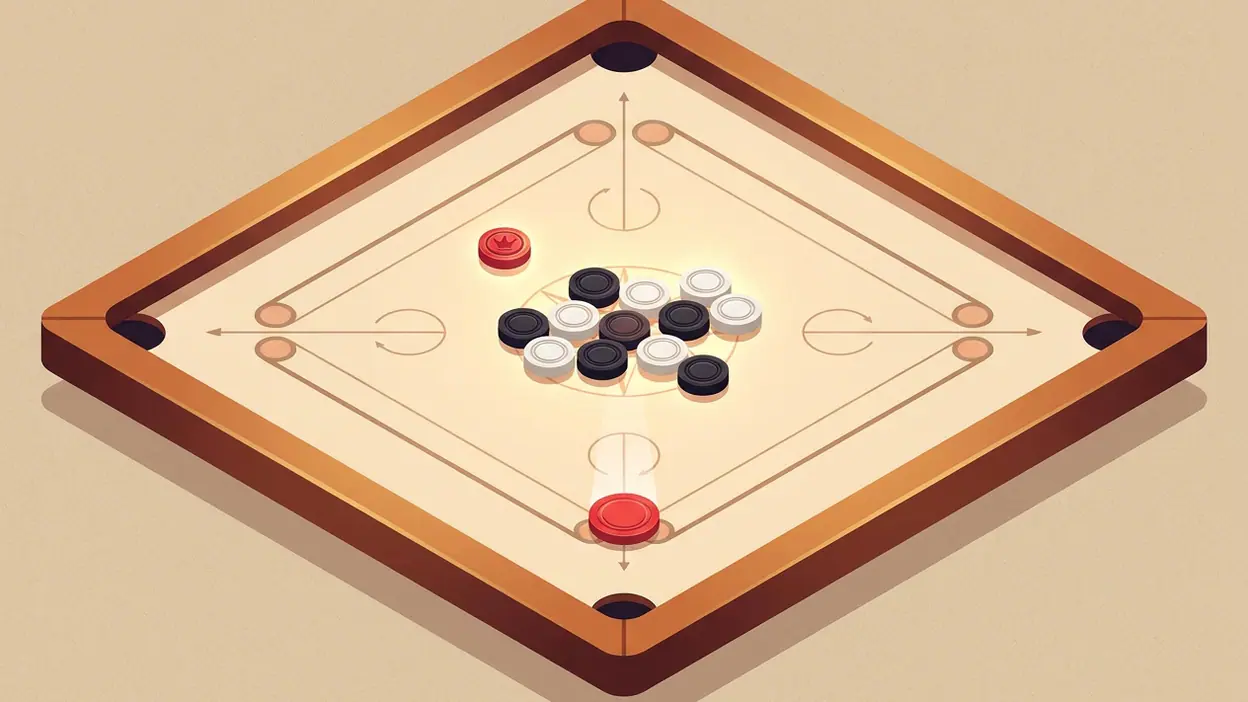
The opening minutes invite impatience. You drag the striker, line up a coin, and pull back as if more force must mean a better shot. But carrom is less about power than about contact: where the striker meets a coin, what that coin hits next, and where both pieces finish. A powerful shot can pocket a target and still leave the board easier for the other player.

Carrom Pool: Disc Game
Miniclip.com4.4Sports
See More Apps Related to Carrom Pool: Disc Game


That matters because the game’s loop is compact. A match can be over before a player has thought through even one full turn. The board clears, rewards arrive, and the next round is ready. This brisk rhythm makes Carrom Pool easy to revisit, but it also encourages autopilot. The hidden skill is slowing down for a few seconds without making each turn feel like homework.
Start by treating every shot as two decisions: which coin is the priority, and where should the striker finish? If the first answer is obvious but the second is not, look for a safer line. A shot that leaves the striker near a useful position may be worth more than a dramatic attempt at a difficult pocket.
The fastest immediate win
Before releasing the striker, trace the line beyond the coin. Imagine the coin continuing toward the pocket, then consider where the striker will go after impact. This quick check catches a common mistake: aiming at the target without accounting for the angle of the collision. The coin may reach the pocket, while the striker knocks a second coin into a bad position or leaves itself trapped against the edge.
Use the guide line as a starting point, not a promise. It helps you read the initial direction, but the final result depends on the contact point and force. Make small adjustments rather than sweeping the striker across the baseline. A short change in position can open a cleaner angle, while excessive movement makes it harder to remember what you were trying to line up.
For your next few matches, deliberately favor a controlled shot over a maximum-power one. Pull back only as far as the board requires. Light, accurate contact is particularly useful when coins sit close to a pocket or when a miss would leave an easy reply. This single habit often improves results faster than chasing a new striker or cosmetic reward.
Worth Reading Next

Telegram Is More Than a Messenger, and That Comes With Trade-Offs
FPS Shooting Gun Games Offline Has the Right Idea, but Old-School Gunplay
More From Our News Desk
View All


Settings worth changing first
Look through the settings before settling into a long run. The exact options can vary by version and device, so avoid assuming every control is present in the same place. Check sound and music levels first: lowering music while keeping effects audible can make the small cues of a match easier to notice without turning a casual session into a noisy one. If you play in public, silence the game rather than relying on low volume.
Next, check for control or aiming preferences and choose the arrangement that feels predictable on your screen. Finger position can obscure the target on a smaller phone, so test whether you can place the striker and pull back without covering the line you need to see. If the game provides an option that changes aiming behavior or sensitivity, try it in a low-stakes match and keep the version that lets you make fine corrections reliably.
Also review notifications and connection-related prompts at the operating-system level. A banner arriving during a timed turn is more disruptive than any in-game setting. Disable nonessential interruptions for a focused session, and use a stable connection for competitive play. These are modest adjustments, but they protect the part of the game that depends most on attention: the final few seconds before a shot.
Build a better match workflow
A useful routine begins before the first shot. Take a quick inventory of the board: identify the easiest pocket, note any coin blocking a direct path, and decide whether your opening should clear space or protect a useful angle. You do not need a formal plan for every coin. One priority is enough to stop you from chasing whichever target happens to look nearest.
During a turn, use the same sequence each time: choose the target, position the striker, inspect the guide, set the force, and check the likely rebound. Then shoot. Repeating that sequence reduces rushed releases and makes mistakes easier to diagnose. If a shot misses, ask whether the angle or the force was wrong; changing both at once makes it difficult to learn.
After a match, take a breath before starting another. Notice whether you lost control of the striker, missed a straightforward pocket, or gave away an easy setup. This is not an invitation to study every round. One useful observation per match is plenty. The game’s short sessions make that kind of feedback practical, and a small correction can carry directly into the next board.
Shortcuts that save time
The most useful shortcut is not a hidden button. It is learning to spot low-risk shots quickly. If a coin has a clear path and the striker can approach it without disturbing a cluster, take the straightforward line instead of testing a clever rebound. Save experimentation for turns where the direct shot is blocked or where a safer placement will set up a better next turn.
Keep your aiming movements small. When the striker is already close to the correct position, nudge it rather than dragging it from one end of the baseline to the other. That preserves your reference point and makes the guide easier to read. Likewise, do not repeatedly pull back and release just to judge the power. Decide on the shot, make one deliberate adjustment, and commit.
If you are playing a series of quick matches, keep cosmetic browsing and reward checks for the gaps between rounds. The game’s progression can make every pause feel like a reason to tap through another screen, but mid-session menu-hopping breaks your focus. Collect what you want, set up your preferred equipment, then give the board your attention.
Feature combinations that matter
Carrom Pool’s appeal comes from the combination of direct touch controls, short turns, and a progression layer that gives repeated matches a sense of direction. None of those parts is especially complicated alone. Together, they make it easy to practice a specific skill in a low-cost way: play a few rounds, focus on soft contact, and see whether your placement improves.
Coins and other rewards can support that routine by giving you a reason to return, but they are not a substitute for better decisions. Cosmetics and equipment add personal flavor and progression goals; they do not make a poor angle a good one. Treat unlocks as a bonus for time spent playing, not as proof that your technique has improved.
Modes and match formats can also change what a good decision looks like. A relaxed game is a sensible place to test unfamiliar angles; a competitive match rewards safer choices when the cost of a miss is high. Use the less pressurized setting for experimentation, then bring only the lessons that feel dependable into more serious play. That pairing gives practice a purpose without making every loss feel like wasted time.
Mistakes casual players make
The first is hitting too hard. Maximum force feels decisive, but it can scatter coins, spoil a favorable layout, or leave the striker in an awkward position. The second is aiming only at the pocket. A target that appears reachable may be guarded by another coin, and a glancing collision can send it somewhere you did not intend. Check the path through the board, not just the final destination.
Another common error is changing the aim and force at the same time. If the shot goes wrong, you will not know which adjustment caused it. Alter one variable per attempt where possible. Players also tend to overvalue a difficult pocket simply because it looks impressive. A safe shot that preserves control is often the smarter play, especially when the opponent has an open route if you miss.
Finally, do not confuse a long winning run with mastery or a short losing run with failure. The board can produce awkward positions, and quick matches magnify individual errors. Look for repeatable causes instead: rushed setup, excessive power, or failure to account for the striker’s finish. Those patterns are actionable; a streak by itself is not.
Who benefits most, and when it becomes useful
This is an easy recommendation for players who want a sports game that fits into spare minutes without demanding a long campaign. It suits people who enjoy familiar tabletop rules, head-to-head competition, and a skill curve built from small improvements. It is also a good fit for someone who wants a tactile game to revisit in short bursts rather than a complex simulation to manage for hours.
It becomes genuinely useful as a practice game when you stop treating each round as disposable. A few focused matches can sharpen visual estimation, patience, and the habit of planning one move ahead. That does not make it a substitute for a full physical carrom board, whose weight and real-world friction feel different. But the digital format makes it easy to test angles repeatedly, and its fast pace keeps that practice accessible.
There are limits. Online competition depends on connection quality, and the reward loop can nudge players toward spending more time or money than the core board game requires. Some sessions will also feel repetitive once the novelty of unlocking items fades. If you want a deep solo campaign or a sports game with realistic physical simulation, this is not the right match. Its strength is focused, repeatable competition, not breadth.
Final recommendation
Carrom Pool is at its best when you bring a little discipline to a game designed for quick fun. Change the settings that interrupt or obscure your play, use a consistent shot routine, and judge each turn by both the pocket and the striker’s final position. Those habits make matches feel less random and give the compact loop real depth.
I recommend it to anyone who likes short competitive games and is willing to learn from missed shots rather than simply queueing another round. The board remains simple, but the decisions are not: force, contact, and placement keep creating new problems to solve. Play casually and it is an easy time-filler; play attentively and it becomes a neat little test of control that earns its replay value.