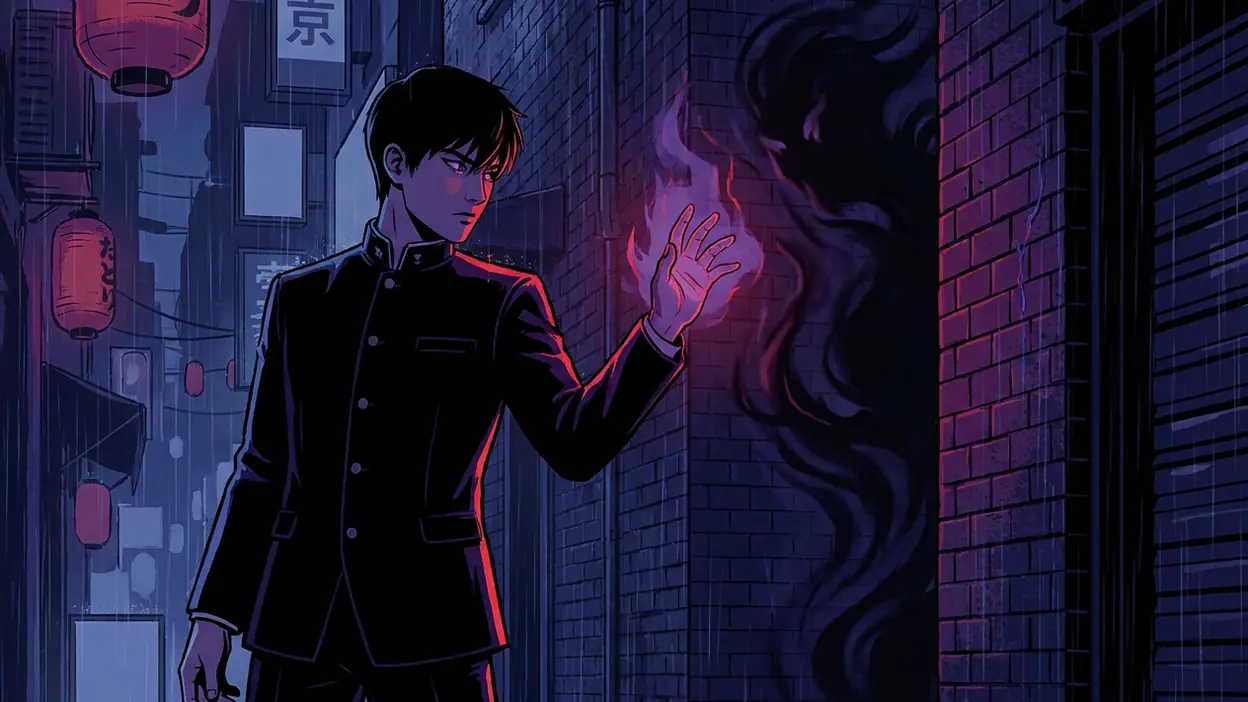
Tokyo Debunker Review: A Supernatural Mystery Worth Following

Some mobile RPGs announce their ambition with a wall of systems. Tokyo Debunker makes a more intriguing first impression: a young woman arrives at a school for the supernatural, meets a cast of beautifully drawn troublemakers, and discovers that a missing cat is only the smallest problem in a city full of strange ones. Its strongest asset is not combat or collection on its own, but atmosphere—the feeling that a stylish school drama might turn, at any moment, into a proper urban legend. That gives the game a clear editorial case: it is a character-led mystery worth following, even when its routine systems ask for more patience than its story deserves.
A supernatural school with a point of view
The setup places the protagonist at Darkwick Academy, where students with supernatural abilities are organized into dorms and dispatched to investigate the uncanny. Tokyo is not simply a backdrop for fantasy decoration. Its contemporary city life—streets, buildings, and the spaces between ordinary routines—makes the supernatural feel like a secret pressed against the familiar. The contrast is the hook: polished young men, ominous incidents, and the suggestion that the city is full of things most people have learned not to notice.

Tokyo Debunker
ZigZaGame Inc.4.6Role Playing
See More Apps Related to Tokyo Debunker


The story leans into the pleasures of a visual novel: expressive character art, brisk exchanges, romantic tension, and mysteries that tease answers rather than explaining everything immediately. Its tone can shift from playful banter to genuine unease without making either feel entirely out of place. That tonal range matters. A dark-academia look alone can become a costume; here, the writing gives the setting enough personality to feel inhabited.
It also knows that players often come for one character and stay for the ensemble. The dorms create natural social clusters, while the central mystery gives the cast a shared reason to collide. Individual scenes are the real currency. A small reaction, a sharp bit of teasing, or a sudden glimpse of vulnerability can make a character feel more memorable than a grand lore reveal. The game is at its best when it trusts those moments.
Why it earns the spotlight
The visual direction is the first obvious distinction. Character portraits are fashion-forward and carefully composed, with strong silhouettes and an elegant, slightly dangerous edge. The presentation understands that a supernatural romance needs more than attractive faces: posture, expression, and timing do much of the storytelling. Scenes feel designed to be read, not merely clicked through. The result is a game with a recognizable identity in a crowded category of collectible mobile RPGs.
Sound and pacing support that identity. The game builds suspense through pauses and scene changes, then lets character dialogue release the pressure. It does not need every chapter to end in a spectacle. A quiet conversation can carry weight if it leaves a question hanging, and Tokyo Debunker often understands that restraint. Its mysteries give the player a reason to come back that is different from simply wanting another unit or a higher number.
That combination—urban fantasy, character drama, and a deliberately ornamental presentation—is the feature worth celebrating. Plenty of games make collection the main event and attach a story as decoration. Here, the story has enough flavor to make the collection feel connected to a world. Even when a new character arrives through familiar gacha conventions, the surrounding fiction gives the reveal a little more context than a bare roster update.
Worth Reading Next

Make FanDuel Sportsbook & Casino Work Better for You

Block Blast! Turns Spare Minutes Into a Test of Self-Control
More From Our News Desk
View All


The loop: investigation, collection, routine
In practice, Tokyo Debunker is built from several rhythms. Story chapters provide the narrative spine. Character collection supplies the long-term chase, with new faces and relationship potential feeding the desire to see more. Between those visits, the game includes lighter management and idle-style progression that can advance while the player is away. This gives it a low-friction daily shape: check in, gather what has accumulated, work through available content, and leave a thread of story waiting for next time.
That structure is convenient, but not every part has equal appeal. The narrative is the reason to care; the routine systems are the scaffolding that keeps the game present between story beats. Progress can feel measured, and the more repetitive tasks do not have the same personality as the dialogue. If you come expecting a tactical RPG built around deep, hands-on battles, you may find the action less compelling than the world surrounding it. The game’s center of gravity is character and atmosphere, not mechanical mastery.
Its replay value follows the same logic. Players who enjoy collecting a favorite cast, following interpersonal arcs, and filling gaps in a supernatural mystery have a natural reason to return. Those who need a new strategic puzzle every session may tire of the repeated cadence. The game works best as a serial: a little progress, a scene or two, and the pleasure of having another chapter to anticipate. It asks for consistency more than marathon sessions.
The moments that make the routine worthwhile
The most satisfying sessions are not necessarily the longest. They are the ones in which a story beat changes how a character reads, or a passing detail turns out to matter. A line delivered with comic confidence can take on a different edge once the game reveals what that character is hiding. The supernatural cases also benefit from familiar urban settings: unease lands harder when it intrudes on a place that feels part of everyday Tokyo rather than a distant fantasy realm.
There is a particular pleasure in opening the game for a quick check and finding that the cast has pulled you back into the plot. The idle layer can make those short visits feel productive, while a character-focused scene gives them an emotional payoff. It is a modest but effective loop: the systems provide a reason to return, and the writing gives that return a human-scale reward. When the game’s two sides line up, even a brief session feels like progress rather than maintenance.
The collection side has a similar high point when a new character feels like an addition to the drama, not just another asset. Strong designs do a lot of work here, but the cast’s interactions are what turn collecting into attachment. The best reward is not simply seeing a rare portrait; it is learning what that person does when the polished presentation slips.
A quieter edge over louder rivals
Tokyo Debunker does not need to win every mobile RPG comparison by being bigger, faster, or more mechanically crowded. Its advantage is focus. Some competitors put constant spectacle first; others make their utility or party-game simplicity the entire appeal. A pregnancy tracker, a group-event tool, a beat maker, and a two-player tic-tac-toe game each solve a different problem, so they are not meaningful substitutes. The useful contrast is within the RPG field: this game is more interested in a distinct mood and a cast you want to spend time with than in presenting an endless parade of features.
That restraint gives it room to be memorable. A stylish setting and character-centered writing can create a stronger attachment than another layer of menus ever could. The game also benefits from its hybrid pace: it can accommodate a short daily visit without pretending that every visit must deliver a major battle. If your ideal mobile RPG is a story you can keep close rather than a demanding tactical session, that is a genuine advantage.
Where the spell thins
The same design choices create clear limitations. The game’s progression can slow, and routine play risks making the wait between narrative payoffs feel longer than it is. Repetition is less noticeable when a mystery is moving; it becomes harder to ignore when the story is temporarily out of reach. A polished presentation cannot fully disguise that underlying mobile-game rhythm.
There is also a balance to strike between the cast’s appeal and the protagonist’s place in the story. Character-led scenes can be a treat, but players who want a more fully authored lead may wish for sharper definition or more meaningful agency. As in many collection-driven games, access to particular characters and content can depend on chance and progression. That makes it worth approaching the game for its ongoing world and ensemble, not with the expectation that every desired story will arrive on demand.
Most importantly, the narrative must keep earning its mysteries. Teasing is an effective tool, but a long-running story needs satisfying answers as well as new questions. The game’s atmosphere creates expectations; the writing has to meet them over time. When it does, the slow build feels deliberate. When it does not, the same pauses can look like stalling.
Who should make room for it
This is an easy recommendation for players drawn to supernatural school stories, stylish character art, and dialogue-heavy mobile games. It suits people who like checking in regularly, collecting a cast, and letting a mystery unfold across sessions. Fans of romance-inflected drama may find plenty to enjoy, but the broader appeal is the ensemble and the uneasy city setting—not romance alone.
It is a less obvious fit for players seeking intricate combat, rapid progression, or a game that rewards one long session with a complete arc. The strongest experience comes from accepting its serial pace. Give it time to establish its characters, and judge it by the quality of those relationships and revelations rather than by how quickly it clears a checklist.
Why it feels timely
Mobile games compete fiercely for attention, but not every player wants another loud demand on it. Tokyo Debunker’s mix of brief routines and lingering story suits the way many people play: in small intervals, with a favorite character or unresolved plot point waiting in the background. Its interest in modern urban folklore also feels well matched to a culture where the city itself can seem mysterious after dark, even before the monsters appear.
The game’s style gives that premise a strong visual signature, while its episodic structure makes the world easy to revisit. This is not a claim that every system is fresh; several are familiar by design. What feels current is the way the game uses those systems to support a mood and a cast rather than letting the mechanics consume the whole identity.
The editor's verdict
Tokyo Debunker is a character-first mobile RPG with a sharper sense of atmosphere than its routine loop sometimes deserves. Its strongest work lives in the writing, the distinctive art, and the tension between school-life banter and supernatural danger. Its weaker stretches are the predictable grind and the waits that can make narrative momentum feel intermittent. I would still recommend it to anyone who wants an elegant, ongoing mystery with a cast worth revisiting. It does not need to be the deepest RPG on a phone; it needs to make you curious about what happens next. More often than not, it does.