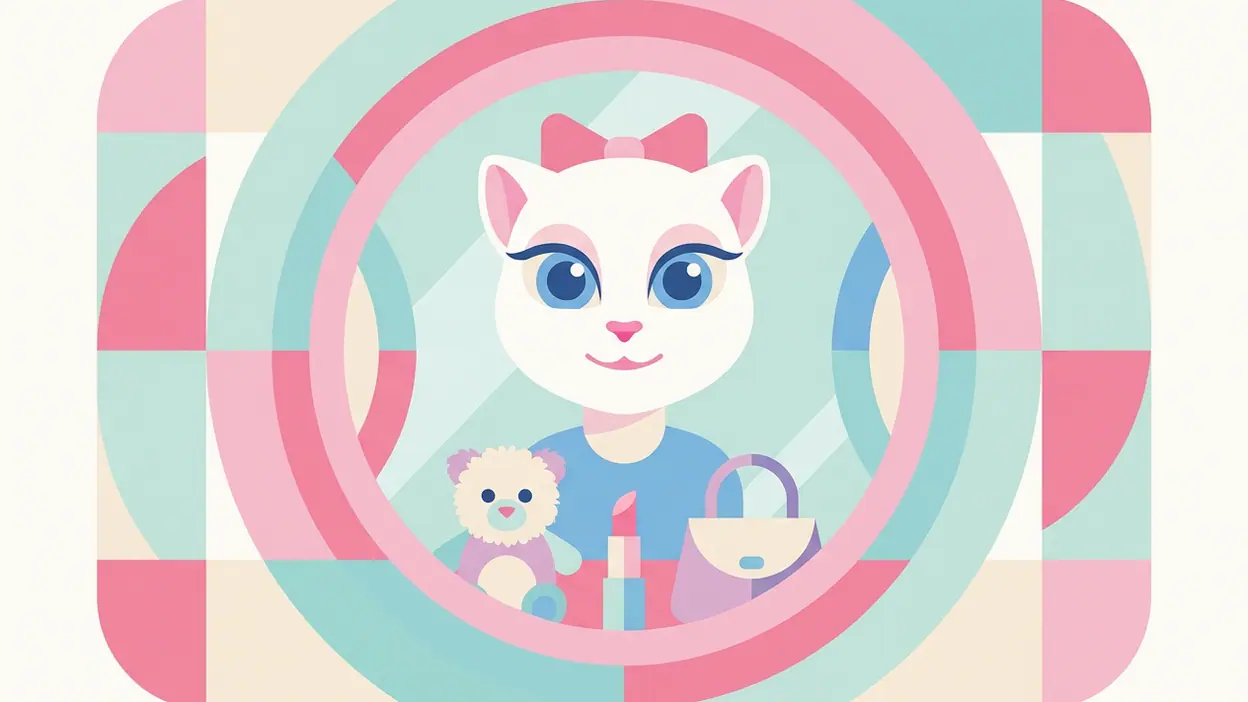
My Talking Angela Turns Pet Care Into a Daily Ritual

My Talking Angela looks like a pet game you can understand in seconds: a white cat, a bright apartment, a few needs to tend. Its real hook is how quickly those simple chores turn into a personal routine. You feed Angela, help her wash up, pick an outfit, and take a detour into a mini-game; each action gives you a small reward and another reason to check in. It is not built around a grand challenge. It succeeds by making care feel playful, expressive, and easy to resume.
Why Angela deserves your attention
There is a familiar comfort to the setup, but Angela is more than a row of meters to keep full. She reacts to your attention with animated expressions, little movements, and the kind of direct eye contact that makes even a routine feeding feel like an exchange. That performance is the center of the game. You are not just collecting resources or clearing a level; you are looking after a character whose mood and appearance respond to what you do.

My Talking Angela
Outfit7 Limited4.2Casual
See More Apps Related to My Talking Angela


The appeal is deliberately broad. A younger player can grasp the care cycle without a tutorial-heavy introduction, while a more casual adult can enjoy dipping in for a few minutes between other tasks. The game keeps its demands low and its feedback immediate. That balance is its strongest design decision: Angela is easy to care for, but there is enough to customize and unlock that the experience does not feel finished after the first visit.
The opening hook: a pet with a point of view
The first minutes establish a cozy rhythm rather than a dramatic premise. Angela needs attention, and the rooms around her invite you to handle one small task at a time. Food, washing, rest, and play give the opening a natural sequence. You learn the basic interactions by doing them, with clear visual cues and cheerful responses instead of a wall of instructions.
That directness matters. The cat is expressive enough to make the simplest action land: a snack feels like a treat, a wash feels like a reset, and play gives the visit a burst of energy. My Talking Angela understands that its main character must carry the experience even when the activity is modest. Her reactions supply warmth that a checklist alone could never provide.
How the core loop feels
The core loop moves between care and play. You notice what Angela needs, handle it, collect the resulting rewards, and spend some of them on a new look or further progress. Then a mini-game offers a change of pace before you return to the apartment. The loop is easy to remember, but it has a satisfying cadence: calm attention, quick action, visible improvement.
Mini-games are important because they stop the care routine from becoming a sequence of taps. They add short, self-contained bursts of concentration and give you something active to do while earning rewards. They are not the sort of deep challenges that demand a long practice session, and that is by design. Each one works as a snack-sized interlude, providing a little variety without pulling the game away from Angela.
Worth Reading Next

Make FanDuel Sportsbook & Casino Work Better for You
Block Blast! Turns Spare Minutes Into a Test of Self-Control
More From Our News Desk
View All


That makes the game feel different from a runner such as Minion Rush, where momentum and obstacle timing dominate the session, or Candy Crush Saga, where the board is the main event. Here, the central pleasure is returning to a character and shaping her everyday world. The mini-games support that relationship rather than replacing it.
Progression and rewards with a personal payoff
Progress is most satisfying when it changes what you can see. Coins and other rewards lead toward outfits, accessories, room details, and new ways to make Angela feel like your version of the character. A fresh look is a small prize, but it is also a visible record of the time you have spent. You are not only filling a progress bar; you are building a style.
That cosmetic focus suits the game's scale. There is no need for a sprawling campaign or a complicated skill tree when the pleasure comes from trying a new outfit and seeing Angela wear it. The rewards create gentle goals: earn enough for the item you want, return later to continue, and keep experimenting. The game is at its best when a reward gives you a reason to personalize rather than just another number to increase.
Some progression is paced through repeated play, and the appetite for new items can outrun what a brief session earns. That can make the loop feel slower if you have a specific look in mind. Still, the steady drip of small rewards is well matched to a game intended for short visits rather than a weekend marathon.
Why sessions are hard to stop
The clever part is how neatly one task suggests the next. Once Angela has eaten, you may want to clean her up. Once she is ready, an outfit change feels natural. A mini-game can fill the gap before you leave, and its reward may bring a new accessory within reach. None of these steps is demanding on its own, but together they create a chain of low-friction decisions.
There is also a soft sense of responsibility. Angela is not a punishing pet who makes you feel guilty for stepping away, yet her needs give a return visit a clear purpose. That distinction keeps the routine inviting rather than stressful. I found the strongest pull in the game's small stopping points: after one more activity, one more reward, or one more outfit check, it is easy to decide that a final quick action will make the session feel complete.
This is casual retention at its most transparent. The game does not need a cliffhanger; it uses unfinished little ambitions. Its limits are also clear: players looking for a demanding mastery curve or a story with major twists will likely find the rhythm too gentle. The satisfaction comes from accumulation and familiarity.
Style, identity, and a clear audience
The visual identity leans into bright colors, rounded shapes, and readable expressions. The apartment feels like a playful stage for daily care, while clothing and accessories let you shift the mood from sweet to showy. The design is polished without becoming visually busy. Most importantly, Angela remains easy to read: you can tell where to look and what kind of interaction the game is inviting.
This is a game for players who enjoy nurturing, dressing up, collecting, and returning to a familiar character. It suits children who want a friendly virtual pet and adults who prefer low-pressure games that fit into spare moments. It is also a natural choice for anyone who likes customizing a character more than chasing a high score. If you want every session to test your reflexes, this is probably not the right pick.
The contrast with My Talking Tom 2 is especially useful. Both games build around a talking pet and a cycle of care, but Angela's presentation puts a stronger emphasis on fashion and personal style. The choice is less about which pet game is objectively better and more about what you want from the routine: a character to dress and curate, or a different flavor of pet-play activities.
Where it frustrates
The simplicity that makes the game accessible can also make its tasks feel repetitive. Feeding, cleaning, and playing are pleasant at first, but the underlying pattern does not transform dramatically over time. If you expect a stream of genuinely new systems, you may find that the game relies on familiar chores and cosmetic goals for much of its long-term appeal.
Progress can also feel measured when you are eager to unlock a particular item. The game nudges you toward repeated visits, and its reward rhythm is more patient than generous. That is not a surprise for a free-to-play casual game, but it is worth knowing before you install: the experience is designed for gradual collection, not instant access to every look. The best approach is to treat new items as pleasant surprises, not a checklist to complete quickly.
Finally, the mini-games add variety without becoming a deep game within the game. They are useful palate cleansers, not a reason to expect the skill ceiling of a dedicated runner or a puzzle title. Bridge Race may deliver a more immediate race-and-obstacle loop, while Candy Crush Saga builds much more of its identity around strategic board puzzles. Angela's appeal sits elsewhere, in the continuity between play and care.
Why it is worth installing now
The best reason to install My Talking Angela is that it turns a few spare minutes into a small, complete-feeling ritual. You can open the game, attend to Angela, earn something, and leave without needing to remember a complicated plot or prepare for a long challenge. That makes it a useful fit for short breaks, quiet evenings, or a player who wants a friendly game to revisit at their own pace.
Its appeal is not dependent on a new season or a competitive event. The basic pleasure remains the same: Angela reacts, the room becomes a little more yours, and the next customization goal is easy to understand. If you have tried other casual games and want something less focused on speed or puzzle pressure, this offers a softer kind of engagement. Install it for the character and the routine, not for a dramatic reinvention of the genre.
Final verdict
My Talking Angela is a warm, approachable virtual-pet game whose strongest feature is the rhythm it builds around care, mini-games, and self-expression. Its tasks can repeat, and its collection pace asks for patience, but those weaknesses do not erase its central pleasure. Angela is lively enough to make routine actions feel personal, and the steady stream of small goals gives brief visits a satisfying shape.
If you want a demanding challenge, look elsewhere. If you want a casual game that feels welcoming from the first few taps and gives you a character to care for, dress, and revisit, Angela earns the space on your home screen. The hook is simple; the lasting appeal is the little ritual that grows around it.