Pokémon GO Turns Passing Hype Into a Social Ritual

There are games that trend because a new season gives everyone something to post, and games that keep showing up in the same park weeks later. Pokémon GO has always had a rare claim to both kinds of attention: it can turn a familiar street into a place to explore, then give a group of strangers a reason to meet there. Its latest wave of visibility makes sense, but the deeper story is not a single spike in buzz. It is how well the game converts curiosity into routine, and routine into a social ritual.
That distinction matters because Pokémon GO is not a conventional mobile hit you can understand from a clip. Its best moments depend on weather, timing, nearby players, and a little willingness to take the long way home. The game’s cultural heat comes from making those conditions feel like part of the entertainment. Its durability, however, rests on whether the catch-and-collect loop still feels rewarding after the novelty of seeing Pokémon in the real world has worn off.

Pokémon GO
Niantic, Inc.3.5Adventure
See More Apps Related to Pokémon GO


Why the game keeps finding a crowd
1. A familiar world with an easy invitation
The premise remains almost absurdly easy to explain: walk around, find Pokémon, throw Poké Balls, and build a collection. That clarity gives the game a low-friction social pitch. A returning player can bring a friend along without a long tutorial, and someone who has never played can recognize Pikachu before the first encounter is over. Few mobile games can summon that level of shared recognition without asking newcomers to learn a whole fictional universe first.
The appeal also travels well across age groups. Some players arrive for nostalgia, others for the collection, raids, or the simple pleasure of having a reason to get outside. That range helps the game appear suddenly everywhere whenever a seasonal event, a new Pokémon debut, or a community gathering gives people a fresh excuse to return. The current buzz may look like a sudden rediscovery, but it draws on years of accumulated familiarity.
2. The pleasure of a changing neighborhood
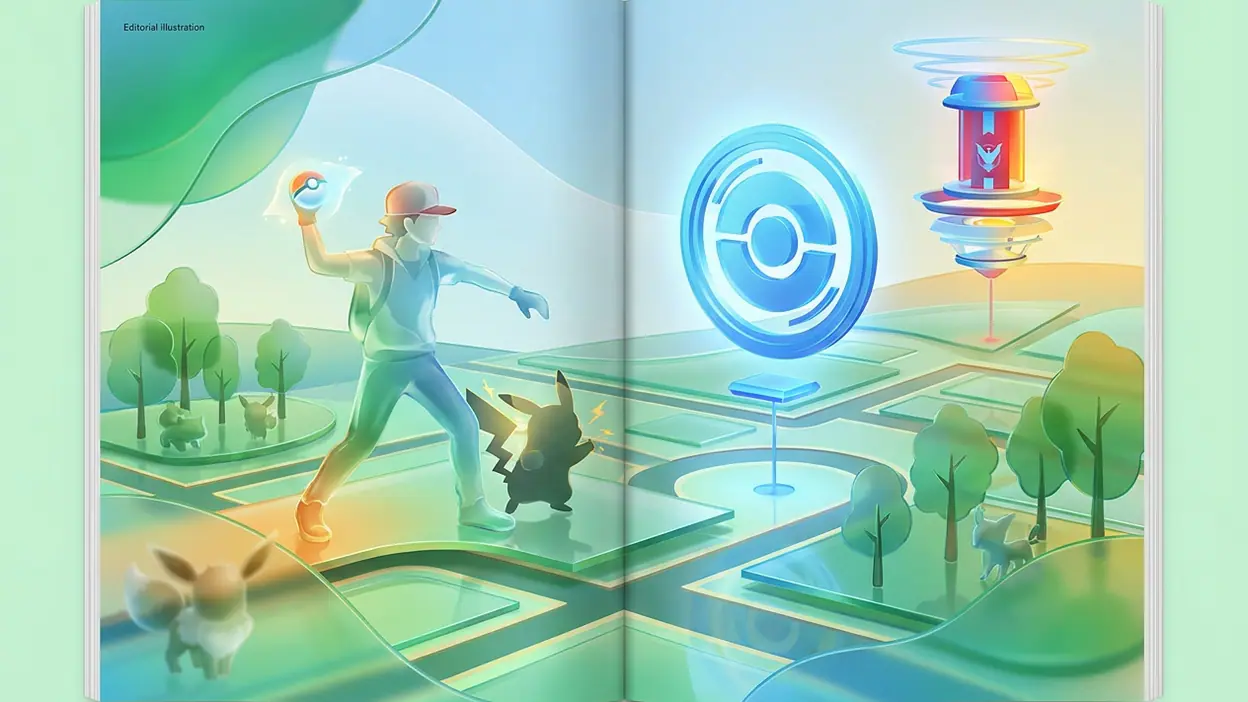
PokéStops and Gyms make real places part of the game’s geography. A mural, a fountain, or the entrance to a public garden can become a useful landmark, and a route that was once merely practical gains little points of interest. The map is not just a backdrop; it determines what is nearby, where resources can be collected, and which meeting spots are worth a detour.
This is the sharpest contrast with a conventional adventure game. Super Bear Adventure can offer a designed landscape full of jumps and secrets, while Pokémon GO borrows its stage from the player’s own town. That makes discovery less predictable and sometimes more personal. It also means the game’s charm varies sharply by location: a dense neighborhood can feel lively, while a rural area with few stops can leave the same player short on options.
3. What players actually react to
The satisfying moments are tactile and brief. A Pokémon appears on the map; the player taps it; the encounter shifts to an AR scene or the game’s illustrated capture screen; then a well-timed curveball lands. A rare silhouette can interrupt an otherwise ordinary walk. A successful catch adds a small hit of anticipation, while a strong appraisal, a shiny variant, or a useful evolution gives the encounter a longer tail.
Worth Reading Next
Make FanDuel Sportsbook & Casino Work Better for You
Block Blast! Turns Spare Minutes Into a Test of Self-Control
More From Our News Desk
View All


Not every catch carries weight, and that is part of the rhythm. Much of play is quick repetition: check the map, spin a stop, catch what appears, sort the storage later. The loop can feel soothing when the player wants a light companion for a walk, but it can also become inventory maintenance. Pokémon storage fills, items run low, and the game regularly asks players to make decisions about what to keep. The pleasure is real; so is the housekeeping.
4. The retention hook is a stack, not a single trick
Pokémon GO gives players several overlapping reasons to return. Daily activities make a short session worthwhile. Research tasks provide a checklist. Eggs reward distance, Buddy Pokémon add a personal companion to the routine, and evolving a favorite gives collected Candy a concrete purpose. Raids and limited-time events add deadlines, while PvP gives competitive players a more deliberate reason to refine a team.
These systems create a flexible rhythm. A casual player can make a quick stop on the way to work, while a dedicated player can plan a longer outing around raid hours or an event’s featured spawns. The loop is strongest when these layers support each other: a walk yields catches, catches provide resources, and those resources help prepare for a group battle. It weakens when the checklist starts to feel like a second job. Missing a timed event can also feel more punishing than missing a normal game session because its rewards may not return soon.
5. Why it travels well on streams and social feeds
The game is easy to share because the story is usually legible without explanation. A rare Pokémon appears, a group converges on a Gym, or a player celebrates an unexpected shiny. Those moments fit naturally into a short video or a group chat. More importantly, they are tied to a place and a time, so a post can act as an invitation: come here now, there is something happening.
That quality gives Pokémon GO a kind of social spread many screen-bound games lack. People talk about what they found on a walk or who joined a raid, rather than only discussing a match they watched. The game can create a crowd in public, which makes the event itself visible to people who have not opened the app. But shareability has limits. Repeated catches and routine resource collection rarely make compelling viewing, and a viewer cannot always tell why one encounter matters more than another. The social story is often better than the raw gameplay footage.
6. The conversation lives in local groups as much as online
Much of the game’s chatter is practical and local: which raid is active, where people are gathering, what is spawning nearby, and whether anyone is still looking for a group. Online communities help players coordinate and interpret updates, but the game’s most useful conversation often happens among friends who already share a neighborhood. That is a meaningful difference from titles whose communities gather mainly around streaming personalities or ranked competition.
It also explains why the same event can feel huge in one city and nearly invisible elsewhere. The game’s social layer is not evenly distributed. A well-populated park can turn a raid into a lively shared activity; a player without nearby participants may face the same encounter as a solitary menu choice. Pokémon GO benefits from community density, and it cannot manufacture that density everywhere.
7. What newcomers should expect
A newcomer should expect a welcoming first hour and a more layered second week. Catching is simple, the basic map is readable, and early progress comes quickly. Soon, however, the game introduces a wide vocabulary of items, types, evolutions, appraisal scores, battle roles, and event rules. There is no need to master all of it immediately, but the interface can feel busy to anyone who has been away from mobile games for a while.
It is also worth setting expectations about movement. Pokémon GO works best when played in places that are safe and pleasant to walk, with enough stops and spawns to make the route rewarding. The game is not a substitute for a full action adventure; it is a location-based collection game with occasional bursts of social intensity. Players who want constant combat or a tightly authored story may find the quiet stretches too quiet.
8. How durable is the trend?
The strongest evidence for staying power is that the core idea remains unusually adaptable. New Pokémon, seasonal themes, raid rotations, and community events can refresh the same basic loop without forcing players to relearn the game. The familiar collection gives each update an immediate frame, while real-world movement keeps the experience from becoming entirely routine. That combination is more durable than a trend built on one viral challenge.
Still, durability does not mean every player stays engaged all year. Many people move in and out according to the event calendar, their social circle, and the season outside. That ebb and flow is not necessarily failure. Pokémon GO has become good at welcoming lapsed players back: a recognizable event or a favorite Pokémon can reopen the door without demanding a fresh start. The game’s long life may depend less on unbroken daily retention than on making return visits feel natural.
9. What could cool it down
Friction is the clearest threat. Players notice when an event feels too focused on paid passes, when a feature adds taps without adding discovery, or when a desired Pokémon is locked behind awkward timing. Location inequality is harder to solve: not every player has easy access to a busy park, a nearby Gym, or a group willing to meet. Weather, mobility, work schedules, and personal safety all shape how playable the game is.
There is also the risk of overloading the experience. Pokémon GO has accumulated many systems over the years, and each new layer competes for attention with the simple pleasure of walking and catching. If every return visit comes with multiple timers, tasks, and limited windows, the game can turn its own spontaneity into obligation. Its best events feel like a lively invitation, not a reminder that the player is behind.
10. The editorial take
Pokémon GO’s buzz is not just nostalgia resurfacing. The game still offers something distinct: a collection loop that gives ordinary movement a purpose and a social structure that can turn a local landmark into a meeting place. That is why a new wave of attention can spread quickly, and why some players keep it installed long after the original launch-era excitement faded.
The caveat is that its magic depends on the world around the player. The map, the community, and the event calendar can make a session feel unexpectedly alive, but they can also expose how thin the routine becomes when those supports are missing. Its best trick is making a walk feel shared. For newcomers, it is worth trying with a friend and a specific destination rather than expecting a nonstop adventure. For returning players, the trend has enough substance to justify another look. The chatter may rise and fall, but the game’s central idea still has legs, literally and culturally.