Extreme Car Driving Simulator Finds Its Fun in the Open Road

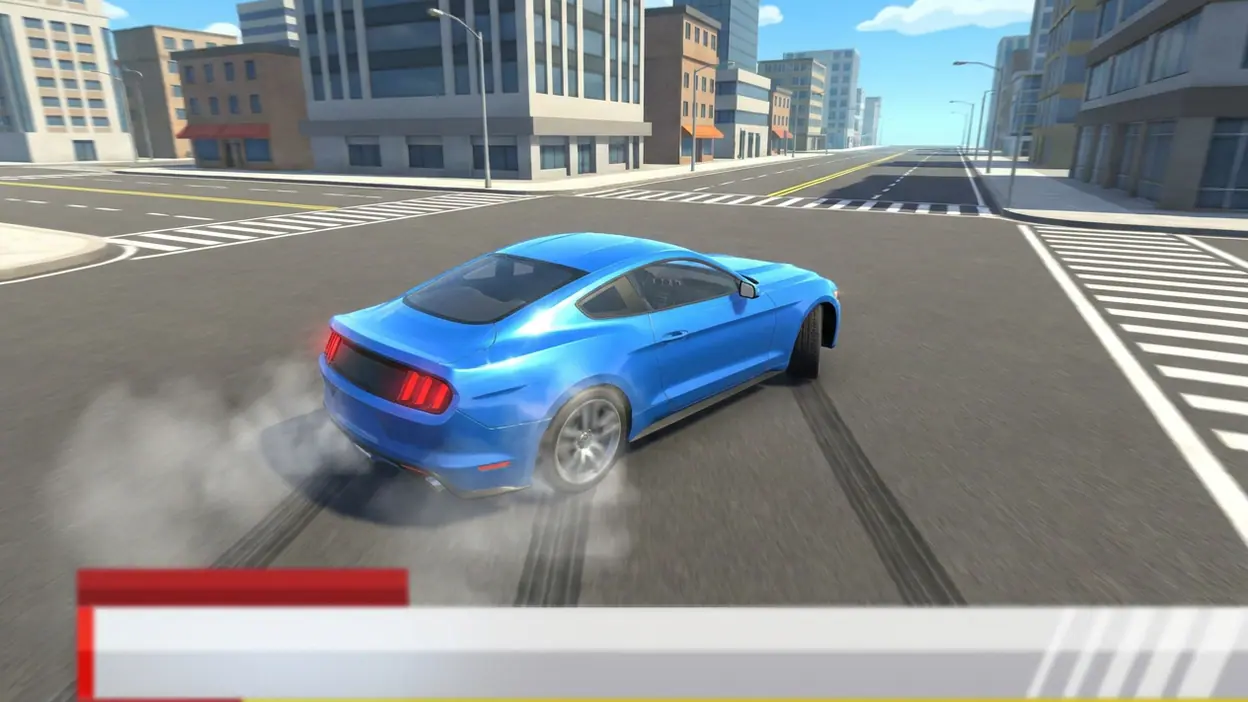
Some racing games make speed feel like a stopwatch problem. Extreme Car Driving Simulator makes it feel like an invitation: pick a car, find an empty stretch of road, and see what happens when you stop treating the city as a route to the finish line. Its best idea is also its simplest. This is a driving sandbox first, a racing game only when you decide to make it one.
That freedom gives the game a distinctive kind of confidence. There is no elaborate story demanding your attention and no parade of rivals insisting every drive must become a competition. Instead, the pleasure comes from steering, skidding, accelerating, and learning how much mischief a broad road or open lot can accommodate. It is an easy game to understand and a surprisingly satisfying one to return to, provided you enjoy making your own reasons to keep moving.

Extreme Car Driving Simulator
AxesInMotion Racing4.3Racing
See More Apps Related to Extreme Car Driving Simulator


A driving game that knows when to leave you alone
Why it deserves the spotlight
Mobile racing is crowded with games that treat progression as the whole point: earn currency, unlock the next event, beat the next rival. Extreme Car Driving Simulator takes a different tack. It gives you a place to drive around and lets the act of driving carry the experience. That can sound modest, but it is a meaningful choice on a phone, where a game often needs to make sense in a few spare minutes.
The open-ended setup also makes the game unusually approachable. You do not need to memorize a circuit, study a tuning menu, or commit to a long event before the fun starts. A quick session can mean weaving through streets, testing a turn at speed, or simply getting comfortable with a different car. The game asks less of your schedule than many racing rivals, and in return it leaves more room for curiosity.
That low-pressure design is the reason it merits an editor's spotlight. The game does not pretend that a city block is a grand campaign. It understands that driving itself can be the activity: the little correction before a corner, the sudden slide when the rear loses grip, the satisfying recovery when you catch it. Those moments are small, but they give the game its character.
What feels exceptional right away
The first thing you notice is how quickly the controls make sense. Steering, acceleration, and braking are available without a long tutorial, so the gap between opening the game and actually driving is short. The handling has a forgiving quality that encourages experimentation. You can push into a bend, misjudge it, and recover without the mistake feeling like a formal failure.
That accessibility does not mean every car feels identical. Acceleration, weight, and the way a vehicle reacts under braking give you reasons to adjust your approach. There is a useful tension between speed and control: putting your foot down is easy, but carrying that speed through a tight turn takes more care. When a drift lands cleanly, it feels earned rather than handed to you by an automatic effect.
Worth Reading Next

1Weather Review: Clear Forecasts for Better Daily Plans

InShot Makes Quick Video Editing Easy, but Small Screens Have Limits
More From Our News Desk
View All


The city is at its best when treated as a playground rather than a backdrop. Broad streets invite fast runs; corners and junctions provide informal tests of control; open spaces give you room to reset and try again. The environment supplies prompts, not instructions. You are free to invent a challenge, whether that means holding a slide for longer or seeing how neatly you can thread a route through the streets.
There is a rare sense of permission to play badly. A clumsy turn is not necessarily the end of a run; it can become a funny recovery or the start of another attempt. That looseness matters. It turns driving into a physical, immediate pleasure instead of a checklist of perfect inputs.
How it earns long-term attention
Sandbox games live or die by the variety players can draw from their basic tools. Here, the loop is simple: choose a vehicle, drive, find a new way to use the space, and return when the mood strikes. Cars give that loop a changing feel, while different routes and self-imposed challenges make familiar streets useful again. You are not just chasing a better result; you are learning what each car can do and what kind of drive you want today.
The replay value is therefore personal rather than heavily scripted. One session might become a relaxed cruise. Another might turn into a series of hard braking tests and fast turns, with repeated attempts to carry more speed through the same corner. There is satisfaction in improving, but the game does not require a leaderboard or a dramatic reward to make that improvement feel worthwhile.
This is also why the experience suits short visits. You can arrive with no plan, find a little challenge in the road ahead, and leave when you are done. The rhythm has no elaborate warm-up. Acceleration creates the hook, a risky turn supplies the tension, and a clean slide gives you a reason to try once more. That compact rhythm is the game's strongest answer to the question of what keeps a driving sandbox alive.
The best moments happen between objectives
The most memorable moments are often unscripted. You approach a corner faster than expected, tap the brake, and feel the car rotate into a slide. For a second, the vehicle is pointed somewhere other than the direction it is traveling. Then a small steering correction brings it back under control. It is not a race victory, but it has the satisfying shape of a little personal triumph.
Other pleasures are quieter. Cruising without a timer gives the city room to breathe, and changing cars can make a familiar route feel newly demanding. A vehicle that accelerates eagerly may make you rethink your braking points; a heavier-feeling ride can reward a more measured approach. These are small differences, but they help turn a free-drive session into something more than aimless motion.
The game is particularly good at letting a casual drive become a challenge by degrees. You might start by exploring, then decide to take a corner faster, then spend several minutes trying to repeat the turn with more control. That progression comes from your attention rather than a mission marker. It is an appealing fit for players who would rather make their own goals than be continually told what to do.
Its edge over louder rivals
Plenty of mobile games compete for the same scraps of attention with constant rewards and a packed screen. PUBG MOBILE, for instance, builds its appeal around pressure, opponents, and the drama of survival. Extreme Car Driving Simulator is compelling for almost the opposite reason: it lowers the stakes and gives you space. There is no need to treat every minute as a test of reaction or ambition.
That restraint is its edge. A driving sandbox can be a welcome change of pace when you want movement without a demanding objective, or a little playful control without committing to a campaign. It does not need to out-shout a battle royale or imitate the progression machinery of a traditional racer. Its strongest feature is the room it leaves for the player.
It also understands that a car can be fun before it becomes a collection goal. The feel of accelerating and turning provides an immediate reason to play, while vehicle variety gives you a longer-term reason to explore. The game is at its most persuasive when it trusts that simple combination and avoids pretending that every drive needs a bigger spectacle attached.
Where it still needs polish
Freedom has a cost: the experience can feel thin if you expect the world to generate objectives for you. Players looking for a substantial campaign, a carefully staged succession of races, or a strong narrative arc may find the open-ended structure too loose. The same streets that invite experimentation can start to feel repetitive if you do not enjoy setting your own challenges.
The driving is accessible, but that friendliness can also limit its depth. Handling has enough character to make control rewarding, yet players seeking a demanding simulation may want more precise feedback and a greater sense of consequence from every input. The game works best as an arcade-style playground, not as a rigorous account of real-world driving physics.
Presentation and variety also matter over time. Repeated visits need enough visual and mechanical texture to keep familiar spaces fresh, and this is where a sandbox can expose its limits. More distinct activities and stronger environmental variety would give the freedom more shape without sacrificing its easygoing appeal. The core idea is good; the world around it could do more to keep that idea surprising.
Who should care most
This is a natural pick for players who want a driving game they can open and understand immediately. If you enjoy free roaming, arcade handling, and the small satisfaction of mastering a turn, the game gives you a straightforward place to indulge that interest. It is also well suited to short sessions: you can dip in for a few minutes without needing to remember a complex objective or finish a long event.
It will be a less obvious fit for anyone who needs structured competition to stay engaged. If your idea of a good racing game begins with a deep career, tightly curated tracks, and a steady climb through increasingly demanding events, this sandbox may feel underwritten. Its pleasures are real, but they depend on your willingness to supply some of the agenda.
Why it belongs in this moment
Mobile games increasingly ask players to keep up: claim the reward, clear the task, return for the next event. A game built around unhurried, self-directed play feels refreshing in that environment. It does not insist that every visit be productive. You can drive for the simple pleasure of driving, leave, and come back when you feel like it.
That quality gives the game a contemporary kind of appeal without requiring it to chase trends. Its premise is durable because the pleasure is physical and immediate: speed, steering, risk, recovery. The phone makes it easy to pick up, but the game earns its place by giving you a small world in which to play on your own terms.
Extreme Car Driving Simulator is not the deepest racer on mobile, and its open structure will not suit everyone. But it knows precisely what it wants to be: a relaxed, responsive driving sandbox where an ordinary stretch of road can become your next test. For players who value freedom, quick access, and the feel of a well-timed slide more than a rigid race schedule, that is more than enough. It is an easy recommendation, with one honest condition: bring your own reasons to drive.