Craftsman: Building Craft Turns Simple Blocks Into Shareable Worlds

Some mobile games become visible because a single clip makes their appeal instantly legible: a strange build, a sudden mishap, a friend wandering into the frame. Craftsman: Building Craft has that kind of shareable simplicity, but its real pull is quieter. It gives players a block-built world that can become a house, a playground, or a half-finished idea they keep returning to. The trend has legs as long as players bring their own projects to it; the familiar building loop alone will not keep every newcomer.
That distinction matters. Craftsman is easy to recognize and easy to explain, which helps it travel through mobile-game feeds and friend groups. Yet recognition is not the same as lasting momentum. Its appeal rests on the gap between a tiny first step and a much larger creative horizon: place a few blocks, shape a room, then realize the empty land around it is an invitation rather than a task list.

Craftsman: Building Craft
StarGame123.5Simulation
See More Apps Related to Craftsman: Building Craft


Why the game keeps turning up
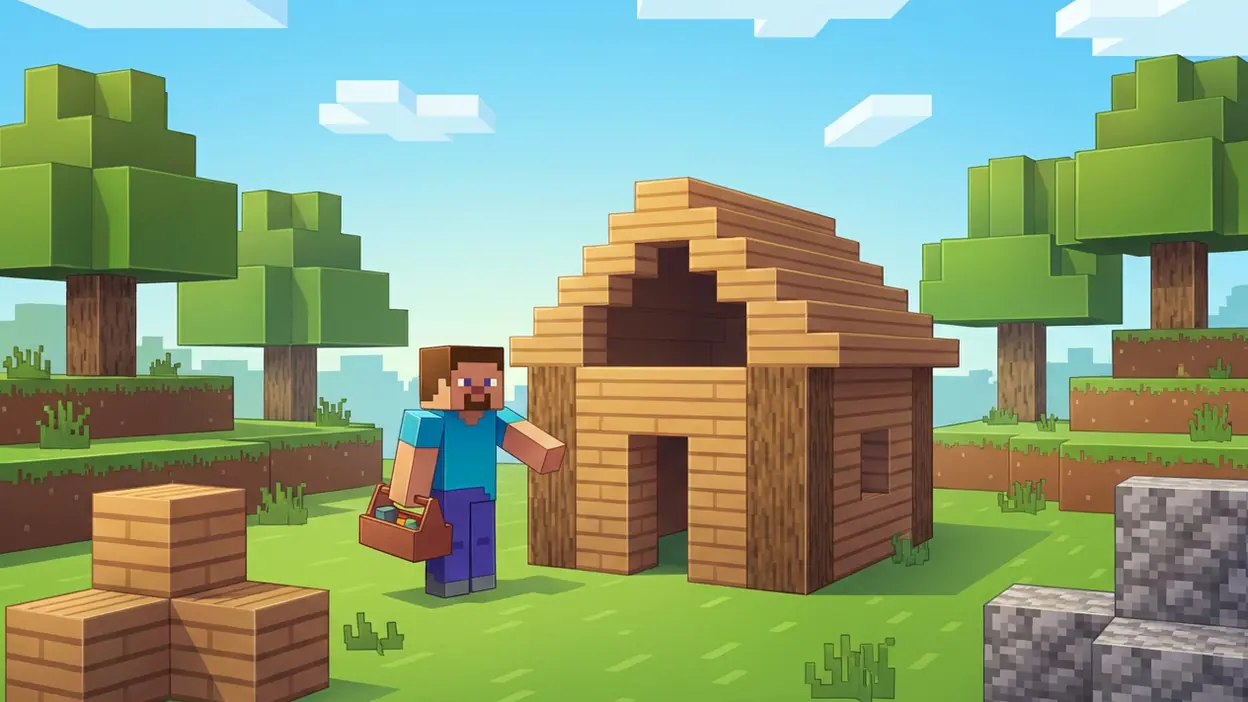
Craftsman arrives with a visual language that needs almost no introduction. The world is assembled from chunky blocks, the landscapes are open and bright, and familiar materials invite familiar plans. A player can look at a patch of ground and immediately imagine a cabin, a tower, or a ridiculous house with no practical reason to exist. That instant readability is useful in a crowded feed, where a game has seconds to make sense.
Its spread also fits the way casual mobile play moves between people. A build can be shown without a long explanation, and a friend can understand the basic idea before taking a turn. This is a more personal kind of viral hook than a timed challenge: the object being shared is often somebody's own construction. A short clip of a finished room, a sprawling base, or an awkwardly ambitious project carries a trace of its maker.
That is where comparisons with quick party games or transformation games become useful. Titles such as 2 3 4 Player Mini Games can produce an immediate social contest, while Tie Dye offers a compact before-and-after payoff. Craftsman is slower and less neatly packaged. Its shareable moment usually comes after the player has spent time making something, so the game asks for more commitment even as its look remains accessible.
What players react to
The strongest reaction is to creative ownership without a heavy entrance fee. There is pleasure in placing one block, stepping back, and seeing a shape emerge. The first small structure can feel satisfying because the game does not require a polished plan. Players can improvise, change direction, and treat mistakes as part of the build rather than as a failed objective.
The block scale helps, too. A simple wall can become a room; a room can suggest a house; a house can grow into a larger setting. That visible progression gives the play session a natural rhythm. Work for a few minutes, inspect the result, then find one more detail to add. For players who enjoy making spaces, the reward is not a score but the moment a rough idea starts to look inhabited.
Worth Reading Next

1Weather Review: Clear Forecasts for Better Daily Plans

InShot Makes Quick Video Editing Easy, but Small Screens Have Limits
More From Our News Desk
View All


There is a social dimension even when nobody else is present. Building with an imagined visitor in mind changes the work: a path needs to lead somewhere, a doorway should make sense, and an empty yard becomes a place to fill. If friends join or see the result later, the build becomes a conversation piece. That personal layer is more enduring than novelty, though it depends on the player caring about the thing they are making.
The retention hook is the unfinished project
Craftsman's loop does not rely on a constant sequence of urgent rewards. It relies on unfinished business. A player logs off with a wall still missing, a roof that needs another pass, or an idea for what to build beside the house. Returning is less like checking a daily chore and more like picking up a hobby project. That can be a powerful form of retention because the next session already has a purpose.
The rhythm is self-directed: choose a spot, gather or select what the build needs, place blocks, adjust the shape, and decide whether to stop or keep going. The loop can be relaxing, but it can also become aimless. Without a clear personal goal, open space may feel less like freedom and more like a blank page. Players who thrive on objectives and frequent unlocks may want firmer direction than the sandbox naturally supplies.
Replay value follows the same logic. A new build can change the whole experience, but the game does not automatically provide a fresh premise every time. The player has to supply one. That makes Craftsman more durable for builders than for people chasing a succession of surprises. A modest cabin, a strange landmark, or a shared project can each keep the loop alive, but repetition becomes apparent if every session is simply another stack of similar walls.
Why it travels well, and where the chatter sits
Building games are naturally streamable because the audience can watch an idea take shape. The process supplies a beginning, a middle, and a reveal: an empty area, a sequence of choices, then a finished structure. Even when the build is small, viewers can follow the transformation. A co-op session or a friendly tour adds reactions that make the result more human than a simple showcase.
There is also room for comic failure. A plan can be too large, a design can look odd from the wrong angle, and a friend can wander through a project at exactly the wrong moment. Those are useful social ingredients because they create stories rather than just screenshots. The best clip is not necessarily the most elaborate build; it may be the moment the builder explains a grand plan and reveals a slightly lopsided result.
The chatter around Craftsman is most compelling when it focuses on what players have made or what they plan to make. That is a healthier signal than attention driven only by a novelty label. It suggests that people are using the game as a creative setting, not merely sampling it once. Still, social visibility can exaggerate the scale of a trend. A handful of impressive builds can make a game look busier than the everyday experience feels, especially for solo players with no ready-made audience.
What newcomers should expect
Newcomers should expect a sandbox, not a guided building course. The first minutes are best spent learning the pace of placement and getting comfortable with the space rather than chasing an impressive result. Start with a small structure that has a clear purpose: a shelter, a workshop, or a place to gather. A contained project gives the world shape quickly and teaches the basic pleasure of turning an idea into a walkable space.
It also helps to decide what kind of session you want. If the mood is casual, build without a strict plan and let the design develop as you go. If you want a project that lasts, sketch a larger goal in your head and divide it into sections. A long build becomes more satisfying when each visit has a concrete next step. Otherwise, open-ended play can blur into wandering and leave the game feeling thinner than it is.
The game is not a substitute for a tightly structured simulation with a deep progression system. Its appeal is that it leaves room for personal direction. That freedom can be inviting, but it places more responsibility on the player than a guided campaign does. People who want a relaxing creative space may enjoy that bargain; people who want the game to continually surprise them may not.
How durable is the trend?
Craftsman's durability depends on whether its audience keeps finding new reasons to build. The central fantasy is not tied to a passing joke or a single seasonal gimmick, so it has a sturdier base than a game whose appeal is one viral trick. Making a place, improving it, and showing it to other people are activities with room for repetition. The basic loop can remain satisfying well after the first look.
But the ceiling is not automatic. A creative sandbox needs either a strong personal imagination or a lively community to prevent its possibilities from feeling abstract. Players who arrive because a clip looked exciting may discover that building takes patience. If they do not find a manageable first project, the same open-endedness that attracts them can send them away. Likewise, social spread can fade if the most visible builds stop feeling fresh or if sharing becomes more work than play.
That makes Craftsman a trend with a plausible long tail rather than an unstoppable wave. Its best audience is likely to be the people who enjoy the act of making, not just the spectacle of finished creations. Updates and community ideas can renew interest, but no trend can outsource the game's essential task: giving players a reason to care about their next block.
The editorial take
Craftsman: Building Craft earns attention by making creative play easy to grasp and personal enough to revisit. Its strongest moments come when an unfinished idea turns into a place with a shape and a purpose, or when that place becomes something worth showing to a friend. Its weaker moments arrive when the blank world feels too open and the player has no project in mind.
That is a real limitation, not a reason to dismiss the game. Craftsman is not built around relentless novelty; it is built around the quiet satisfaction of making something yours. The social buzz can bring people through the door, but retention will belong to the builders who find a project they want to continue. For them, this is more than a clip-friendly block game. For everyone else, the first burst of curiosity may be the whole visit.