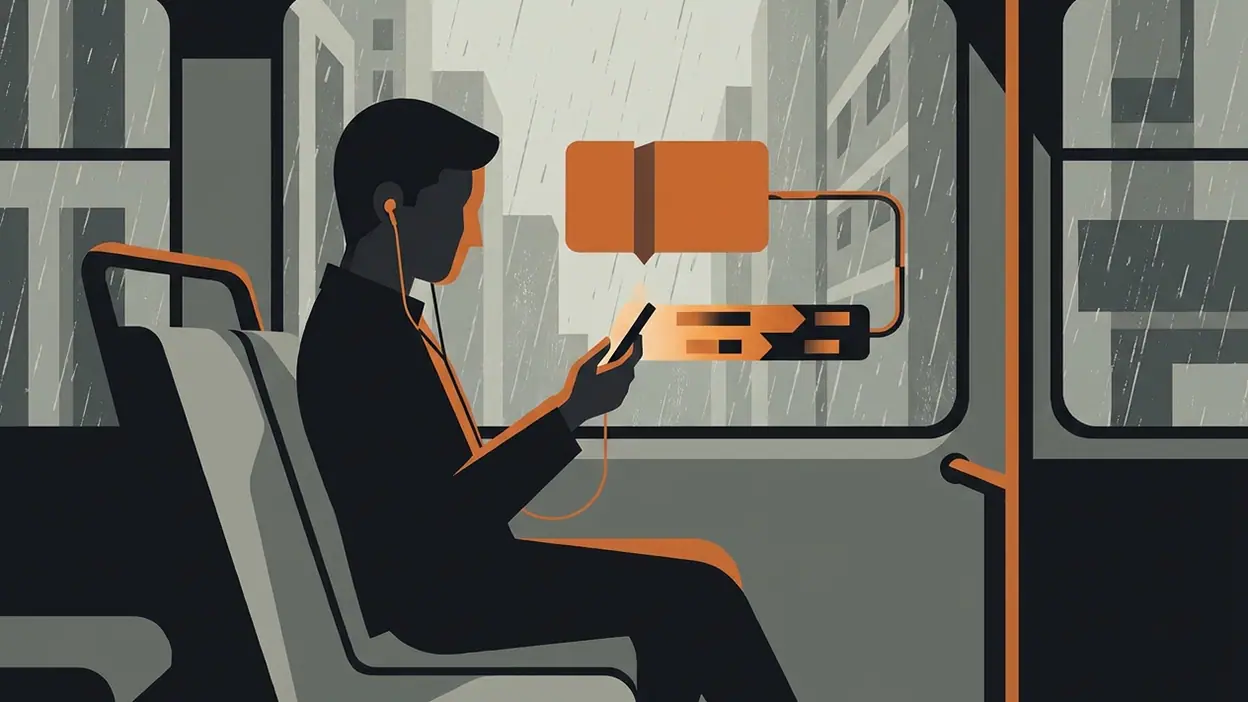
Audiomack Makes Offline Listening Feel Like a Form of Control

A music app’s real power is not measured only by the size of its catalog. It shows up in the small decisions that turn a song into a habit: what appears first, how quickly a listener can save it, and whether it still plays when the signal disappears. Audiomack: Music Downloader makes those decisions unusually visible. Its mix of discovery, artist uploads, playlists, and offline listening gives it a clear pitch, but it also makes the app a useful case study in how a platform can build loyalty without owning the phone, the operating system, or the whole music industry.
Audiomack is not simply a smaller version of a subscription service. Its strength lies in the way it connects emerging music and fan discovery with a practical download-and-listen loop. That can make it feel more open and immediate than services built around a tightly managed mainstream catalog. Yet every convenience also concentrates influence: Audiomack helps decide which music surfaces, which tracks become easy to keep, and how listeners move between discovery and repeat play.

Audiomack: Music Downloader
Audiomack Music Apps4.8Music & Audio
See More Apps Related to Audiomack: Music Downloader


Discovery is the product, not a side feature
A platform with a specific kind of influence
Audiomack’s strategy makes most sense when viewed through its relationship with artists and listeners rather than through a simple contest over catalog size. The service has built an identity around new releases, independent artists, and genres with active online fan communities, including hip-hop, Afrobeats, and R&B. That focus gives the app a role beyond playback: it can act as a launchpad where music reaches listeners who are actively looking for what is next.
This is a different kind of power from that exercised by a phone maker or a giant streaming service. Audiomack does not control the device’s default music settings or own a broad hardware ecosystem. Its leverage comes from attention and access. If an artist can reach listeners through an upload, a chart placement, or a playlist, the platform becomes part of the route to an audience. If a fan discovers a track there and saves it for a commute, Audiomack has also secured a place in that listener’s routine.
The distinction matters. A platform does not need to own every part of a user’s digital life to influence behavior. It needs to become the easiest place to perform a valuable task. Audiomack’s task is concrete: find music, try it quickly, and keep listening when connectivity is unreliable or expensive.
How it fits into the wider music ecosystem
On a phone, Audiomack sits between streaming, social discovery, and personal music libraries. The app’s catalog and recommendations help listeners browse; playlists and charts turn browsing into a guided path; offline listening makes selected tracks available beyond the app’s most obvious use case. That combination is what gives the product its strategic shape. It does not just compete for the moment when someone presses play. It competes to become the place where music is first encountered and later revisited.
That position is especially useful for artists who want their work to circulate beyond a single social post. A short clip can create curiosity, but a music app gives a listener a place to hear more, follow an artist’s output, and return to a track. Audiomack’s role in that process is both cultural and commercial: it offers a discovery channel, while the platform gets the listening activity and the data that can inform future recommendations.
Worth Reading Next

1Weather Review: Clear Forecasts for Better Daily Plans

InShot Makes Quick Video Editing Easy, but Small Screens Have Limits
More From Our News Desk
View All


The arrangement is not unique to Audiomack. YouTube Music can turn a video-driven discovery habit into on-demand listening, while JioSaavn combines music and podcasts within a broader regional service. Lark Player takes a more library-oriented route, and StarMaker builds around singing and participation. These products sharpen the contrast: Audiomack’s identity depends more heavily on finding and circulating music than on becoming a universal media hub.
Distribution is a product feature
For mobile services, distribution means more than getting an app into an app store. It means reaching listeners through the channels they already use, making the first session easy, and giving people a reason to return. Audiomack’s artist-centered discovery can support that loop: an artist directs fans to a track, a listener finds related music, and a saved playlist gives the app another chance to be opened later.
Offline listening adds a second, practical advantage. Music that remains available without a strong connection is valuable on transit, during travel, or in places where mobile data is costly or inconsistent. In those situations, a downloaded playlist is not a minor convenience. It changes whether the service can fit into the day at all. Audiomack’s download identity therefore speaks to real mobile conditions, not just a marketing label.
There is a trade-off, though. Offline access makes a platform more useful, but it also makes a listener’s saved collection dependent on that platform’s rules and availability. Downloads inside a music app should not be confused with unrestricted files that can be moved anywhere. The distinction affects what users own, what they can transfer, and what happens if an account, catalog entry, or licensing arrangement changes.
The habits Audiomack encourages
The app’s habit loop is easy to understand: open it to find something new, follow a recommendation or chart, save tracks, then return to the playlist when there is no time to search again. This is a stronger routine than relying on a single hit. A good discovery session produces a small personal queue, and that queue lowers the effort required for the next listen.
There is a positive side to that design. Many listeners do not want to assemble every session from scratch, and a service that connects discovery with saved listening can make music exploration feel active rather than exhausting. Audiomack can also lead people beyond familiar names, particularly when its discovery surfaces put emerging artists in front of listeners who would not have found them through a conventional radio rotation.
But recommendation systems always make editorial choices, whether or not they call themselves editors. A chart privileges momentum. A playlist groups tracks according to a platform’s categories. A recommendation can reinforce a listener’s existing taste or nudge them somewhere new. Audiomack’s influence is not absolute, but it is real: the app shapes the boundary between what is available and what is easy to notice.
What this means on phones
Mobile listening rewards speed and low friction. People often open a music app while doing something else, with limited patience for complicated menus or repeated searches. Audiomack’s strongest proposition is that discovery and offline playback belong in the same environment. The listener does not have to treat finding music and preparing it for later as entirely separate activities.
That convenience also raises expectations around clarity. Users should be able to tell which tracks are available offline, how playlists behave, and whether a download is tied to an account or a particular app installation. Any confusion around those boundaries weakens trust, especially for people who choose Audiomack partly because they want reliable listening away from a network.
There is also a broader phone-platform lesson here. A service can shape everyday behavior without controlling the operating system. Audiomack competes for a recurring place on the home screen and a predictable share of attention. Its advantage is not that the phone is Audiomack’s; it is that the app can make a particular listening task feel easier than the alternatives.
How competitors answer
Rivals respond by leaning into different kinds of reach. YouTube Music benefits from a vast video ecosystem and the ability to connect an official release with performances, uploads, and other video material. JioSaavn adds podcasts to its music proposition and draws on a regional catalog focus. Lark Player is more closely associated with playing music already stored on a device, while StarMaker turns singing into a social activity rather than treating listening as the whole experience.
Those differences show why no single feature decides the contest. A service may have a broader catalog, stronger video discovery, a better local library, or a more social format. Audiomack’s case is strongest when a listener values a direct path from emerging music to a saved, repeatable listening collection. Its identity is narrower than a universal media platform, but that narrowness can be an advantage if it serves a real audience well.
Where listeners gain, and where they give up control
Listeners benefit when Audiomack brings unfamiliar artists within easy reach and makes music more dependable in places with poor connectivity. Artists can gain another route to audiences, and fans can build a queue around new finds instead of waiting for a song to travel through mainstream channels. The app’s most persuasive value is this combination of cultural discovery and practical access.
The leverage shifts toward the platform when discovery, saved listening, and repeat use all depend on its environment. Users may become attached to playlists and recommendations that are difficult to reproduce elsewhere. Artists, meanwhile, can benefit from exposure while remaining dependent on how a service ranks, presents, and monetizes their work. Those are standard platform tensions, not a verdict that Audiomack behaves unusually badly. They are still worth noticing, because convenience can hide the costs of dependence.
Users also have reason to keep their expectations grounded. Audiomack’s download-focused identity does not mean every track is a permanent, transferable file, and no discovery platform can guarantee that an artist or release will remain available in the same form forever. The safest way to think about the app is as a useful listening service, not a replacement for music ownership or a universal archive.
A clear role, with familiar platform limits
Audiomack works best for listeners who want to explore a lively stream of new music and carry selected listening into offline moments. It is less compelling for someone whose priority is a single all-purpose media library, video-first discovery, or complete control over locally stored files. That is not a flaw in the concept so much as a reminder that a platform’s strengths are also a set of boundaries.
The larger lesson is that ecosystem power does not always arrive as a bundle of devices and services. Sometimes it begins with a focused app that earns trust in one recurring moment: the search for a new song, the decision to save it, and the quiet return to it later. Audiomack makes that chain feel direct and useful, especially for listeners who value emerging music and offline playback. It also asks users to accept the familiar bargain of platform convenience: easier access in exchange for more dependence on the service that organizes it.
My verdict is that Audiomack has a distinct and defensible place on a crowded phone. Its strongest advantage is not simply that it can play music; it connects discovery with a practical reason to come back. That makes it a meaningful alternative for the right listener, while its limits around platform dependence and the meaning of downloads deserve clear-eyed attention. The app is most valuable when users treat it as a powerful doorway into music, not as the owner of the room.