Flight Pilot Makes Flying Easy. The Next Standard Is Flight With Consequences

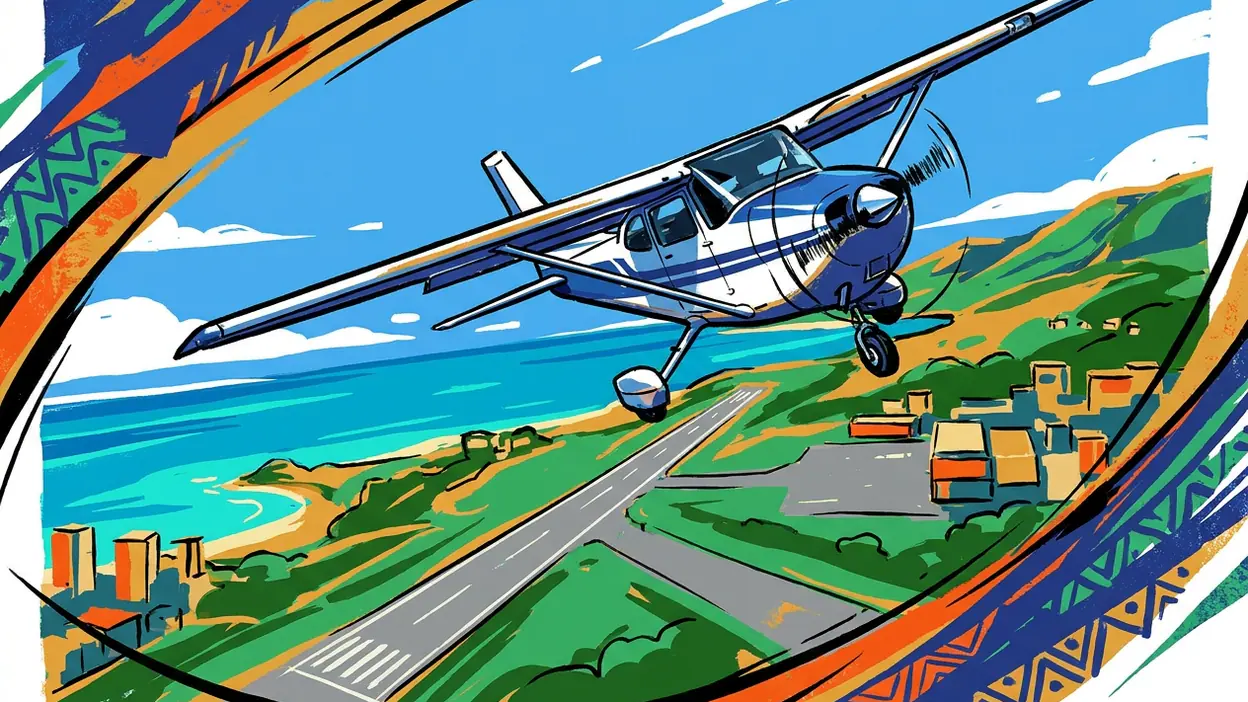
Mobile flight games have a deceptively hard job: make the first takeoff feel effortless, then give players a reason to care about the landing. Flight Pilot: 3D Simulator understands the first half exceptionally well. Its quick missions and forgiving controls turn flying into an accessible, tactile routine, but its structure also exposes a category-wide problem: a convincing sensation of control is no longer enough to sustain a simulator. Players increasingly expect a career, a world, or a deeper set of decisions around the vehicle. The next standard is not simply prettier skies. It is flight with consequences.
The category has moved beyond the cockpit
“Simulator” once promised a patient relationship with machinery: learn the controls, master the physics, and earn the freedom to go farther. On mobile, that promise has been reshaped by short sessions and touchscreens. A game now has to explain itself quickly, produce a satisfying action within minutes, and still suggest a longer journey. The best mobile experiences do not treat accessibility and depth as opposites. They let a newcomer get moving, then reveal systems worth learning.

Flight Pilot: 3D Simulator
Wildlife Studios4.1Role Playing
See More Apps Related to Flight Pilot: 3D Simulator


That shift is visible across mobile games, even outside aviation. Players who move between Evertale, Cat Runner: Decorate Home, Hair Dye, Avatar World, and The Seven Deadly Sins encounter very different genres, but the underlying expectation is familiar: a clear immediate activity should connect to a larger sense of progress or personal investment. Collecting, customizing, decorating, and developing characters all give repeated actions a broader purpose. A flight game does not need to copy those systems. It does need to answer the same question: what changes because I played another mission?
The baseline is now instant readability
Flight Pilot gets the essential mobile baseline right. Its missions make the objective legible, its aircraft respond without requiring a long training period, and its controls are approachable enough that a casual player can begin steering rather than studying a manual. The appeal is physical in a simple, satisfying way: bank toward a target, correct your line, manage your approach, and feel the aircraft settle into a landing. The best moments are small acts of adjustment, not grand cinematic set pieces.
That clarity matters because mobile play is often interrupted. A player may have only a few minutes, so the game needs to establish a goal and deliver a result without burying either in menus. Flight Pilot’s mission-based rhythm serves that reality. Take off, handle the task, bring the plane back, and collect the reward: the loop is easy to understand before it becomes familiar. In a category where complex controls can quickly become a barrier, that is not a trivial achievement.
But instant readability is now a starting point, not a selling point on its own. Mobile players are accustomed to games that wrap short activities in visible advancement. They expect new options to open, abilities to change, collections to grow, or environments to develop. A simulator can meet that expectation through aircraft, routes, mission variety, or more demanding conditions. Without such a ladder, a cleanly delivered mission risks feeling like a task completed rather than a skill acquired.
Flight Pilot’s strongest signal is the mission
The game’s most useful design choice is that it makes flying serve an objective. The plane is not merely a prop gliding over a landscape; it is the tool for completing a focused task. That gives each outing a natural beginning and end, and it adds tension to otherwise simple steering. A turn matters because there is somewhere to go. A landing matters because the flight is not finished until the aircraft is safely down.
Worth Reading Next

B612 AI Photo&Video Editor: The Secret to Its Addictive Appeal

Word Search - A Cultural Lens on Digital Habits

Shooting Ball: Mastering Precision and Strategy in Mobile Gaming

How Google Messages Strengthens Its Grip in the Tech Ecosystem

Alibaba.com: Mastering the B2B Marketplace Ecosystem
More From Our News Desk
View All


This objective-first design is a strong response to the realities of a phone screen. It avoids asking every player to invent their own reason to fly, and it keeps the basic loop moving. The hook is the fantasy of taking control; the rhythm is a chain of brief assignments; the replay value comes from improving execution and chasing the next step. The formula can be enjoyable precisely because it does not demand a long commitment every time the game opens.
There is a trade-off, though. When missions are the main source of purpose, their variety and progression carry the whole experience. If assignments begin to feel interchangeable, the flight model has to do a great deal of work to keep repetition fresh. The game’s strongest signal is therefore also a test: it shows how much a mobile simulator can gain from clear objectives, while making the limits of a narrow objective loop difficult to ignore.
The conventions it keeps, and the one it bends
Flight Pilot follows several reliable mobile conventions. It breaks play into compact sessions, presents achievable tasks, and makes progress understandable without demanding a long-term commitment. It also favors accessibility over strict simulation. That is the sensible choice for a broad mobile audience: if the first contact with the controls feels punishing, many players will never stay long enough to appreciate the aircraft or the missions.
Where it bends expectations is in the way it foregrounds doing over managing. Some games in the wider mobile market build retention around collections, extensive customization, or characters whose development becomes the central reward. Flight Pilot places the act of flying closer to the front. That gives it a cleaner identity than a simulator that hides its core activity behind layers of menus and upgrades. The aircraft is not just a collectible to inspect; it is something to put to work.
Still, a direct focus on action is not the same as a rejection of progression. The emerging player expectation is not “add more systems at any cost.” It is “make the systems that are present feel connected.” A new aircraft should alter how a mission feels. A new challenge should ask for a different kind of judgment. A reward should signal more than another step toward an arbitrary total. This is where a lean mission game can feel either refreshingly focused or thin, depending on how much its progression changes the experience.
What other mobile games make clear
The related games sharpen the point without serving as direct competitors. Evertale and The Seven Deadly Sins put long-term character development near the center of their appeal; their progress is legible because players can see a roster or team change. Cat Runner: Decorate Home connects activity to a visible transformation of a space. Hair Dye and Avatar World make self-expression part of the reason to return. These games show how many forms “progress” can take, from power to ownership to personalization.
Flight Pilot does not need a cast of characters or a decorating layer. Those would distract from its strongest pleasure: controlling an aircraft through a task. But the comparison does reveal a design challenge. In many mobile games, progress leaves a mark that players can point to. In a flight simulator, that mark could be a wider choice of aircraft, missions that demand new handling, or a more varied sense of place. The important thing is not borrowing another genre’s rewards; it is making a pilot’s growing capability visible.
That distinction also helps explain why a flight game can feel more repetitive than its mission count suggests. Different assignments do not necessarily create different experiences if they ask for the same decisions in the same way. A strong progression curve should change what the player notices: wind, distance, approach angle, urgency, or the particular strengths of a chosen plane. When new content changes judgment rather than just destination, replay has a reason beyond completion.
The convention it challenges is depth through complexity
Flight games often imply that authenticity requires a wall of controls and technical detail. Flight Pilot challenges that convention by keeping its central interaction understandable. That is a meaningful design argument: a game can communicate the pleasure of aviation through steering, positioning, and landing without turning every session into a cockpit exam. For mobile, where touch input and limited screen space are real constraints, restraint can be more honest than an awkward attempt at desktop-grade complexity.
The challenge is to keep that restraint from becoming simplification without consequence. An approachable control scheme earns its place when it supports decisions that matter. If every flight asks for the same gentle correction, accessibility starts to look like sameness. A mobile simulator does not need to reproduce every instrument, but it should give players reasons to read the situation and adapt. The strongest future for the genre lies in selective realism: a few meaningful pressures, presented clearly, rather than a flood of technical detail.
Where the category still lags
Mobile flight games still have room to improve in three connected areas: a stronger sense of place, more meaningful mission variation, and a progression curve that rewards learning. The landscape should affect the flight rather than merely fill the background. Objectives should create different kinds of pressure, not just different destinations. And advancement should make a player feel more capable, not only more equipped.
There is also a persistent tension between quick rewards and a convincing simulation. Too much friction can push casual players away; too little can drain the fantasy of responsibility. Flight Pilot leans toward accessibility, which makes its loop easy to enter, but the category’s next step is not simply to make every plane harder to fly. It is to introduce stakes in a measured way: a tighter approach, a less forgiving route, or a task where preparation changes the outcome. Difficulty should teach attention, not punish curiosity.
For users, the consequence is straightforward. A game like this is most appealing when they want a brisk, clear flying experience rather than a demanding aviation study. It can provide the pleasure of making a plane obey, solving a small problem in the air, and seeing the task through to a landing. Players seeking a rich world or a long arc of personal development may find that the mission loop needs more variation to hold their attention. Neither response is a contradiction; they reveal the different jobs a mobile simulator is being asked to do.
The next runway
The category’s outlook is promising because its central design problem is now clearer. Mobile flight games do not have to choose between instant access and meaningful depth. They can begin with a forgiving takeoff, then add layers of judgment, aircraft identity, and environmental variety as the player grows comfortable. The challenge is to make those additions reinforce flying rather than bury it under economy screens or collectible clutter.
Flight Pilot: 3D Simulator is a useful measure of the category’s present state: confident about getting players into the air, less definitive about what should keep them there over time. Its mission focus and approachable handling show why short-form flight can work on a phone. Its limits point toward a higher standard, where each sortie teaches, changes, or reveals something. The future of mobile simulation belongs to games that preserve the simple thrill of taking off while making every return to the runway feel like earned progress.