Word Card Sort: Solitaire
For Android
I found Word Card Sort: Solitaire most interesting when I stopped treating it like a conventional word game. It is not simply about finding a word quickly or building a long chain of letters. The central challenge is to sort word cards and recognize associations, so each move asks me to balance vocabulary, pattern recognition, and patience. That combination gives it a calmer personality than a timed spelling game, while still making a short session feel mentally active.
My overall view is positive, with one important qualification: this is best for players who enjoy thinking through relationships between words rather than chasing constant action. If you want a quiet puzzle for a coffee break, a commute, or the end of the day, it has a clear appeal. If you prefer fast rounds, dramatic progression, or a large social component, the experience may feel too restrained.
How the word-sorting idea works in practice
The game comes from BitEpoch and sits in the word category, but its solitaire framing gives it a different rhythm from a standard crossword or anagram app. I approached each board by looking for links between the visible terms, then testing whether those links were strong enough to support a complete group. That process encourages me to consider several meanings at once instead of grabbing the first apparent match.
The most satisfying moments come when a seemingly unrelated card becomes useful after I reinterpret the rest of the board. A word may belong to a familiar topic, describe an object, or connect through a broader idea. The game therefore rewards flexible thinking more than raw speed. I found myself scanning the whole layout before committing, which is a small but meaningful change from the instinctive tapping common in simpler word puzzles.
Its solitaire identity also matters. I can play alone without needing another person, a live opponent, or a fixed appointment. That makes the format easy to fit around ordinary routines. I used the same kind of approach I would use with a physical puzzle: make a tentative group, leave uncertain cards untouched, and return to them once the clearer relationships have been removed from consideration.
The key strength is the way it turns vocabulary into a sorting problem. A player is not only asking, “What does this word mean?” but also, “Which interpretation is useful here, and what does that leave behind?” That second question creates the real difficulty and gives the game more staying power than its short description might suggest.
Why the format feels more thoughtful than a basic word search
In a word search, the task is usually visual discovery. In a crossword, the clue narrows the answer. Here, I have to form a theory about the board itself. That makes mistakes more instructive: when a group fails, I can often see that I relied on a narrow meaning or connected words too quickly.
A useful habit is to separate certainty from possibility. I first look for cards that share an unmistakable relationship, then keep ambiguous cards available until the board gives me more context. This is more effective than trying to solve every card independently. It also reduces the frustration of an early guess that appears sensible but blocks a better arrangement later.
Another practical technique is to read the words aloud, even quietly. Hearing them can expose a shared phrase or category that is less obvious when I only scan the screen. This is especially useful when two cards look connected visually but differ in how naturally they are used in everyday language. The game’s concept rewards that kind of deliberate reading.
I also found value in treating an unsuccessful attempt as a vocabulary exercise rather than a failure. When a connection does not work, I ask what alternate meaning I overlooked. That mindset keeps the experience relaxed and makes it suitable for players who like language but do not want a high-pressure test.
Where it fits into an everyday routine
The strongest use case is a short break when I want something more engaging than scrolling but less demanding than a full game session. For example, I could open it while waiting for an appointment, solve part of a board, and return later without needing to remember a complicated story or control scheme. The word association remains the focus, so the mental reset feels cleaner than switching into a large action game.
It also works well as a quiet evening activity. I can play at my own pace and concentrate on one group at a time. That makes it a reasonable choice for people who enjoy puzzles before bed, although anyone who becomes determined to solve every ambiguous arrangement may find themselves thinking about the board longer than planned.
You may also like

Amazon Kindle: Revolutionizing Digital Reading

Why OLX: Compras Online e Vendas Captivates Shoppers Worldwide

Unpacking the Strategy of Yalla Ludo's Jackaroo Mode

Why eBay's Mobile App Stands Out in Online Shopping

How Fishdom's Puzzle Mechanics Transform Your Aquarium Experience

Block Blast! The Perfect Puzzle for Busy Lives
For language learners, the game can encourage attention to meaning and context, but I would not treat it as a complete study tool. A player may encounter useful relationships between words, yet the experience is built around solving rather than teaching definitions systematically. It is better as a light supplement to reading or vocabulary practice than as a replacement for structured learning.
The main weakness: ambiguity can become friction
The same flexibility that makes the puzzles interesting can also make them feel uncertain. Word associations are not always universal. A connection that seems obvious to one player may feel artificial to another, especially when a word has several common meanings. When I reached that point, the challenge stopped feeling like deduction and started feeling like guessing what the puzzle intended.
That distinction matters. A difficult board is enjoyable when the answer becomes clear after careful thought. It is less satisfying when several interpretations appear equally plausible and there is no obvious way to rank them. Players who prefer strict rules, exact clues, or a single mathematically clear solution may be more comfortable with a traditional crossword, a letter-grid game, or a number puzzle.
The solitaire structure creates another trade-off. It keeps the game peaceful and convenient, but it also means there is no built-in competitive pressure from another player. I would not choose it when I want a quick head-to-head match or a strong sense of social progression. Its appeal depends on enjoying the act of sorting itself.
There is also a financial consideration. The game is free to start, while in-app purchases range from $1.99 to $99.99 per item. That wide range is worth keeping in mind before spending. I would begin with the free experience and decide whether the extra value fits my habits rather than assuming that every optional purchase is necessary. For a casual player, the best approach is to treat purchases as optional and set a personal limit in advance.
Who will enjoy it most
I would recommend it first to people who like word association, category puzzles, and unhurried solitaire games. It suits players who enjoy examining a board, revising an assumption, and feeling a small moment of clarity when a difficult group finally makes sense. It is also a good match for anyone who wants a game that can be played alone without demanding quick reflexes.
Older children and adults can approach it comfortably because the content rating is Everyone. That does not mean every puzzle will be equally easy for every age group. Vocabulary range and familiarity with different topics will influence the experience, so a younger player may enjoy working through it with a parent or older sibling. The game can create a useful conversation about why words belong together, even when the player does not solve a board immediately.
I would be more cautious about recommending it to someone who wants constant novelty from mechanics. The core activity remains sorting and association, so players looking for racing, combat, narrative exploration, or elaborate customization should choose a different kind of game. Likewise, if your ideal word game is a rapid-fire spelling challenge, this one may feel too slow.
It is also not my first choice for someone who dislikes subjective categories. The game’s appeal depends on accepting that language can be layered and contextual. If you want every answer to be determined by a fixed clue or a strict letter rule, the looser association style may become the central annoyance rather than the central pleasure.
Practical details for Android users
The listing shows a 4.9 average from around 320 ratings, with more than 10 thousand installs. Those figures suggest a small but enthusiastic audience, although I would still treat them as a starting point rather than proof that the game will suit every puzzle preference. Ratings are especially personal with word games because tolerance for ambiguity varies so much from one player to another.
It is free, rated for Everyone, and requires Android 6.0 or later. The current version is 1.130. That makes it accessible on a broad range of Android devices, including older phones that may not run newer games comfortably. I would still check available storage and general device performance before installing any game, particularly on a phone that is already crowded with apps.
The game was released on January 9, 2026, so its identity is still closely tied to its focused word-card concept rather than a long-established ecosystem. BitEpoch is the developer named for the title. For me, the most relevant question is not how large the surrounding community is, but whether the core puzzle loop gives me enough satisfaction to return without needing extra systems around it.
One useful way to evaluate it is to play several sessions with a deliberate method. On the first session, I would solve naturally and notice whether the associations feel fair. On the next, I would slow down and group only the most certain cards. If the second approach makes the game more rewarding, it is probably a good fit. If the puzzles still feel like arbitrary word matching, a more rule-bound alternative will likely be better.
How it compares with familiar alternatives
Compared with a crossword, this game gives me less help from formal clues and more freedom to interpret. Crosswords are usually better when I want a structured grid and a clear progression from clue to answer. Word Card Sort: Solitaire is better when I want to explore relationships without filling a fixed pattern.
Compared with an anagram game, it places less emphasis on rearranging letters and more on understanding meaning. Anagram games are often more immediate and can feel faster, while this one asks me to pause and consider the board as a collection of ideas. I would choose the anagram format for a quick burst of wordplay and this one for a slower reasoning session.
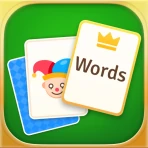
Compared with a standard solitaire card game, the cards here are not mainly about suits, ranks, or probability. The mental reward comes from language. Someone who enjoys solitaire because of its familiar mechanics may not find the same comfort here, but a word enthusiast may appreciate the way the card presentation gives vocabulary a tactile puzzle structure.
Compared with competitive word games, it removes much of the pressure. There is no need to beat another person in real time, which is a strength for relaxed play but a weakness for players who need rivalry to stay interested. I see it as a personal concentration exercise rather than a test of speed.
Small strategies that improve the experience
My first recommendation is to avoid locking in a group merely because three cards seem related. Look for the fourth relationship and consider what the remaining cards would mean afterward. This simple check helps prevent the most common kind of mistake: a group that works in isolation but steals a card from a more coherent category.
Second, pay attention to ordinary usage rather than dictionary possibility. Almost any word can be connected to another through an obscure interpretation, but the strongest solutions usually feel natural once seen. If a proposed group requires a long explanation, I keep searching before accepting it.
Third, use elimination actively. When a clear group disappears, do not only focus on the cards left behind. Ask what kind of category is now possible because that group has been removed. This turns the board into a changing set of constraints and often reveals a relationship that was hidden by visual clutter.
Finally, stop when the puzzle stops being enjoyable. Because the game is designed for solitary, flexible sessions, there is no reason to force a solution while tired or distracted. Returning later with a fresh view can be more satisfying than repeatedly tapping through the same uncertain idea. That is a small advantage over games built around uninterrupted rounds.
My final recommendation
Word Card Sort: Solitaire succeeds because it gives wordplay a thoughtful, card-based shape. I like that it asks me to interpret, compare, and revise instead of simply reacting. The free entry point, Everyone rating, and support for Android 6.0 or later make it easy to try, while the focused design means I can understand its appeal quickly.
My reservation is equally clear: the game’s open-ended associations will not satisfy everyone. When the intended connection feels natural, the puzzle is rewarding. When several meanings compete without a convincing answer, the same design can feel less precise than a crossword or a strict letter puzzle. The optional purchase range also means I would approach spending carefully.
I recommend it to patient word-game fans who value insight over speed. Try it when you want a calm solo challenge, use the certainty-first sorting method, and judge it by how fair the associations feel across several sessions. If that style of reasoning clicks with you, this is a distinctive little word game. If you need competition, rigid clues, or rapid action, another category will serve you better.
Pros
- Simple sorting gameplay is easy to learn within a few rounds.
- Short sessions make it suitable for quick breaks or casual play.
- Word-based challenges add a light mental workout to solitaire.
- Clean card-focused design keeps the board easy to follow.
- Progressive difficulty can keep regular players engaged.
Cons
- Some levels may feel repetitive after extended play.
- Mistakes can be frustrating when a single move blocks progress.
- The word challenges may not suit players seeking traditional solitaire only.
- Ads may interrupt the experience
- depending on the version and device.
- Players wanting deep strategy may find the mechanics relatively simple.
FAQ
What is Word Card Sort: Solitaire, and how is it played?
Word Card Sort: Solitaire combines classic solitaire-style card sorting with word and vocabulary challenges. You typically organize cards according to matching letters, words, categories, or patterns while clearing the board within the rules of each level. The game is easy to understand, but later stages introduce more complicated layouts that require planning, quick recognition, and careful use of available moves.
Is Word Card Sort: Solitaire suitable for beginners?
Yes. Word Card Sort: Solitaire is generally accessible to beginners because the early puzzles introduce the sorting mechanics gradually and provide a relaxed way to learn the rules. Players who enjoy word games, solitaire, or casual brain-training apps should be able to start without previous experience. Difficulty can increase as levels progress, so patience and strategic thinking become more important over time.
Can Word Card Sort: Solitaire be played without an internet connection?
Many casual puzzle and solitaire games allow at least some levels to be played offline, but the exact availability can depend on the version installed and the platform. Online access may still be required for advertisements, cloud synchronization, updates, leaderboards, or optional rewards. Before relying on it during travel, open the game once while connected and test whether the main gameplay remains available offline.
Does Word Card Sort: Solitaire contain advertisements or in-app purchases?
The game may include advertisements, especially between levels or when players request optional hints, extra moves, or bonuses. Some versions can also offer in-app purchases for removing ads, obtaining boosters, or progressing more quickly. Review the store listing and purchase settings before downloading, particularly if children will use the app or if you prefer a completely uninterrupted free-to-play experience.
What are the main benefits and possible drawbacks of playing Word Card Sort: Solitaire?
Word Card Sort: Solitaire can be a relaxing way to pass time while exercising vocabulary recognition, concentration, pattern matching, and decision-making. Its short levels make it convenient for quick sessions, and the combination of cards and words gives the familiar solitaire format a different feel. However, repeated puzzles may become predictable, advertisements can interrupt play, and advanced levels may feel frustrating without hints or extra moves.