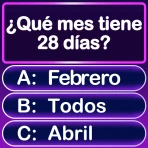
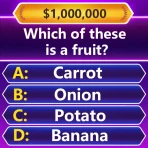
The 1% Club TV Show Quiz Game
For Android
I went into The 1% Club expecting a straightforward TV trivia game, and that is exactly where its appeal begins. It presents itself as a quiz built around the challenge of reaching the toughest questions, rather than as a large, complicated game with upgrades, characters, or a long campaign. After spending time with it, I found the experience easiest to enjoy in short sessions: a few questions when I wanted a mental break, or a shared challenge with someone nearby.
This is a free trivia game developed by Telescope Inc., aimed at players of all ages. It belongs to the quiz-and-game-show side of mobile entertainment, so the main attraction is not exploration or collection but the tension of deciding whether I really understand a question before committing to an answer. That simple premise gives the game a clear identity, although it also means the quality of the question flow matters more than visual extras.
The current release is version 2.0.0, and the game is available for devices running Android 6.0 or later. It has passed the early curiosity stage with over one hundred thousand installs, while its average score sits at 3.2 from roughly two hundred and sixty ratings. I read that combination as a useful warning: there is enough interest to make the concept worth trying, but the experience will not suit everybody equally.
How the quiz feels from the first question
My first impression was that the game understands the value of a recognizable game-show setup. The challenge feels more inviting than a dry list of general-knowledge questions because each answer carries a little pressure. Even when I knew the subject, I still had to slow down and check whether I was answering the exact question being asked instead of reacting to a familiar word.
That distinction is important. The game is not at its best when treated as a speed test alone. I got more from it when I read each prompt carefully, considered the wording, and accepted that an apparently easy question might be testing attention rather than specialist knowledge. For a casual player, that makes the experience approachable. For a trivia enthusiast, it creates a different challenge from simply recalling obscure facts.
The format also works well as a quick social activity. I can imagine opening it during a relaxed evening and passing the phone around, with each person arguing over an answer before the result appears. It does not need a large group or a formal competition to be useful. Two people can turn a short run into a conversation about logic, wording, and general knowledge.
At the same time, I would not describe it as a complete replacement for a full party-game collection. Its appeal depends on whether the questions continue to feel fresh and whether the presentation gives each round enough energy. Players looking for elaborate progression, a deep single-player journey, or a broad collection of modes may find the experience narrow.
A visual language built around the show format
The art direction works because it supports the idea of a televised challenge instead of trying to turn the quiz into something it is not. The setting feels more important than decorative detail: the player is placed in a situation where the next question deserves attention. That framing helps separate the game from a plain browser-style questionnaire.
I liked the way the presentation encourages me to treat each prompt as an event. A question is not merely another item in a vertical list; it is part of a larger climb toward harder decisions. That sense of staging gives ordinary trivia a little more weight. The visual language is most effective when it stays out of the way and lets the wording remain the star.
There is a useful trade-off here. A restrained presentation makes the game easy to understand quickly, but it may feel less exciting to people who expect constant animation or a heavily customized interface. I would choose this style for clarity, especially when playing with another person, because excessive decoration can make a quiz slower to read and harder to discuss.
One practical tip I found helpful was to avoid judging the game by its opening impression alone. The setting establishes the mood, but the real test is how I respond to the wording. If I began tapping immediately, I made more careless decisions. If I treated the screen like a host delivering a question, I paid closer attention and enjoyed the tension more.
Sound, pauses, and the rhythm of attention
Sound and pacing are particularly important in a game-show quiz, because they tell me when to relax and when to focus. The experience benefits from a rhythm in which a question has room to land before I make a decision. That pause is not wasted time; it gives the player a chance to think rather than turning every round into blind reflex.
You may also like

Amazon Kindle: Revolutionizing Digital Reading

Why OLX: Compras Online e Vendas Captivates Shoppers Worldwide

Unpacking the Strategy of Yalla Ludo's Jackaroo Mode

Why eBay's Mobile App Stands Out in Online Shopping

How Fishdom's Puzzle Mechanics Transform Your Aquarium Experience

Block Blast! The Perfect Puzzle for Busy Lives
I found the mood strongest when I played without rushing. A short session could feel surprisingly absorbing because the game asks for small bursts of concentration. The rhythm also makes it suitable for breaks: I do not need to prepare for a complicated campaign, remember a large inventory, or return after a long tutorial.
There is a downside to this structure. If I wanted a rapid-fire trivia workout, the staged pacing could feel slower than a conventional question bank. Likewise, players who enjoy constant rewards may find the quieter moments less satisfying. The game is trying to create anticipation, not simply maximize the number of questions answered per minute.
For an everyday use case, I would place it in the gap between activities rather than use it as background entertainment. On a commute, during a coffee break, or while waiting for friends, I could play a short round and stop without losing the point of the session. In a noisy environment, however, the show-like atmosphere may have less impact, and the questions themselves need to carry the experience.
Where the mechanics fit the idea
The central mechanic fits the theme because success depends on understanding and judgment, not on building a powerful character or learning a complicated control system. That makes the game immediately accessible. Someone who has never played a mobile quiz can pick it up, while an experienced trivia player can concentrate on the content instead of learning menus.
The best strategic adjustment is to separate confidence from certainty. I learned not to choose an answer just because it sounded familiar. Instead, I looked for qualifiers, comparisons, and small changes in wording that could alter the meaning. This is one of the more interesting aspects of the format: knowledge helps, but careful reading can rescue me when I do not know everything.
That also explains who will enjoy it most. It is a good fit for people who like general knowledge, television-style tension, and discussions about whether an answer is technically correct. It is less suitable for players who want a persistent world, character development, competitive rankings, or a strong sense of customization. The game’s simplicity is its strength and its boundary at the same time.
Compared with ordinary trivia apps, this one has a clearer dramatic frame. A standard quiz can be better when I want a large number of categories, quick repetition, or a more utilitarian practice session. Compared with a traditional party quiz, this game is easier to start because it does not require someone to prepare questions or act as a host. The compromise is that the experience is more dependent on its own presentation and question flow.
Another useful trade-off concerns replay. A conventional question bank can feel rewarding because I can target a subject and deliberately improve. Here, the attraction is more about the moment-to-moment challenge and the feeling of progressing through a televised-style test. I would recommend it for spontaneous play, but I would choose a dedicated study-oriented quiz app if my goal were systematic learning.
Who should install it, and who should pass
I would recommend trying it if you enjoy solving questions aloud, debating answers with friends, or testing how carefully you read under mild pressure. The Everyone content rating makes it an easy choice for a broad household audience, and the free price removes the biggest barrier to experimenting with the format.
It is also a sensible option for someone who wants a game that can be understood within moments. There is no need to invest an evening before discovering whether the core idea works for you. A short session is enough to reveal whether the show-style pacing feels engaging or overly restrained.
I would skip it if my priority were deep progression or a highly competitive online environment. I would also look elsewhere if I wanted specialized trivia about one subject, because a general game-show approach is not the same as focused practice. Players who dislike questions designed around wording and interpretation may find the challenge frustrating rather than clever.
The rating of 3.2 is consistent with that mixed fit. It does not make the game a poor choice, but it suggests that the presentation and quiz structure will divide opinion. I would not install it expecting a flawless, endlessly varied trivia platform. I would install it as a free, focused game-show experience and judge it on whether that specific mood suits me.
Small habits that make each session better
My first recommendation is to read the entire question before looking for the answer that feels most familiar. This sounds obvious, but the game’s tension comes from the difference between recognizing a topic and understanding the actual prompt. Taking a brief pause improves the experience because it turns guessing into reasoning.
Second, I would play with the phone positioned where another person can see it if the goal is social fun. The game becomes more interesting when people explain why they chose an answer, especially when the disagreement comes from interpretation rather than a lack of knowledge. That makes the app useful as a conversation starter, not just a solitary test.
Third, I would stop after a satisfying run instead of forcing a long session. The format is strongest when the questions retain their sense of occasion. Playing in short bursts keeps the mood focused and avoids turning the game into repetitive tapping. This is a small but meaningful difference from quiz apps designed for endless grinding.
Finally, I would treat mistakes as information about my reading habits rather than as proof that I am bad at trivia. Some questions reward broad knowledge, while others expose assumptions I made too quickly. That mindset makes the game less discouraging and gives the format more lasting value than a simple correct-or-incorrect counter.
My final take on the atmosphere and the challenge
After using it, I see The 1% Club TV Show Quiz Game as a compact, accessible trivia experience with a recognizable mood. Its art direction and setting give the questions more presence, while the pacing encourages attention instead of pure speed. The mechanics remain simple, but that simplicity is deliberate: the game wants the player focused on the problem in front of them.
The result is not a universal recommendation. I would choose a larger trivia platform for broader subject control, a study tool for structured learning, and a full party game for more varied group activities. But for a quick television-style challenge that can work alone or with friends, this game has a clear reason to exist.
Telescope Inc. has made a free game that is easy to try and easy to explain. Its strongest quality is the way it turns ordinary questions into small moments of suspense. Its main limitation is that players who need extensive progression or constant novelty may quickly want more. If you enjoy careful wording, shared guesses, and short bursts of game-show tension, it is worth giving this quiz a fair session before deciding whether its measured rhythm is for you.
Pros
- Quick quiz rounds make it easy to play in short breaks.
- Questions cover varied topics
- keeping each session unpredictable.
- Competitive scoring adds excitement for players who enjoy challenges.
- Simple controls make the game accessible to most users.
- Replay value comes from trying to improve your previous score.
Cons
- Some questions may feel too difficult without specialist knowledge.
- Repeated questions can reduce variety during longer play sessions.
- Progress may feel slow if rewards depend heavily on high scores.
- An internet connection may be required for some game features.
- Players seeking a deep strategy game may find the format limited.
FAQ
What is The 1% Club TV Show Quiz Game?
The 1% Club TV Show Quiz Game is a trivia experience inspired by the television quiz show of the same name. Instead of relying mainly on general knowledge, it challenges you with logic, observation, wordplay, and lateral-thinking questions. The goal is to solve increasingly difficult puzzles and see whether your answers place you among the small percentage of players who can reach the toughest levels.
How does the gameplay work?
Gameplay generally follows the quiz-show format, with questions becoming progressively more challenging as you advance. You read each puzzle carefully, consider the possible answers, and submit your choice before moving on. Some versions may include lives, points, stages, or other progression features. Success depends less on memorizing facts and more on spotting patterns, interpreting wording, and thinking differently from the obvious answer.
Is The 1% Club TV Show Quiz Game suitable for all ages?
The game is suitable for most players who enjoy brain teasers and casual quiz challenges, including families, friends, and fans of the television program. However, difficulty can vary considerably, and some questions may require strong reading comprehension or abstract reasoning. Younger players may enjoy it with assistance, while children should be supervised if the app includes advertisements, purchases, or online features.
Does the game require an internet connection?
Internet requirements can depend on the version and device you use. Basic quiz content may be available during some offline sessions, but an internet connection could be needed to load advertisements, synchronize progress, access new questions, submit scores, or use competitive features. Before downloading, check the store listing and test the game with Wi-Fi and mobile data disabled if offline play is important to you.
Are there advertisements or in-app purchases?
Many free-to-download quiz games support development through advertising, optional purchases, or both. The 1% Club TV Show Quiz Game may therefore display ads between rounds or offer purchases connected with extra lives, hints, ad removal, or additional content, depending on the release and region. Review the app-store description and payment settings before playing, especially if children will use the device.