Quiz Win: Play For Real Reward
For Android
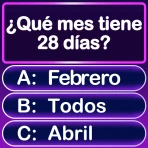
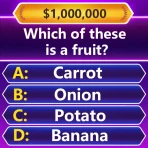
I went into Quiz Win: Play For Real Reward expecting a lightweight trivia game, and that is exactly where it makes the best first impression. It is a free quiz title from QuestTech, built around short question-and-answer sessions rather than a long story, complicated controls, or a demanding setup. The central appeal is easy to understand: answer questions, keep playing, and work toward the reward-oriented experience suggested by its name.
That simplicity makes it approachable, but it also means the quality of the moment-to-moment questions matters more than flashy presentation. In my experience, this is most enjoyable when I treat it as a quick mental break instead of a complete replacement for a deep trivia platform. The game belongs to the trivia category, carries an Everyone age rating, and is free to start, so it is easy to recommend as a casual option for families, commuters, and anyone who likes testing general knowledge in short bursts.
How the first goals shape the opening sessions
The early appeal comes from having an immediate reason to answer the next question. There is no need to learn a complicated interface before playing. I can open the game, read a prompt, choose an answer, and quickly see whether my knowledge was enough. That low entry barrier is important because trivia games often lose people when they bury the first playable moment under menus or lengthy explanations.
The reward angle gives those first rounds a little more purpose than a completely scoreless quiz. Even when I am only playing for a few minutes, I have a clear short-term objective: stay engaged, answer accurately, and see what comes next. That is a useful structure for a coffee break or a short wait in a queue. It also makes the game more inviting to someone who does not usually play mobile games, because the basic activity is familiar from ordinary quiz nights.
Still, I would not confuse an early goal with a deep progression system. The verified store information presents the reward concept, but it does not establish a detailed map of unlocks, character development, leagues, or collectible content. I therefore judge the opening on the strength of its quiz loop rather than imagining a larger adventure behind it. That is a fairer way to approach this title and helps set realistic expectations before installing it.
A useful personal rule is to begin with a small session rather than trying to force a long run. I answer a handful of questions, notice whether the topics suit me, and then decide whether I want to continue. This prevents the reward language from becoming the only reason to play. If the questions themselves are not enjoyable, no goal can fully compensate for that.
What progress feels like during ordinary play
Trivia games need visible feedback, even when their systems are simple. Each answer provides an immediate signal: I either knew the fact, made a reasonable guess, or learned that my confidence was misplaced. That instant response is one of the strongest parts of the format because it turns a few spare minutes into a small test of memory and judgment.
In this game, I pay attention to progress in practical terms rather than expecting a role-playing-style character journey. A good session is one where I maintain focus, improve my accuracy, or recognize a subject that repeatedly catches me out. That may sound modest, but it is enough to create a satisfying rhythm when the questions arrive at a comfortable pace.
The reward-focused framing can make each correct answer feel more meaningful, yet it also creates a trade-off. Players may start concentrating on the outcome instead of the knowledge challenge. I get more from the experience when I use the reward idea as motivation, not as a promise that every session will feel like a major achievement. The quiz remains the main activity, and the reward theme works best as an extra layer of purpose.
For families, the progress signal is especially easy to understand. A younger player can see that answering questions correctly helps sustain a run, while an adult can turn the game into a quick informal challenge between errands. Because the age rating is Everyone, it is positioned as a broadly accessible title, although adults should still use their own judgment about whether the reward-oriented presentation suits a child’s expectations.
One practical tip is to notice your mistakes by topic instead of only counting them. If I miss several questions involving geography, science, or history, I treat that pattern as a prompt to slow down on similar questions. This turns the app into a small learning tool rather than a series of disconnected guesses. It is a more rewarding way to play, especially for people who enjoy seeing their general knowledge develop over time.
Difficulty, guessing, and the rhythm of a quiz run
The difficulty of a trivia game is not just about whether questions are easy or hard. It also depends on wording, the range of subjects, and how much time I feel I have to make a decision. A question can be technically simple but still challenging if the possible answers are close together. Conversely, a difficult fact can feel manageable when the choices clearly point toward the right answer.
You may also like

Amazon Kindle: Revolutionizing Digital Reading

Why OLX: Compras Online e Vendas Captivates Shoppers Worldwide

Unpacking the Strategy of Yalla Ludo's Jackaroo Mode

Why eBay's Mobile App Stands Out in Online Shopping

How Fishdom's Puzzle Mechanics Transform Your Aquarium Experience

Block Blast! The Perfect Puzzle for Busy Lives
My main caution with Quiz Win is that a short store summary cannot tell me how consistently the difficulty rises from one round to the next. I would not claim that it has a carefully measured curve of escalating stages without evidence. Instead, I look at the pacing as a casual quiz experience: the satisfaction comes from moving through questions and handling a mixture of familiar and uncertain topics, not from mastering a formally documented campaign.
That distinction matters for different kinds of players. Someone who wants a relaxed general-knowledge game may appreciate the flexible feeling of answering one question at a time. A competitive trivia specialist may want clearer rankings, fixed difficulty tiers, or a more transparent system for comparing performance. If those features are essential to you, a dedicated competitive quiz platform may be a better fit than this reward-centered casual title.
I also recommend resisting the urge to answer instantly just because the game is designed for quick play. A fast guess can be useful when I genuinely know the answer, but hesitation is often a sign that I should compare the choices carefully. Reading the full wording before tapping is a small habit that improves the experience and makes the result feel more connected to knowledge than luck.
The most effective way to use the game is in focused bursts. I put the phone down when my attention starts drifting, because distracted trivia becomes random tapping. That is a realistic limitation of the format: the game can provide a pleasant mental exercise, but it cannot manufacture concentration. Its pacing works best when the player brings a little attention to each question.
Where retention works and where it may become pressure
The idea of earning rewards naturally encourages another round. That can be helpful when I want a reason to return, but it can also make the session feel less relaxed if I begin chasing progress instead of enjoying the questions. The difference depends on how I frame the game. I like it more when I set a simple stopping point and regard continued play as optional.
This is also where I would be careful with expectations. The title and summary emphasize unlimited quiz prizes, but I would not treat that wording as a guarantee of a particular outcome or as a substitute for reading the current in-app terms. Reward-focused games deserve a little more attention from players: understand what the app is asking you to do, avoid spending money impulsively, and remember that a free download does not automatically mean every part of the experience has the same conditions.
That advice is not a criticism unique to this game; it is simply sensible whenever rewards are part of the presentation. For me, the strongest reason to keep playing is the quiz loop itself. If the questions are interesting, the reward theme adds motivation. If the questions stop being engaging, pressure to continue becomes a weakness rather than a strength.
Another retention factor is convenience. The game’s minimum operating requirement is Android 6.0, which places it within reach of many older Android devices. That makes it a practical choice for a spare phone or a budget handset, assuming the device can run the current version smoothly. The current release is 1.8.6, so I would keep the app updated when possible and check that the installed version matches the one supported by the device.
The game has also reached over 500 thousand installs and holds a 4.4 average from around 16 thousand ratings. Those figures suggest that it has found a substantial audience and that many players respond positively to its basic concept. I still would not use popularity as proof that it will suit everyone. A person looking for deep competitive structure, a story campaign, or a highly specialized subject library may prefer an alternative designed around those priorities.
Everyday scenarios where the format makes sense
My favorite use case is the awkward ten-minute gap: waiting for an appointment, sitting before a meeting, or taking a break while something finishes. I can start a quiz session without committing to a full game level, and the question format gives that time a clear shape. Unlike scrolling through an endless social feed, I am at least actively recalling information and making decisions.
It can also work as a casual conversation starter. Two people can compare answers, debate a doubtful choice, or take turns reading questions aloud. I would not call it a complete party-game replacement, because the app is primarily designed for individual mobile play, but the quiz format naturally supports informal sharing. That is a useful advantage over games that require everyone to learn a complicated control scheme.
For learning, I would use it as reinforcement rather than as a structured course. It can encourage curiosity and expose gaps in general knowledge, but a person studying for a formal exam should use a dedicated study app or textbook alongside it. Trivia questions are selected for quick engagement, not necessarily for a complete curriculum, and that difference affects how seriously I would rely on the results.
It is less suitable for players who dislike uncertainty around reward systems. If you want a game where every unlock, prize, and milestone is clearly defined from the beginning, you may find the reward-centered presentation less comfortable than a conventional paid quiz or a straightforward score-based app. Likewise, players who need a rich solo campaign may run out of meaningful goals sooner than casual users.
How it compares with familiar trivia alternatives
Compared with a traditional trivia app that focuses only on scores, this game has a stronger motivational hook. The possibility of prizes gives each short session a reason to continue, while a standard quiz may feel more like a test with no larger purpose. That difference is valuable for people who need a nudge to return.
Compared with a serious competitive quiz platform, however, I would expect less emphasis on formal competition unless the app clearly presents those systems in play. Competitive alternatives are usually better for players who want detailed rankings, tightly controlled rounds, or a strong sense of head-to-head progression. Quiz Win is more appealing when convenience and reward-oriented motivation matter more than tournament depth.
Compared with educational software, it is the more casual choice. I can use it without planning a study schedule, but I should not expect lessons, explanations, or a carefully sequenced subject path simply because it asks knowledge-based questions. Its value is in repetition, curiosity, and quick recall. That makes it a pleasant supplement, not a replacement for deliberate learning.
Compared with a paid quiz game, the free entry is an obvious advantage for trying the format without commitment. The trade-off is that reward-focused free games can require more patience with their pacing and presentation than a simple one-time purchase. I would choose this title when I want to sample the experience first and keep sessions flexible; I would choose a paid alternative when I want a cleaner, more predictable package.
My verdict on goals, pacing, and long-term appeal
QuestTech has made a quiz game that is easy to understand and easy to fit into ordinary life. Its strongest design choice is the immediate loop: read, decide, receive feedback, and consider another question. The reward theme gives those actions extra momentum, while the broad age rating and free price make the first step uncomplicated.
The limits are just as important. I would not install it expecting a documented progression tree, a story-driven campaign, or the depth of a specialist competitive trivia service. The available facts support a casual reward-oriented quiz experience, and that is the standard I use to judge it. Players should also approach prize language thoughtfully and avoid letting the desire to continue override their own limits.
For me, the game earns a recommendation for short sessions, family-friendly general trivia, and anyone who enjoys turning idle minutes into a small knowledge challenge. It is particularly suitable if you like the encouragement of goals but do not want complicated controls or a large time commitment. I would skip it if your main priority is rigorous study, a deep unlock system, or fully transparent competitive progression.
Overall, I see Quiz Win as a convenient casual trivia companion rather than a definitive quiz platform. Its 4.4 average and broad install base show that the straightforward concept connects with many players, but the real test is personal: do the questions keep you interested after the initial reward appeal fades? If the answer is yes, the app can make spare moments more engaging. If not, a conventional score-based quiz or a focused learning alternative will probably serve you better.
My final advice is to play for the questions first and treat any reward as secondary. That mindset keeps the experience enjoyable, makes the pacing feel less demanding, and gives you a clearer sense of whether this particular trivia game deserves a regular place on your phone.
Pros
- Quick quiz rounds make it easy to play during short breaks.
- Simple question-and-answer format is suitable for casual players.
- Real-reward concept can add motivation beyond ordinary trivia games.
- Lightweight gameplay is generally easy for beginners to understand.
- Competitive scoring may encourage players to improve their knowledge.
Cons
- Reward availability may depend on location
- eligibility
- or current promotions.
- Some quizzes may feel repetitive after extended play sessions.
- Incorrect answers can limit progress or reduce potential rewards.
- An internet connection may be required for quizzes and account features.
- Users should review payout terms before investing significant time.
FAQ
What is Quiz Win: Play For Real Reward?
Quiz Win: Play For Real Reward is a trivia-style mobile game that lets players answer questions across different categories while competing for points, rankings, or potential rewards. The app is designed for users who enjoy quick quiz rounds and the possibility of earning prizes. Available features, reward types, and participation rules may vary depending on your country, age, and the current version of the application.
Can I really earn real rewards by playing Quiz Win?
The application may offer real-world rewards or prize opportunities, but earning them is not guaranteed. Results can depend on quiz performance, competition, eligibility requirements, available contests, and the app’s terms. Before spending time or money, carefully review the official reward conditions, withdrawal rules, minimum balance, supported payment methods, and any regional restrictions. Treat the game as entertainment rather than a guaranteed source of income.
Is Quiz Win: Play For Real Reward free to download and play?
Quiz Win: Play For Real Reward may be available to download without an upfront charge, although the exact model can change between Android and iOS versions. Some features may include advertisements, optional purchases, entry fees, or other limitations. Check the store listing and in-app information before participating in paid contests. Also review whether points, bonuses, or promotional rewards have expiration dates or special usage conditions.
What personal information or permissions does the app require?
The permissions required can depend on your device, operating system, login method, and reward features. A quiz app may request account details, email verification, or payment information if it supports prize withdrawals. Only provide information through the official application and avoid sharing sensitive financial details unnecessarily. Before installing, read the app’s privacy policy and examine its data-safety section to understand how information may be collected, stored, and shared.
Are there age, location, or withdrawal restrictions?
Yes, reward-based quiz applications commonly apply eligibility rules based on age, location, contest availability, and local regulations. Certain countries or regions may not support cash prizes, and users may need to meet a minimum age requirement or complete identity verification before withdrawing rewards. Read the current terms carefully, especially the rules for withdrawals, taxes, account suspension, duplicate accounts, and any deadlines for claiming prizes.