Jigsaw Puzzle Art: Relax Book
For Android
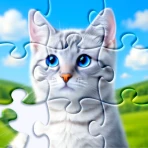
I approached Jigsaw Puzzle Art: Relax Book expecting a familiar picture-arranging game, and that is exactly where its appeal begins. It is a free puzzle game from Runyou built around assembling illustrated images rather than chasing a complicated story, competitive ladder, or demanding action. After spending time with it, I found the strongest part of the experience was its calm, visual identity: the pictures give the game a clear purpose, while the simple format makes it easy to pick up whenever I have a few quiet minutes.
That simplicity is also the main thing to understand before installing it. This is not a game for players who need constant surprises, deep progression systems, or fast reactions. It is better suited to anyone who enjoys sorting shapes, watching an image slowly become complete, and using a puzzle as a small break from a busier day. The store presents it as “Jigsaw Puzzle Art,” but my experience is that the real draw is the combination of artwork and relaxed pacing rather than the puzzle rules alone.
A calm picture-first puzzle with a clear identity
My first impression was that the game knows what it wants to be. It does not bury the central activity under a complicated interface. You choose a picture, work through its pieces, and gradually turn a scattered board into a finished image. That direct structure matters on a phone because there is very little learning curve. I could understand the basic interaction almost immediately, without having to study several menus or remember a long set of instructions.
The game belongs comfortably in the casual puzzle space, but I would describe its mood as more important than its challenge level. A traditional jigsaw can feel like a table activity that demands a long uninterrupted session. Here, the digital format makes the same general idea more flexible. I can begin a picture during a short pause, stop when I need to, and return later without treating the session like a serious commitment.
That makes it a practical choice for an everyday situation such as winding down after work. I might not have the concentration for a strategy game or the energy for a competitive match, but I can still spend a few minutes looking for edge pieces, matching colors, and recognizing parts of the larger image. The activity gives my attention somewhere gentle to go without requiring me to perform for anyone else.
The numbers around the game support that broad appeal. It holds a 4.8 average from around 24 thousand ratings and has passed one million installs, which suggests that its straightforward approach has connected with a substantial audience. Those figures do not change my personal judgment, but they do help explain why this kind of quiet, accessible puzzle has staying power.
It is also free and rated for Everyone, so the barrier to trying it is low. I would still encourage parents to judge any mobile game according to their own household preferences, especially because the experience takes place on a small screen and may encourage longer sessions than intended. For adults, older children, and anyone who likes visual puzzles, the age positioning feels consistent with the uncomplicated nature of the play.
The artwork does more than decorate the board
The pictures are the emotional center of the experience. In many puzzle games, the image is simply a surface placed behind the mechanics. Here, the finished picture gives the player a reason to keep going. Each correctly placed piece is satisfying not only because it solves a small problem, but because it reveals more of the scene and makes the overall composition easier to read.
I noticed that this changes how I approach difficult sections. Instead of treating every piece as an isolated shape, I start using the image’s visual language: a repeated color, a strong outline, a cluster of similar textures, or a recognizable object. That makes the puzzle feel less like random sorting and more like gradually understanding a painting. The art direction therefore supports the mechanics directly, rather than merely making the menu look attractive.
The approach works best when I allow myself to look at the whole image before moving pieces around. My useful habit is to identify the broad zones first. I look for the likely border, then separate pieces by obvious color families or distinctive patterns. This is more efficient than picking pieces one by one from a mixed group, and it also lets the artwork guide the solving process. The picture becomes a map.
There is a trade-off, though. Beautiful or detailed imagery can make a puzzle more inviting while also making similar pieces harder to distinguish. A large area with nearly identical tones may slow progress even when the scene itself is attractive. I see that as a natural tension in the format: the more atmospheric the image, the more carefully I may need to inspect its small visual differences.
For that reason, I would not choose this game if my ideal puzzle is purely abstract and optimized for maximum logical difficulty. Its challenge comes through visual recognition and patient arrangement, not through elaborate rules. Players who prefer number puzzles, wordplay, or tightly engineered brainteasers may find the art-led design too gentle.
You may also like

Amazon Kindle: Revolutionizing Digital Reading

Why OLX: Compras Online e Vendas Captivates Shoppers Worldwide

Unpacking the Strategy of Yalla Ludo's Jackaroo Mode

Why eBay's Mobile App Stands Out in Online Shopping

How Fishdom's Puzzle Mechanics Transform Your Aquarium Experience

Block Blast! The Perfect Puzzle for Busy Lives
How the setting creates a playable mood
Although there is no need for a large fictional world, the game still creates a sense of place through its images. The settings are experienced as small visual environments that emerge piece by piece. A scene can feel open, warm, decorative, or peaceful depending on the composition, and that feeling develops alongside the solution rather than being delivered in a separate story sequence.
I like that the setting remains subordinate to the puzzle. It does not interrupt the activity with excessive narrative explanation. Instead, the image supplies context while my hands supply the movement. This keeps the game coherent: the visual theme, the quiet pace, and the simple objective all point in the same direction.
One practical consequence is that the game works well when I want a screen activity with a softer tone. It is an option for a morning coffee break, a quiet commute when I am seated safely, or a short evening session before putting the phone away. I would not use it while walking, driving, or doing anything that needs full attention, but in a settled environment it can occupy the mind without creating the urgency of a timed game.
The same softness may feel repetitive to some players. If I play for a long stretch, the basic rhythm can become predictable because the pleasure comes from repeating a familiar process with different imagery. I think the best way to enjoy it is to treat each picture as a contained activity rather than expecting a constantly changing adventure. That expectation makes a significant difference.
Sound and rhythm matter even when the rules stay simple
The game’s mood depends not only on what I see but also on how the interaction feels over time. A jigsaw naturally has a slow rhythm: inspect, test, place, reassess, and continue. That sequence gives the experience its quiet pulse. It does not demand rapid decisions, so I can focus on small visual relationships and let the completed image appear gradually.
Sound, when present during play, should support that rhythm rather than compete with it. I found the most comfortable approach was to treat audio as part of the background atmosphere, not as the reason to keep playing. This is important for a relaxation-oriented puzzle because loud or overly busy feedback would undermine the visual calm. Players who prefer complete silence can also approach the game as a primarily visual pastime, which suits the format well.
The pacing is especially effective for short sessions. I do not need to reach a dramatic checkpoint before stopping. A few placed pieces can feel like progress, and a longer session can still remain unhurried. That flexibility is one of the game’s more useful qualities: it respects the difference between having five minutes and having half an hour.
At the same time, a slow pace is not automatically relaxing for everyone. Some people experience repeated searching as mental friction, particularly when several pieces look alike. If I am tired but impatient, I can find myself staring at the same area without making progress. In those moments, it helps to change tactics rather than force the issue. I might work on the border, isolate a contrasting color, or stop and return later with fresher eyes.
That simple change of rhythm is one of my practical tips. I would not try to solve an entire difficult area through random tapping or repeated guessing. Instead, I divide the picture into visual regions and finish the most distinctive one first. This reduces clutter and makes the remaining pieces easier to interpret. It is a small workflow improvement, but it makes the relaxed concept feel more rewarding because I am cooperating with the image instead of fighting it.
Where the mechanics fit and where they fall short
The central mechanics are easy to understand, which is a strength for casual use. I can begin without a tutorial-heavy introduction, and the objective remains visible throughout the session. The focus stays on matching pieces and building the image, so the game does not ask me to learn unrelated systems before I can enjoy its main idea.
That accessibility makes it suitable for players who are new to digital jigsaws. It also works for experienced puzzle fans who want something lighter than a large, demanding board. I can approach it with a methodical plan, but I do not need expert knowledge. The game rewards observation, patience, and recognition of patterns rather than speed or specialized skill.
Its limitation is that simplicity can reduce variety. Players looking for a strong sense of progression, unusual puzzle rules, character development, or competitive pressure should probably look elsewhere. A more feature-heavy jigsaw title may offer a better fit for someone who wants extensive customization or a more demanding long-term challenge. This game is at its best when the act of completing pictures is enough.
I also would not recommend it as the first choice for someone who dislikes repetition. The same broad action returns from one image to the next, and the appeal depends on whether that repeated structure feels meditative or monotonous. My own view is that it works as a break-sized game, but I would be less likely to spend every gaming session inside it.
The current version is 1.1.24, and it runs on Android 7.0 or later. That broad system compatibility makes it approachable for people who are not using the newest phone. Still, the quality of the experience will depend on screen size and touch comfort. On a smaller display, pieces and visual details may demand more concentration, while a larger screen gives the artwork more room to communicate its patterns.
One useful way to decide whether it suits you is to consider your preferred solving style. If you enjoy starting with corners, sorting by color, and using the completed image as a guide, the design should feel natural. If you prefer puzzles that provide a clear score, countdown, or escalating rule set, the relaxed structure may seem underpowered. Neither reaction is wrong; they simply reflect different reasons for playing.
Who will get the most from it
I would recommend this game to people who want a low-pressure activity that can fit around ordinary routines. It is particularly suitable for a player who likes artwork, prefers quiet concentration to competition, and wants to decide independently when a session begins or ends. The free price also makes it easy to test without treating the download as a major commitment.
It can be a nice shared activity as well, even though the play itself is designed around the individual screen. Two people can look at the same picture and discuss which area to tackle next, or one person can hand the phone over after completing a section. That kind of informal cooperation suits the unhurried design better than a competitive score chase would.
I would be more cautious about recommending it to someone who needs a strong reward loop to stay engaged. If you want every session to introduce a new mechanic or a dramatic objective, the artwork alone may not carry the experience for long. Likewise, players who specifically want realistic physical jigsaw simulation may prefer a title that emphasizes piece rotation, table layout, or more elaborate board controls.
Another consideration is attention. Because the game is easy to start and has no obvious need for a long commitment, it can become an automatic way to fill spare moments. I found it more satisfying when I chose a small goal, such as completing one visual section, rather than opening it without any stopping point. That approach preserves the relaxing quality and prevents the activity from becoming background scrolling with a puzzle attached.
My verdict on the complete atmosphere
Jigsaw Puzzle Art: Relax Book succeeds because its art direction, sound-led calm, and pacing all reinforce the same mechanical idea. The pictures are not an excuse for a generic puzzle board; they are the reason the board feels worth completing. The setting exists through composition, the rhythm comes from gradual assembly, and the rules stay quiet enough for the visual experience to remain in control.
My strongest recommendation is to use it when you want gentle focus rather than stimulation. Give yourself a comfortable place, begin by studying the whole image, and sort pieces into recognizable visual groups instead of searching randomly. That small amount of preparation makes the game more enjoyable and reveals its best quality: it turns careful looking into a complete, manageable activity.
There are clear boundaries. It will not replace a deep puzzle adventure, a competitive brain game, or a feature-rich jigsaw simulator for players who want those things. Its repeated structure can also feel limited during very long sessions. But for a free, Everyone-rated puzzle from Runyou that emphasizes beautiful imagery and easy access, I think the balance is convincing.
With more than one million installs and a 4.8 average from around 24 thousand ratings, it has found an audience for a reason: the game understands that not every mobile experience needs to be loud or complicated. Its real strength is the way a simple mechanic becomes a small pocket of calm when the artwork and pacing are allowed to lead. I would recommend giving it a try if that sounds more appealing than chasing scores or mastering complex systems.
Pros
- Large variety of relaxing jigsaw puzzles to complete.
- Beautiful artwork makes the finished puzzles satisfying to view.
- Multiple difficulty levels suit both beginners and experienced players.
- Offline play lets you enjoy puzzles without an internet connection.
- Simple controls make placing and rotating pieces easy on mobile devices.
Cons
- Some puzzles or artwork may require in-app purchases to unlock.
- Ads can interrupt gameplay
- especially between puzzle sessions.
- Small pieces may feel difficult to handle on compact phone screens.
- Limited challenge for players seeking competitive or time-based modes.
- Progress may not transfer easily when changing devices or platforms.
FAQ
What is Jigsaw Puzzle Art: Relax Book?
Jigsaw Puzzle Art: Relax Book is a casual puzzle game designed for relaxing, screen-based play. It offers illustrated images that you complete by fitting individual pieces together. The experience is generally slower and less competitive than traditional arcade games, making it suitable for short breaks or longer sessions when you want something calm and visually focused.
How does the gameplay work in Jigsaw Puzzle Art: Relax Book?
The main objective is to complete pictures by dragging and matching puzzle pieces in the correct positions. Depending on the selected image or difficulty, puzzles may contain different numbers of pieces and require varying levels of concentration. The simple touch controls are easy to understand, although larger or more detailed puzzles can take noticeably longer to finish.
Is Jigsaw Puzzle Art: Relax Book free to download and play?
The game can generally be downloaded without an upfront purchase, but free access may include advertising, optional in-app purchases, or other limitations. Some content, puzzle collections, hints, or convenience features may require payment. Before downloading, it is worth checking the current store listing and reviewing the purchase settings, especially if children may use the device.
Does Jigsaw Puzzle Art: Relax Book work without an internet connection?
Some parts of Jigsaw Puzzle Art: Relax Book may be available offline after the necessary content has been loaded, which can make it useful during travel or in places with weak connectivity. However, advertisements, new puzzle downloads, synchronization, updates, and certain online features may require internet access. Offline availability can also vary between versions and devices.
Who would enjoy Jigsaw Puzzle Art: Relax Book?
Jigsaw Puzzle Art: Relax Book is best suited to players who enjoy visual puzzles, colorful artwork, and a peaceful pace rather than fast action or intense competition. It can be appealing to both casual users and regular jigsaw fans, although people looking for advanced social features, highly complex puzzle mechanics, or a completely ad-free experience should review the available options before installing it.