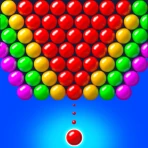
Angry Birds Match
For Android
I approached Angry Birds Match expecting a familiar casual puzzle, but its real appeal is the way it turns short matching sessions into a light Angry Birds adventure. It is easy to start, comfortable to play with one hand, and friendly enough for a quick break rather than a demanding gaming session. My overall view is positive: this is a polished choice for players who enjoy match-three puzzles and want a recognizable cast around them, although people looking for deep strategy or a completely uninterrupted free experience may eventually feel its limits.
Developed by Rovio Entertainment Oy, the game sits firmly in the casual category. It is free to download, carries an Everyone age rating, and has reached over ten thousand installs. Its average rating is 4.8 from around 1.3 thousand ratings, which matches my impression that the basic experience is approachable and pleasant. The current version is 0.14.1, and it requires Android 10 or newer, so checking device compatibility before installing is sensible.
Why the matching format works so well here
The central attraction is not that the matching formula is unfamiliar. It is that the Angry Birds setting gives the familiar format a little more personality. Instead of feeling like an anonymous grid exercise, each session has the visual identity of the flock behind it. That matters when a player wants something relaxing but still likes a game to have a sense of place and character.
I found the strongest part of the experience to be its low barrier to entry. The rules are understandable almost immediately, so the game suits someone who does not normally play puzzle games. At the same time, matching is not entirely mindless. The better moves usually come from looking beyond the first obvious pair or group and considering what the next move might create. That small layer of planning gives the game more staying power than a purely automatic tap-and-clear design.
It also fits naturally into ordinary routines. I can imagine opening it while waiting for an appointment, taking a few turns during a commute, or using it as a gentle wind-down before bed. The sessions do not demand the kind of concentration associated with a long strategy game. This makes it particularly useful for players who want entertainment in small pieces rather than a game that asks them to reserve a full evening.
The key strength is its balance between instant accessibility and just enough decision-making to keep each board from feeling completely passive. That balance is difficult to maintain. A puzzle that is too simple becomes disposable, while one that is too demanding loses the casual audience. This game generally stays on the more welcoming side without removing the satisfaction of finding a better move.
Small decisions make a difference
My most useful playing habit was to avoid making the first available match automatically. In a match-three game, a move can be technically valid and still be strategically weak. I get better results when I scan the whole board first, look for a move that opens more space, and pay attention to possible follow-up matches. This is especially helpful when the board becomes crowded or when a move near the edge can affect several nearby pieces.
Another practical tip is to treat the opening moments as preparation rather than a race. Clearing an easy group may feel satisfying, but creating room for a larger chain can be more valuable. I also try not to spend a useful special opportunity merely to remove a small inconvenience. Saving a stronger move for a congested section often gives the board a cleaner reset and reduces the feeling that I am reacting blindly.
These are not complicated tactics, but they change the game from random tapping into a more deliberate routine. That is where the title earns its place among casual puzzle games. It does not require a guide to understand, yet it rewards players who develop a personal rhythm instead of treating every turn as interchangeable.
A good fit for short, interrupted play
One realistic use case is a parent taking a few quiet minutes while waiting for a child’s activity to finish. Another is a commuter who wants a distraction that can be paused mentally without losing the thread of a complicated story. I would also recommend it to someone who enjoys familiar characters but does not want an action game with fast controls or a large learning curve.
The same design can be less suitable for someone who wants a long-form challenge. If your ideal puzzle game involves building a complex strategy over an extended session, this may feel lightweight. It is designed around quick accessibility and a cheerful presentation, not around the depth of a dedicated competitive puzzler. I would choose a more demanding alternative when my goal is to test planning skills rather than simply relax.
Where the free model becomes part of the decision
The download is free, but in-app purchases range from $0.99 to $99.99 per item. That is important context for anyone who prefers a completely self-contained free game. I can enjoy the basic appeal without spending money, but the presence of optional purchases means I would be careful when handing the device to a child or when trying to avoid impulse spending.
You may also like

Amazon Kindle: Revolutionizing Digital Reading

Why OLX: Compras Online e Vendas Captivates Shoppers Worldwide

Unpacking the Strategy of Yalla Ludo's Jackaroo Mode

Why eBay's Mobile App Stands Out in Online Shopping

How Fishdom's Puzzle Mechanics Transform Your Aquarium Experience

Block Blast! The Perfect Puzzle for Busy Lives
My advice is to decide in advance whether you are comfortable treating purchases as optional conveniences rather than necessities. If you are, the free entry point is attractive. If you know that waiting or replaying a section will frustrate you, the purchase structure may affect your enjoyment more than the matching itself. The game is therefore best approached with a clear personal limit, especially on a shared family device.
This is also where the title differs from some simpler alternatives in the same broad category. A basic offline-style matching game may offer less character and presentation but can feel more straightforward. A larger, more competitive puzzle game may provide more systems and long-term goals, but it can also demand more attention. Angry Birds Match occupies the middle ground: more personality than a bare puzzle board, less intensity than a game built around mastery or competition.
What the Angry Birds identity adds
The familiar setting gives the game a warmer tone than an abstract collection of colored pieces. That can be a deciding factor for younger players and for adults who already enjoy the flock’s playful style. The Everyone rating reinforces its broad accessibility, although an age label should never replace a parent’s judgment about spending habits or screen time.
For me, the branding works best when it supports the puzzle rather than trying to carry the entire experience. I would not install this solely because of the characters if I disliked matching games. The flock can make the presentation more inviting, but it cannot change the basic structure: the main activity remains arranging matches, looking for useful combinations, and working through short puzzle encounters.
That distinction helps set expectations. This is not an action-focused Angry Birds experience, and it is not the right choice for someone expecting the original style of launching birds. It is a casual matching game with Angry Birds personality. Once I understood that, the game felt more coherent and easier to judge on its actual strengths.
Who should play it and who should skip it
I would recommend it to casual players who like colorful puzzle boards, short sessions, and recognizable characters. It is also a good starting point for someone who has never spent much time with match-three games because the basic concept is easy to grasp. Families may appreciate the approachable tone, provided they set sensible boundaries around optional spending.
I would be more cautious about recommending it to players who dislike repetition. Matching games naturally rely on a recurring core action, and no amount of presentation changes that foundation. It is also not my first choice for someone seeking a serious test of skill, a story-heavy adventure, or a game that rewards long uninterrupted sessions. In those cases, a deeper puzzle title or a more substantial single-player game would probably be a better match.
Storage and compatibility are practical considerations too. The minimum requirement of Android 10 means older devices may not be suitable. For people using a supported phone and wanting a free casual download, that requirement is unlikely to be a major obstacle, but it is still worth checking before planning to play on an older handset.
My everyday approach to getting more from it
I get the most enjoyment by treating each session as a small puzzle break instead of trying to rush through everything. I first survey the board, prioritize moves that create space, and only then consider quick clears. When I am tired, I play more casually and accept that not every move will be optimal. When I want a little more engagement, I slow down and look for chain reactions or moves that improve the next turn.
This flexible approach is one of the game’s quiet advantages. It can be a background distraction when I have only a moment, but it also allows a little more thought when I am in the mood. The trade-off is that its relaxed nature may not satisfy players who need constant novelty. Its value comes from repeatable comfort rather than from radically changing the rules every time it is opened.
I also recommend keeping expectations realistic about progression and convenience. A free casual game with optional purchases can be enjoyable without spending, but patience becomes part of the experience. Players who see every delay as an irritation may have a poor time, while those who are happy to play at a slower pace can focus on the matching itself. That difference in temperament is more important than the headline price.
Final verdict for potential players
After spending time with it, I see Angry Birds Match as a friendly, accessible puzzle game rather than a breakthrough in the genre. Its strongest evidence is practical: the controls are easy to understand, the Angry Birds presentation gives the boards character, and the matching offers enough small decisions to prevent every turn from feeling automatic. It works particularly well in short gaps during the day.
Its meaningful weakness is equally clear. The core activity may feel repetitive to experienced puzzle players, and the optional purchase range means the free label should be considered alongside your own spending habits. The game will not replace a deep strategy title or a more ambitious adventure, and it should not be chosen with those expectations.
Still, I would recommend it to anyone who wants a gentle match-three game with a familiar flock, especially if quick sessions matter more than complex systems. Rovio Entertainment Oy has made an inviting casual experience that is easy to pick up and comfortable to revisit. My final judgment is simple: install it if you want cheerful, low-pressure puzzle breaks; skip it if you need demanding strategy, constant novelty, or a completely purchase-free design.
Pros
- Bright
- polished graphics with charming Angry Birds animations.
- Easy-to-learn matching gameplay suitable for casual players.
- Hundreds of levels provide plenty of content to explore.
- Special boosters make difficult puzzles more manageable.
- Playable in short sessions
- making it convenient for mobile gaming.
Cons
- Lives and boosters can run out quickly during tougher levels.
- Some level objectives rely heavily on random tile layouts.
- Progress may feel slow without spending money on extra resources.
- Frequent events and rewards can make the interface feel busy.
- Later stages become repetitive if you prefer more varied gameplay.
FAQ
What is Angry Birds Match?
Angry Birds Match is a free-to-play puzzle game for Android and iOS in which you match three or more identical items to clear levels. The game combines familiar match-three mechanics with characters and locations inspired by the Angry Birds universe. Completing puzzles helps the birds rescue hatchlings, unlock new outfits, and progress through colorful story-based areas.
Is Angry Birds Match free to download and play?
Yes, Angry Birds Match can generally be downloaded and played for free. However, it includes optional in-app purchases for items such as extra lives, boosters, coins, and other advantages. Progress is possible without spending money, although difficult levels and limited lives may encourage purchases. Parents should review device payment settings before allowing children to play.
Does Angry Birds Match require an internet connection?
Many basic levels may be playable without a continuous internet connection, which is useful when traveling or using limited mobile data. Nevertheless, an internet connection may be needed for certain features, including advertisements, events, updates, cloud-related functions, and in-app purchases. Availability can vary depending on the device, game version, and operating system.
Are there advertisements or in-app purchases in Angry Birds Match?
Yes, Angry Birds Match may display advertisements and offers optional in-app purchases. Ads can sometimes provide rewards, such as additional resources or helpful bonuses, while purchases can speed up progress or provide extra attempts. The game is suitable for casual play without buying anything, but users who dislike advertising or spending prompts should check the available settings and store information first.
Is Angry Birds Match suitable for children?
Angry Birds Match is generally designed as a family-friendly puzzle game, with bright visuals, simple controls, and non-graphic cartoon action. However, it may include advertisements, promotional offers, and in-app purchases, so younger players should use parental supervision. Adults should also check the age rating, privacy information, and device restrictions because content and purchasing options can change with updates.