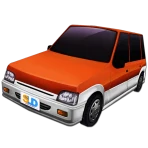
Drag Rivals: Tuning & Racing
For Android
I went into Drag Rivals: Tuning & Racing expecting a quick drag-racing distraction, and that is exactly where it works best. This is a free racing game from RETROBOT s.r.o. built around short, focused battles rather than long circuits or open-road exploration. My overall impression is positive: it is easy to understand, quick to pick up, and satisfying when a small tuning decision turns a close finish into a win. It is not trying to replace a full driving simulator, though, and that distinction matters before you install it.
The central appeal is the compact loop of preparing a car, making adjustments, and testing the result in another straight-line race. I like games that respect short sessions, and this one fits the moments when I have only a few minutes to spare. The store rating sits at 4.3 from 117 ratings, while its install count has passed 10K+, which suggests that the game has already found an audience without pretending to be a massive mainstream racer.
Why the drag-racing format works here
Drag racing gives the game a clear identity. Instead of asking me to learn a complicated track, manage several corners, and spend a long time in one event, it puts the emphasis on preparation and execution over a short distance. That makes each attempt immediately readable: I can tell whether my setup is helping, whether my launch was poor, and whether I need to change my approach before trying again.
The best part is the relationship between tuning and racing. Customisation is not merely a visual layer in my experience; it gives the preparation phase a reason to exist. A car that looks appealing is nice, but the more interesting question is whether the changes I make actually help me compete. That creates a useful rhythm: race, notice a weakness, adjust, and return to the next challenge with a clearer plan.
I also appreciate that the game does not require me to commit to a long play session. A short battle can work as a quick break during a commute, between tasks, or while waiting for an appointment. The format is particularly suitable for players who enjoy making one or two deliberate decisions at a time instead of learning a large map or memorising a full track layout.
There is a practical skill in treating each race as feedback rather than simply pressing through events. If a car repeatedly loses after a strong start, I would focus on what happens after the launch instead of changing everything at once. If the opening is the problem, I would concentrate on timing and preparation before spending resources elsewhere. That simple habit makes progress feel more earned and prevents tuning from becoming random button pressing.
Tuning is most enjoyable when you make one change at a time
My strongest tip is to avoid rebuilding the car after every loss. Change a single part of your approach, then race again. This makes it easier to understand whether the improvement came from the vehicle, the timing, or simply a cleaner run. In a drag game, where the race is short, small differences can be difficult to interpret if several variables change together.
This method also helps conserve whatever in-game resources are available. I would rather spend carefully after identifying a genuine weakness than make several expensive changes based on frustration. That is one of the more useful ways to approach the game: think of the garage as a place for controlled experiments, not a shop window where every upgrade must be purchased immediately.
Another worthwhile habit is to separate visual customisation from performance decisions. Personalising a car can make the experience more enjoyable, but appearance alone should not decide where I invest first. When I want to progress efficiently, I would prioritise changes that address a clear racing problem and return to cosmetic choices once the car feels competitive.
What makes it approachable on a phone
The game’s straightforward racing concept is a good match for touchscreens. Drag battles do not demand the same constant steering input as a circuit racer, so the experience feels less awkward on a small display. That makes it approachable for someone who likes cars but does not want to learn a full set of virtual controls.
It is also easier to recommend to a mixed-age household because the content rating is Everyone. That does not mean every player will enjoy the competitive loop, but it does make the game a more comfortable choice for casual family use than a harsher or more mature racing title. I would still explain the in-app purchase model before handing it to a child, especially if the device uses a shared payment setup.
The current version is 0.8.2, and the game runs on Android 6.0 or later. Those requirements make it accessible to people using older Android devices, although actual smoothness can still depend on the phone itself. I would not assume that an older compatible handset will deliver the same comfort as a newer one, particularly during longer sessions or when the device is already busy with other apps.
You may also like

Amazon Kindle: Revolutionizing Digital Reading

Why OLX: Compras Online e Vendas Captivates Shoppers Worldwide

Unpacking the Strategy of Yalla Ludo's Jackaroo Mode

Why eBay's Mobile App Stands Out in Online Shopping

How Fishdom's Puzzle Mechanics Transform Your Aquarium Experience

Block Blast! The Perfect Puzzle for Busy Lives
The limitations I noticed before recommending it
The focused format is also the game’s biggest limitation. If I want winding roads, varied cornering, free driving, or a deep simulation of vehicle handling, this is not the right choice. Drag racing deliberately removes much of what makes traditional racing games exciting: there is no need to master braking points or search for the fastest line through a complex circuit. Players who want those elements will likely be happier with a conventional track racer.
Repeated short races can also become predictable if the tuning layer does not keep offering meaningful decisions. The loop is strongest when I can see a clear reason to return to the garage. When progress feels more like repeating the same battle until a stronger car is available, the excitement becomes less about skill and more about persistence. That is not a deal-breaker for me, but it is a reason to keep expectations realistic.
The free entry point is welcome, but the in-app purchase range runs from $1.99 to $99.99 per item. I would approach that model carefully. The game can be tried without an upfront purchase, yet players who are highly competitive or impatient may feel pressure to spend when progress slows. I would recommend deciding on a personal spending limit before getting deeply invested, rather than making purchases in response to a frustrating loss.
That payment structure is especially relevant for younger players. The Everyone rating describes the content, not the spending habits a player might develop. Parents should treat the game like any free-to-play title: check the device’s purchase controls, talk about optional spending, and make sure a child understands that losing a race does not mean an immediate purchase is necessary.
I also would not choose this game as my main racing experience if I wanted a rich sense of place. The appeal comes from the cars, the setup, and the head-to-head result, not from exploring a detailed world. That narrow focus is efficient and easy to understand, but it means the game has less variety for players who need scenery, discovery, and different forms of driving to stay interested.
Who will get the most from it
This is a good fit for someone who enjoys car customisation but prefers manageable sessions. If you like comparing setups, making small improvements, and chasing a better result without learning a full racing circuit, the design makes sense. It is also suitable for casual players who want a game they can open, understand quickly, and put down without losing an hour to a single event.
I can imagine recommending it to a friend who enjoys racing games but finds traditional mobile steering uncomfortable. The drag format reduces the control burden while keeping enough preparation and timing to create a sense of involvement. It is also a reasonable choice for a player who wants a free starting point and is willing to ignore optional purchases unless they genuinely add value.
On the other hand, I would steer competitive simulation fans elsewhere. Someone looking for realistic cornering, detailed vehicle physics, or a broad selection of racing disciplines may find the streamlined structure too limited. The same applies to players who dislike repeating short events or who want every improvement to come from driving skill alone rather than a mixture of tuning and progression.
For a realistic everyday scenario, imagine having ten minutes before a meeting. I would run a battle, identify whether the car lost at the start or later in the race, make one considered adjustment, and try again. That is a better use of the game than opening it expecting a substantial campaign session. Its design rewards a small, repeatable routine rather than a long uninterrupted commitment.
How I would approach the first sessions
I would begin by learning the basic race rhythm before worrying about making the car look perfect. The first goal should be consistency: produce clean runs and pay attention to where the result changes. Once I understood the game’s timing and the effect of my choices, I would start customising with a purpose.
I would also resist the urge to spend immediately. Free games often make early purchases seem like a shortcut, but a few losses can reveal whether the problem is genuinely the car or simply an inconsistent input. Waiting gives me better information and makes each purchase easier to judge. If an upgrade solves a repeated issue, it feels useful; if it only covers a single mistake, it may not be worth the cost.
Players who share a phone or have limited storage should also remember that the minimum operating-system requirement is only one part of the experience. Keeping the device updated and closing demanding background apps is sensible for any mobile racer. I would test the game during a short session first, then decide whether it feels comfortable enough for longer play.
RETROBOT s.r.o. has chosen a narrow but understandable concept, and that helps the game avoid the confusion that can affect larger racing titles. I never feel lost about the basic purpose: prepare the car and perform better in the next drag battle. The trade-off is that the game must keep those decisions interesting, because there are fewer other activities to distract from a repetitive moment.
My verdict on Drag Rivals: Tuning & Racing
After spending time with it, I see this as a focused mobile racer rather than a complete driving world. Its strongest evidence is the way tuning gives short races a reason to repeat. I can make a change, test it quickly, and understand the result without committing to a lengthy event. That makes the game easy to recommend to casual drag-racing fans and players who enjoy incremental improvement.
Its meaningful weakness is equally clear: the narrow format will not satisfy anyone searching for varied tracks, deep handling, or a simulation-heavy experience. The in-app purchase range also deserves attention, particularly for younger players and anyone who tends to spend when progress becomes difficult. The free price makes trying it simple, but it does not remove the need for sensible spending boundaries.
With a 4.3 average and over 10K+ installs, the game has enough early interest to justify a look, while its Everyone rating broadens its potential audience. I would recommend it to people who want quick car battles, purposeful tuning, and a game that fits naturally into short breaks. I would skip it if my priority were realistic circuit racing or a large, constantly changing driving experience.
My final recommendation is to try it as a compact tuning game, not as a replacement for every other racing style. If the pleasure of improving a car one decision at a time sounds appealing, Drag Rivals: Tuning & Racing has a clear reason to stay installed. If you need exploration, complex tracks, or progression without any purchase pressure, another racing game will probably serve you better.
Pros
- Deep tuning options let you personalize cars beyond simple cosmetic changes.
- Short races are convenient for quick play sessions on mobile.
- Competitive events add goals for players who enjoy leaderboard challenges.
- Different driving styles can make each race feel strategically distinct.
- Progression rewards encourage regular play and continued car upgrades.
Cons
- Upgrade costs may slow progress for players who avoid in-app purchases.
- Online competition can feel uneven when opponents have more powerful cars.
- Some races may become repetitive after mastering the available tracks.
- Frequent rewards and menus can make the interface feel cluttered.
- A stable internet connection may be needed for several game features.
FAQ
What is Drag Rivals: Tuning & Racing?
Drag Rivals: Tuning & Racing is a mobile drag-racing game focused on short, fast races and vehicle customization. Players compete by timing gear shifts, improving acceleration, and tuning different parts of their cars. The game combines straightforward controls with progression systems, making it accessible for casual players while still offering room to experiment with upgrades and racing strategies.
How does the racing gameplay work?
Races in Drag Rivals: Tuning & Racing are generally based on precise timing rather than traditional steering. You need to launch effectively, shift gears at the right moment, and use available boosts or performance advantages strategically. Although the controls are easy to understand, winning tougher events requires practice, attention to the rev meter, and a properly upgraded car suited to the competition.
Can cars be customized and upgraded?
Yes, customization and upgrades are central parts of the experience. Depending on your progress, you can improve performance areas such as acceleration, top speed, grip, and other racing attributes. Visual customization may also be available, allowing you to give your vehicle a more personal appearance. Choosing upgrades carefully is important because raw power alone does not always guarantee better race results.
Is Drag Rivals: Tuning & Racing free to download and play?
The game can generally be downloaded for free, but free-to-play mobile games commonly include optional in-app purchases. These may provide currency, upgrade resources, cosmetic items, or progression advantages. Players can usually begin without spending money, although advancing more quickly may require patience or optional purchases. It is also worth checking the store listing for current pricing and payment details.
Does the game require an internet connection?
Internet requirements can vary according to the feature you are using and the version installed on your device. Single-player activities may be available in limited offline situations, while online events, leaderboards, advertisements, cloud saves, and competitive functions typically need a connection. For the most reliable experience, use a stable internet connection and review the latest Android or iOS store information before downloading.