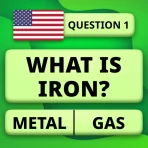
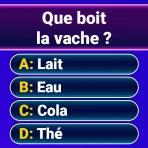
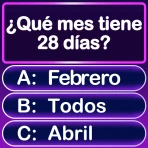
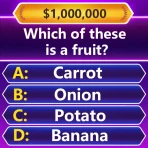
Minipuzzles Go!
For Android
I tend to keep a trivia game on my phone for the moments when I want to think without committing to a long session. Minipuzzles Go! fits that particular mood well: it is a free Android trivia game from Puzztime! built around small puzzles, brain teasers, and daily challenges. I found its appeal less in dramatic competition and more in making a spare few minutes feel purposeful.
That makes it especially interesting on a shared household device. One person can pick it up for a quick mental break, another can try a challenge later, and nobody needs to organize a full game night around it. At the same time, I would not treat it as a complete family activity by default. Its Everyone content rating makes it broadly approachable, but a shared phone still needs sensible boundaries around who is using it, what gets purchased, and whether players are comfortable sharing the same play space.
How Minipuzzles Go! works in everyday use
The central idea is simple: open the game, choose a small puzzle or brain teaser, and spend a short burst of attention solving it. That compact format is its strongest practical quality. I can use it while waiting for an appointment, during a quiet coffee break, or when I want something more engaging than scrolling but less demanding than a full-length game.
The daily-challenge angle gives the game a useful rhythm. Rather than asking me to search through a large library every time, it creates a reason to return and see what is waiting. I like that structure for building a light habit, although it also means the experience depends on whether the particular challenge matches my mood. Some days I want logic; on others, I may prefer wordplay or a very quick question.
Because the app is categorized as trivia, I would approach it differently from a traditional puzzle game with a single long campaign. The attraction is variety and mental switching. You are not necessarily learning one elaborate ruleset and mastering it over many hours. Instead, you are moving between bite-sized problems, which keeps the barrier to entry low and makes it easier to hand the phone to somebody else.
In my experience, the best household use is informal turn-taking. I might solve one puzzle, leave the phone on the table, and let another person try the next one. That works when everyone understands that the game is for casual participation rather than a serious contest. If your household enjoys arguing over answers, comparing approaches, and laughing at wrong guesses, this format can create small moments of connection without requiring a separate board game.
A realistic shared-device moment
Imagine a family waiting for food at a restaurant. One person has the phone, opens a daily challenge, and reads the puzzle aloud. A parent thinks through it, a child offers an answer, and somebody else spots a detail that was missed. The game becomes a conversation starter rather than a solitary screen activity. When the food arrives, the session can stop immediately without anyone losing a long campaign.
That same situation also shows the limitation. If several people want to track their own progress, a single shared device may become awkward. I would avoid assuming that one person’s results represent everybody’s ability. The app is easier to enjoy as a shared prompt than as a carefully managed household scoreboard.
Setting expectations before sharing the phone
The game is free to install, which makes trying it uncomplicated. It includes optional in-app purchases priced from $0.99 to $11.99 per item, so I would establish a simple rule before handing the device to a child or guest: solving puzzles is fine, but purchases require the device owner’s permission. That is ordinary good practice for any free game with paid items, especially when several people use the same phone.
I would also decide whether the device owner wants other players touching the app at all. A shared phone can contain personal notifications, open conversations, or other apps that have nothing to do with the game. Minipuzzles Go! may be suitable for a quick pass around the room, but the privacy boundary comes from how the household manages the device, not from the game’s Everyone label.
For a child, I would sit nearby at least during the first session. The age rating is Everyone, which makes the title easier to consider for mixed-age use, but an age label cannot replace parental judgement. A younger player may understand the puzzles differently from an adult, become frustrated by an answer, or simply tap through screens without understanding what is happening. A quick explanation of the rules and the purchase boundary is more useful than assuming the rating answers every family question.
I would use the same approach with grandparents or relatives who are less comfortable with mobile games. The short format is welcoming, but the phone itself may be the confusing part. Showing how to start a challenge, how to enter an answer, and how to stop without changing anything else on the device can turn a potentially frustrating handoff into a pleasant shared activity.
You may also like

Amazon Kindle: Revolutionizing Digital Reading

Why OLX: Compras Online e Vendas Captivates Shoppers Worldwide

Unpacking the Strategy of Yalla Ludo's Jackaroo Mode

Why eBay's Mobile App Stands Out in Online Shopping

How Fishdom's Puzzle Mechanics Transform Your Aquarium Experience

Block Blast! The Perfect Puzzle for Busy Lives
Coordination matters more than competition
One of the more interesting trade-offs is that the game naturally supports conversation, but that does not mean it automatically provides a complete multiplayer experience. I would not promise synchronized turns, household profiles, or a built-in family system unless the app visibly offers those options during use. Instead, I would coordinate manually: one person reads, everyone suggests, and the phone holder confirms the result.
This manual approach is surprisingly effective for a small group. It prevents the fastest reader or most confident player from taking over every puzzle. It also makes the game accessible to someone who does not want to hold the device. A useful house rule is to give each person a few seconds to think silently before anyone calls out an answer. That preserves the puzzle element and reduces the chance that one loud guess ends the discussion.
For two people, I prefer alternating who controls the screen. The person holding the phone should not automatically become the leader. Switching after each challenge gives both players a reason to stay involved and avoids turning the session into one person solving while the other watches. If the app’s available content varies in difficulty, I would also choose puzzles by mood rather than treating every result as a measure of intelligence.
Daily challenges can help coordinate a routine. A household might try one after dinner, during a weekend breakfast, or while waiting for a ride. The important point is to keep the appointment loose. Missing a day should not turn a relaxing game into another obligation. I see the daily format as an invitation, not a demand.
What the current release feels like
The current version is 0.9.0, which is worth keeping in mind when deciding how much polish or breadth to expect. I would approach it as a developing trivia experience rather than a huge, fully established platform. That does not make it unsuitable; it simply changes my expectations. I look for a pleasant core loop and judge whether the available puzzles remain enjoyable instead of expecting a deep progression system.
The developer, Puzztime!, has positioned the game around relaxing puzzles and brain teasers, and that focus comes through in the way I use it. It is not the title I would choose when I want a high-pressure timed match, a competitive leaderboard session, or a sprawling narrative. Its value is in the small mental reset between larger tasks.
That distinction is important when comparing it with usual alternatives. A general trivia quiz may be better for players who want broad factual recall and rapid-fire questions. A crossword or number-puzzle app may suit someone who prefers one consistent puzzle language. A board game is still the better choice for a group that wants face-to-face interaction with physical pieces and clearly defined turns. Minipuzzles Go! sits between those options: more varied and easier to start than a traditional puzzle book, but less socially complete than a dedicated tabletop game.
I also would not compare it directly with a large competitive quiz service and expect the same experience. Those games often reward speed, rankings, and repeated matches. Here, the calmer bite-sized approach is the reason to choose it. If your household has different tastes, it can work as the neutral option for a short break, but the competitive player may find it too gentle.
Age, trust, and sensible boundaries
The Everyone rating is helpful for households looking for a generally accessible title, particularly when adults and children may use the same device. Still, trust is built through supervision and clear expectations. I would explain that a correct answer is not the only goal, and I would avoid turning every puzzle into a test that younger players feel they must pass.
For children, I would make the first few sessions collaborative. Reading a puzzle together can reveal whether the wording is comfortable and understandable for that child. It also gives an adult a chance to notice whether the child is tapping paid options or becoming overly focused on returning for the daily challenge. The game can be a pleasant shared activity, but it should remain one small option among many.
For adults sharing a device, the main boundary is ownership of progress. I would not assume that a result earned by one person should be treated as another person’s record. If the app does not present separate household identities in a way that suits your needs, keep the social comparison verbal and casual. A shared device is convenient, but it is not the same thing as separate personal accounts.
I would also be careful with the phrase “relaxing.” A puzzle can be relaxing when it is optional and played at your own pace, but it can become irritating if someone is tired, if the answer feels obscure, or if the group keeps interrupting. The best use is to stop while the mood is still good. There is no benefit in forcing one more challenge simply because the daily prompt is available.
Small habits that make the game better
My first practical tip is to use the app as a transition activity rather than a permanent background distraction. A few puzzles between work and dinner, or while waiting for an appointment, gives the game a clear role. I would avoid opening it whenever I feel bored by default; that can make any short-form app feel repetitive quickly.
Second, separate solving from judging. In a shared session, let everyone explain why an answer seems plausible before confirming it. This makes the game more rewarding for people who enjoy reasoning, not just people who happen to know the answer immediately. It also helps younger players learn how to approach a puzzle instead of merely watching an adult win.
Third, use the daily challenge as a conversation anchor. Rather than silently completing it and moving on, ask another person how they would interpret it. This is particularly useful when one household member prefers words and another prefers logic. The same prompt can feel different depending on how someone thinks, which gives the app more social value than its small screen suggests.
Fourth, keep purchases out of the group decision. If an optional item appears, the phone owner should handle it separately and decide whether it is worthwhile. I would not let a child or guest make that choice in the middle of a shared session. The free entry point is enough to evaluate whether the game belongs in your routine before spending anything.
Finally, do not use the rating as a substitute for knowing your audience. An Everyone game can still be unsuitable for a particular child’s attention span, reading ability, or tolerance for mistakes. Try it together, explain the boundaries, and let the child’s reaction guide how often it is played.
Who should install it?
I recommend giving Minipuzzles Go! a try if you want a free trivia game for short sessions, enjoy rotating between different kinds of mental challenges, and like the idea of a daily prompt without committing to a long campaign. It is also a good candidate for a household phone because the basic activity is easy to explain and can be discussed aloud.
I would be more cautious if you need robust separation between family members, a serious competitive ladder, or a large, predictable progression system. Players who dislike daily routines may find the challenge format unimportant, while people who prefer deep single-puzzle mastery may be happier with a dedicated crossword, sudoku, or logic app.
The install base is over ten thousand, and the game holds a 4.6 average from around two hundred ratings, so its early reception is encouraging without being a reason to assume it will suit everyone. I read those figures as a sign that the concept is connecting with a modest audience, not as proof that every puzzle or household arrangement will work equally well.
My household verdict
Minipuzzles Go! works best when I treat it as a small shared ritual: one challenge, a few opinions, and then the phone goes down. Its free entry, Everyone rating, and compact trivia format make it easy to introduce to a mixed household, while the daily structure gives returning players a simple reason to come back.
Its weaknesses are mostly about expectations. It should not replace a full multiplayer game, a private account system, or a dedicated learning tool. Shared-device users need to coordinate turns themselves, protect purchase decisions, and keep individual results in perspective. Those are manageable limitations, but they matter if your household wants formal profiles or competitive tracking.
For me, the deciding strength is its flexibility. I can solve alone, read a puzzle aloud, invite a child to reason through it, or let a relative try without explaining a complicated ruleset. If you want a low-pressure mental break that can also become a short household conversation, this is a sensible free option. I would install it, test a few sessions together, and keep it only if the puzzles fit the way your home actually shares time and devices.
Pros
- Quick levels are ideal for short breaks or casual play.
- Simple controls make the game accessible to most players.
- A variety of puzzle types helps keep the experience fresh.
- Lightweight gameplay should run smoothly on many devices.
- Progressive challenges can provide a satisfying sense of improvement.
Cons
- Some puzzles may feel too easy for experienced players.
- Repeated mechanics can become predictable during longer sessions.
- Hints or extra features may be limited without in-app purchases.
- The game may offer little appeal after all levels are completed.
- Ads could interrupt the flow for users on the free version.
FAQ
What is Minipuzzles Go! and how does it work?
Minipuzzles Go! is a casual puzzle game built around short, easy-to-start challenges that can be played whenever you have a few spare minutes. After opening the app, you can choose a puzzle and work through its objectives using simple touch controls. The experience is designed to be accessible for beginners while still offering enough variety to keep regular players interested.
Is Minipuzzles Go! free to download and play?
Minipuzzles Go! can generally be downloaded for free, but the exact monetization model may include advertising, optional in-app purchases, or both, depending on the version and platform. Some content or convenience features may be restricted until you progress or make a purchase. Before downloading, it is worth checking the store listing for current pricing, available purchases, and whether ads can be removed.
Does Minipuzzles Go! require an internet connection?
The basic puzzle experience may work without a constant internet connection, which makes Minipuzzles Go! suitable for short sessions while traveling or when mobile data is unavailable. However, certain features can depend on connectivity, including advertisements, online rewards, updates, leaderboards, cloud saving, or purchases. For the most reliable experience, launch the game online at least once and review its current permissions and store information.
Is Minipuzzles Go! suitable for children and beginners?
Minipuzzles Go! is aimed at casual players and uses straightforward puzzle mechanics, so beginners can usually understand the gameplay without a long tutorial. Its colorful presentation and short challenges may also appeal to younger users. Parents should still review the app’s age rating, advertisements, optional purchases, privacy information, and any external links before allowing children to play independently.
What devices are compatible with Minipuzzles Go!?
Compatibility depends on the operating system version, device hardware, and the edition available through the Google Play Store or Apple App Store. Most recent Android and iOS phones should meet the basic requirements, but older devices may experience slower performance, limited storage, or unsupported features. Check the official store page before installing to confirm the required operating-system version and available download size.