Block Blitz: Puzzle Adventure
For Android
I can see why Block Blitz: Puzzle Adventure has found an audience. It is a free puzzle game from Bluetile built around the kind of quick block-placement session that fits into a spare minute, but it still asks enough of your attention to feel like a game rather than a disposable tap toy. I tested it with a short-session mindset: open it, play a little, stop when something interrupts me, and decide whether I actually wanted to come back.
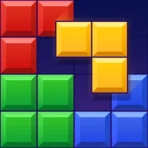
That distinction matters. Plenty of block puzzles are pleasant for a few rounds and then become background noise. This one works best when you want a compact mental reset, not a long story, elaborate character system, or demanding competitive experience. Its store summary describes fast-paced block puzzles intended both for quick fun and brain training, and that is a fair way to understand its place. The appeal is immediate: recognize the available shapes, think about the open spaces, and make a placement before the board becomes awkward.
How Block Blitz fits into a short break
The first strength is how quickly the central activity becomes understandable. You do not need to learn a fictional world or remember a complicated objective before getting started. The puzzle itself is the explanation. That makes it suitable for the moments when I have just enough concentration for a small challenge but not enough patience for a lengthy setup.
In a realistic everyday situation, I could use it while waiting for an appointment, during a short commute break, or after finishing a task when I want to clear my head. The important point is that the game does not need to become the main event. A few placements can provide a sense of progress, while a longer session is available when I feel like chasing a better result.
I also found that the pace creates a useful tension between relaxing and staying alert. The individual actions are simple, yet careless placement can reduce future options. That gives the game more texture than merely filling any empty space. I have to look at the current arrangement, consider which areas may become difficult later, and avoid using a flexible space too early just because a piece fits there.
The best way to approach Block Blitz is as a focused pocket of play, not as a full-scale adventure. The title suggests more than the core puzzle may need to promise, but the practical attraction is the block challenge itself. Players looking for a quiet, self-contained brain exercise will understand the appeal quickly. Players expecting narrative exploration, extensive customization, or a large collection of distinct game modes should adjust their expectations before installing it.
The rhythm between quick decisions and careful planning
The game’s rhythm is more interesting than its basic rules might suggest. At the start of a run, the board usually feels forgiving because there is room to experiment. As the open spaces become less convenient, each placement carries more weight. That gradual pressure gives a short session a natural shape: an easy entry, a period of deliberate planning, and a point where one poor decision can make the remaining choices uncomfortable.
I recommend taking a brief pause before placing every awkward shape rather than treating the game like a reflex test. The fastest move is not always the useful move. A piece that fits neatly in a corner may be more valuable later if it is unusually shaped, while a broad piece can sometimes be placed in several locations. Thinking in terms of future flexibility is one of the simplest ways to get more from the game.
That advice also reveals a trade-off. The more carefully I play, the more satisfying a good sequence becomes, but the experience loses some of its effortless, casual quality. If I am tired and only want completely passive entertainment, even this light planning can feel like work. On the other hand, if I want a puzzle that rewards attention without requiring a long commitment, the balance is appealing.
For newcomers, I would avoid trying to optimize immediately. First, learn how the pieces affect the shape of the board and notice which placements tend to leave useful room. After that, begin reserving awkward spaces for pieces that actually need them. This small change in habit makes the game feel less random and more like a series of manageable decisions.
Why interruption tolerance matters
A short-session game should not punish me for having a short session. That is where Block Blitz earns much of its practical value. I can approach it in small bursts instead of needing to protect a long uninterrupted block of time. The format is naturally compatible with stopping after a few moves, putting the phone away, and returning when I have another quiet moment.
That does not mean every return feels identical. If I leave during a tense part of a run, I may need a moment to reconstruct my plan. I have to look again at the available spaces and remember which area I was trying to preserve. For that reason, I find it helpful to make a deliberate placement before stopping rather than leaving the board in the middle of a complicated calculation.
You may also like

Amazon Kindle: Revolutionizing Digital Reading

Why OLX: Compras Online e Vendas Captivates Shoppers Worldwide

Unpacking the Strategy of Yalla Ludo's Jackaroo Mode

Why eBay's Mobile App Stands Out in Online Shopping

How Fishdom's Puzzle Mechanics Transform Your Aquarium Experience

Block Blast! The Perfect Puzzle for Busy Lives
My practical routine is simple: play until I reach a natural decision point, check the whole board once, and then stop if something else needs my attention. This avoids the mild frustration of reopening the game and immediately making a mistake because I forgot what I had been saving space for. It is a small habit, but it improves the return experience.
People who need a game that can be abandoned at any moment will likely appreciate this structure. People who want a strong sense of continuous progression may find it less compelling. Block puzzles are usually about the current board and the satisfaction of solving its immediate spatial problem, not about building a large persistent world. That makes the game easy to enter, but it can also make each return feel less meaningful than returning to a story-driven title or a long-term strategy game.
Replay value after the first pleasant sessions
The central question is whether arranging blocks remains enjoyable once the novelty fades. In my view, replay value comes from improving judgment rather than discovering a long chain of new content. Each board asks me to manage space under pressure, and the challenge changes depending on the shapes and the decisions I have already made. A good run is not only about clearing space; it is about avoiding a position where one inconvenient piece has nowhere sensible to go.
That kind of replay value suits players who enjoy self-improvement. I can replay because I want a cleaner sequence, a longer run, or simply a better understanding of why a previous board collapsed. It is less suitable for someone who needs constant visual change or a new objective every few minutes. Once the basic block-puzzle language is familiar, the pleasure depends heavily on whether I enjoy refining my choices.
One useful technique is to identify the most restrictive shape currently available. Instead of placing the easiest piece first, I look for the piece with the fewest realistic destinations and plan around it. This prevents the common mistake of filling the board with convenient placements while leaving an awkward shape stranded. It also turns a vague puzzle into a clearer question: what space must remain available?
Another is to resist making the board look tidy too early. A compact arrangement can feel satisfying, but a visually neat area is not automatically a strategically flexible one. I prefer leaving more than one possible route for future pieces when I can. That approach may produce a less attractive board in the moment, yet it often gives me more options when the next pieces arrive.
These are not complicated advanced systems; they are ways of reading the puzzle more intelligently. They matter because the game’s long-term appeal depends on the player creating their own depth. If I only place pieces wherever they fit, the experience can become repetitive quickly. If I treat each move as a choice about future space, the same basic format has more room for mastery.
Who should play it, and who should skip it
This is a good match for someone who likes compact puzzle sessions, simple rules, and a little pressure without a heavy learning curve. It can also work well for players who enjoy relaxing with a game that still keeps their mind occupied. The Everyone content rating makes it broadly approachable, and the free entry point removes the need to commit financially before discovering whether this type of puzzle suits you.
I would especially recommend it to people who often have irregular pockets of free time. Its strongest use case is not a planned evening of gaming; it is the small gap between other responsibilities. Open it when you have a few minutes, make thoughtful placements, and leave when your attention is needed elsewhere. That is a more convincing reason to keep it installed than any promise of endless novelty.
I would be more cautious about recommending it to players who dislike repeating a core mechanic. If you need a campaign, character development, or a wide variety of puzzle formats, this may feel narrow. It is also not my first choice for someone who wants a purely meditative experience with no pressure at all. The block arrangement can be calming, but the possibility of running out of useful space keeps a mild layer of tension in the background.
Compared with traditional paper block puzzles, the mobile format is more convenient because it is always ready during a spare moment and does not require setting anything up. Compared with large puzzle collections, however, it may feel more focused and less varied. That focus is either a benefit or a limitation depending on what I want. When I need one clear activity, it is welcome. When I want several different challenges in one app, a broader alternative may offer better value for my attention.
Cost, device access, and everyday expectations
Block Blitz is free to play, with optional in-app purchases priced from $2.49 to $4.99 per item. That makes trying it straightforward, but I would still approach the purchase options thoughtfully. A free puzzle can be perfectly useful without spending anything, while optional items may appeal more to players who already know they are using the game regularly. I would not pay simply to solve the question of whether I enjoy the core loop; the free starting point is enough for that decision.
The game is available for devices running Android 7.0 or later, so compatibility should be comfortable for many older phones as well as newer ones. Its current version is 2.7.0, and the title has been available since September 1, 2025. Those details are useful when deciding whether it fits an existing device, especially if I am installing it on an older handset reserved for travel or casual use.
Its reach is already substantial, with over one million installs, while the average rating sits at 4.7 from around one hundred eighteen thousand ratings. There are also roughly two thousand eight hundred written reviews. I do not treat popularity as proof that every player will enjoy it, but those figures suggest that the short-form block-puzzle format is connecting with a large audience rather than serving only a tiny niche.
One practical consideration is attention rather than hardware. A game can be technically easy to run and still be the wrong fit if I find its repeated decision-making tiring. Before spending on any optional item, I would use it across several different kinds of breaks: a rushed pause, a relaxed evening, and a moment when I am already mentally tired. That quickly shows whether the game feels refreshingly simple or merely repetitive.
My final take on the casual experience
After looking at it through the lens of short sessions, Block Blitz: Puzzle Adventure succeeds because it gets to the puzzle quickly and gives each placement a modest consequence. I can enjoy it for a few minutes without preparing for a major commitment, yet I still have reasons to think ahead. That combination makes it more satisfying than a completely mindless time filler.
Its limitations are closely tied to its strengths. The focused block format is easy to return to, but it may not provide enough variety for players who need constant new content. The calm presentation of a simple puzzle is accessible, but the board can still create pressure when my available space becomes awkward. Optional purchases are present, so players who prefer totally uncomplicated free experiences should keep that in mind before settling into it.
For me, the deciding factor is replay attitude. If I enjoy asking why a board failed and trying a more flexible arrangement next time, the game has enough depth for regular casual use. If I judge replay value only by new stories, characters, or mechanics, it will probably feel limited. I would choose it for waiting rooms, short decompression breaks, and those moments when I want my phone to give me one clear problem instead of a stream of distractions.
Overall, Bluetile has made a focused puzzle game that understands the usefulness of a brief session. It is free to start, rated for Everyone, and easy to recommend to someone who likes arranging blocks while keeping one eye on the clock. I would not present it as a substitute for a deep puzzle adventure or a varied game collection. I would describe it more honestly as a reliable pocket challenge: quick to understand, tolerant of interruptions, and most enjoyable when I play with enough care to protect my future options.
Pros
- Quick levels make it easy to enjoy during short breaks.
- Simple controls are suitable for players of most ages.
- Increasing difficulty keeps the puzzle challenge engaging.
- Bright visuals give the game a cheerful
- polished appearance.
- Offline play is useful when you have no internet connection.
Cons
- Later stages may feel repetitive if you play for long sessions.
- Some puzzles can become frustrating without helpful boosters.
- Progress may rely heavily on limited moves or attempts.
- Frequent rewards and prompts can interrupt the gameplay flow.
- Older devices may experience slower performance or battery drain.
FAQ
What is Block Blitz: Puzzle Adventure?
Block Blitz: Puzzle Adventure is a casual block-puzzle game built around arranging and clearing shaped pieces on a grid. It combines familiar drag-and-drop puzzle mechanics with an adventure-style progression system, giving players goals to complete beyond simply chasing a high score. The game is designed for short sessions, making it suitable for quick entertainment while commuting or taking a break.
How do you play Block Blitz: Puzzle Adventure?
Gameplay is generally easy to understand: select the available block shapes, place them on the board, and complete rows, columns, or other required patterns to clear space and earn points. Good planning is important because pieces cannot always be rotated or placed freely, depending on the game mode. As levels progress, objectives and board layouts can become more demanding.
Is Block Blitz: Puzzle Adventure free to download and play?
Block Blitz: Puzzle Adventure can typically be downloaded without an upfront purchase, allowing players to try the core puzzle experience for free. However, free versions of mobile games may include advertising, optional in-app purchases, extra lives, boosters, or other convenience items. Before downloading, it is worth checking the current store listing for pricing, advertisements, and available purchase options.
Does Block Blitz: Puzzle Adventure require an internet connection?
The basic puzzle gameplay may be available without a constant internet connection, which is useful for playing during travel or in areas with weak reception. Nevertheless, some features can depend on online access, including advertisements, cloud saving, events, leaderboards, account synchronization, or updates. Availability of offline features may also vary between Android and iOS versions.
Is Block Blitz: Puzzle Adventure suitable for children and casual players?
The game is generally approachable for casual players because its main controls are simple and the rules can be learned quickly. It may also be suitable for older children, although parents should review the store age rating, advertising content, and in-app purchase settings before allowing unsupervised play. Later levels can require patience, spatial reasoning, and careful decision-making rather than fast reflexes.