Lucky Classic Tripeaks Game
For Android
I approached Lucky Classic Tripeaks as a card-game player who enjoys short sessions but is cautious whenever an app connects solitaire-style play with cash rewards. The basic appeal is easy to understand: it presents TriPeaks solitaire in a modern mobile format, while its store summary also points toward real-money rewards and real-cash play. That combination makes the game more interesting than a plain offline card app, but it also means the right question is not simply whether the cards are enjoyable. I wanted to know whether the format feels comfortable for everyday play, whether the pressure to continue changes the experience, and which players should treat it as entertainment rather than a money-making opportunity.
JOYWIN GAME is the developer behind this card title. It is free to install, carries a Mature 17+ content rating, and has reached over one hundred thousand installs. The app has a 4.6 average from around three thousand ratings, with several hundred written reviews, so it has attracted a meaningful audience rather than remaining an obscure experiment. It was released in July 2025 and the current version is 0.2.3, which is useful context: the game is still relatively young, and anyone expecting the depth or long-established reputation of a classic desktop solitaire product should adjust those expectations.
How the TriPeaks format feels in everyday play
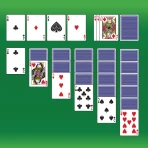
TriPeaks is a good fit for a phone because each round is built around quick decisions. You remove cards from the layout by selecting a card that is one rank above or below the card currently available. The familiar rhythm is simple to grasp, but it still gives me small tactical choices: do I use the next possible card immediately, or wait while looking for a longer run? That balance is the strongest part of the concept. I can understand the objective within moments, yet I still have reasons to pay attention instead of tapping automatically.
In practical terms, this makes the game suitable for a short break, a commute, or a few minutes before bed. I would not open it when I want a long strategy session with a detailed campaign, because TriPeaks naturally works in compact bursts. Its value comes from the clarity of the card layout and the satisfaction of extending a sequence. A player who already likes solitaire will recognize the structure quickly; someone new to the format can learn by playing rather than studying a complicated rulebook.
My preferred way to use a game like this is to decide on a stopping point before starting. For example, if I am waiting for an appointment, I might play a small number of rounds and then close the app regardless of whether the last round went well. That habit matters more here than it would with a completely offline solitaire game because the cash-reward framing can make a near-success feel like a reason to continue. The most useful skill is not finding a winning streak; it is keeping the session within a limit I chose in advance.
The short description, “Lucky Classic Tripeaks,” communicates the central format without overcomplicating it. The broader store summary emphasizes classic cards, solitaire, and real-cash rewards. That wording sets an expectation that the game is not merely a decorative card puzzle. It also means new players should read the in-app instructions and any relevant terms carefully before treating rewards as part of their routine. A free download does not automatically mean that every aspect of participation is cost-free, and the reward language deserves attention rather than being treated as background decoration.
Where progress can become pressure
Traditional solitaire is usually self-contained: I play a deal, win or lose, and move on. A reward-oriented version can change that mental rhythm. Even when the card mechanics remain familiar, the possibility of earning something may make a loss feel more significant and a close round feel unfinished. That emotional shift is the main difference I would highlight for a friend deciding whether to try it. If you enjoy cards for relaxation, the reward angle may add excitement, but it can also make it harder to stop at the natural end of a session.
I would therefore separate two goals. The first is playing TriPeaks because the card puzzle is enjoyable. The second is pursuing rewards. The first goal is easy to understand and can stand on its own. The second requires more caution because the practical value of a reward depends on the app’s rules, eligibility conditions, withdrawal process, and any spending requirements that may apply. I would not install it with the assumption that casual play will reliably produce meaningful income. That is not a sensible standard for a mobile card game.
A useful routine is to treat every round as entertainment with a fixed personal budget of time and money, even if I initially plan to spend nothing. I would avoid chasing a result after a frustrating loss, and I would never increase spending simply to recover an earlier outcome. This is not a criticism of the TriPeaks rules themselves; it is a response to the pressure that can arise when a familiar luck-and-skill activity is connected to real-world rewards. Players under the Mature 17+ rating should be especially careful about that distinction.
The version number, 0.2.3, also affects how I interpret progress. A young app can improve quickly, but it may also change its balance, presentation, or reward flow as development continues. I would keep the app updated through the normal platform process and check the current in-app wording before relying on a particular routine. I would not build a personal spending plan around a feature that could be adjusted in a later release.
Fairness is more than a familiar card layout
For me, a fair solitaire game needs more than recognizable rules. I want the outcome to feel understandable, the available choices to be clear, and the relationship between play and rewards to be explained in plain language. TriPeaks already includes chance because the deal influences what becomes possible, so a player cannot judge fairness only by looking at the final result. The important issue is whether the app gives enough context for me to understand what I am playing for and what conditions surround any reward.
I would approach the competitive side differently from a conventional multiplayer card game. A standard solitaire app is mainly a personal puzzle: I compare today’s result with my own previous attempts. When cash rewards enter the picture, the comparison can feel more serious, even if the core play still resembles solo solitaire. I would not assume that a high score, a fast completion, or a long sequence automatically translates into a valuable payout. Those are separate questions, and the app’s own current rules should answer them.
You may also like

Amazon Kindle: Revolutionizing Digital Reading

Why OLX: Compras Online e Vendas Captivates Shoppers Worldwide

Unpacking the Strategy of Yalla Ludo's Jackaroo Mode

Why eBay's Mobile App Stands Out in Online Shopping

How Fishdom's Puzzle Mechanics Transform Your Aquarium Experience

Block Blast! The Perfect Puzzle for Busy Lives
One practical tip is to pause before starting a reward-focused session and inspect the screen for the exact objective. I would look for the stated requirement, the way progress is counted, and the point at which a result becomes eligible. I would also check whether an action consumes an entry, uses a balance, or involves any other condition. This is a more reliable approach than inferring the system from promotional language such as “real cash.” If the explanation is difficult to follow, I would stay with ordinary free play or choose a conventional solitaire app instead.
Another trade-off is speed. In a normal card game, playing quickly can simply make a session more efficient. In a reward context, rushing may cause me to miss a safer move or misunderstand what I have accepted. I prefer to slow down whenever a decision could affect a reward-related result. The extra seconds are worthwhile because a fast tap is not a strategy if I do not understand its consequence.
What I would check before spending or expecting a payout
The app is free to install, but that fact alone does not answer every spending question a cautious player may have. The store information identifies the game as involving real-money rewards and real-cash solitaire, yet I would still read the current in-app explanations before making any financial decision. In particular, I would want to understand whether participation can require a purchase, whether a balance can be withdrawn under conditions, and whether rewards are limited by eligibility or activity rules. I would not fill those gaps with assumptions.
This is where Lucky Classic Tripeaks differs from a basic free solitaire alternative. With a standard offline or non-reward card game, my main concerns are advertisements, interface quality, and whether the deal variety stays interesting. Here, I would add a second layer of caution around spending and reward expectations. The extra possibility may appeal to players who enjoy a more goal-driven session, but it is unnecessary for someone who only wants a calm card puzzle. That person may be better served by a simpler app with no financial framing.
I would also keep personal records separate from the game’s presentation. If I decide to participate in any reward-related activity, I would note what I chose to do, what result appeared, and what the app said would happen next. This is not about treating a casual game like accounting; it is a way to avoid confusing an on-screen progress indicator with money that is already available. The distinction is especially important for new players who may be attracted by the phrase “real cash” before learning the practical conditions.
For a household with younger users, the Mature 17+ rating is a clear reason to keep the app away from children and teenagers below that threshold. I would not hand it to a child simply because the card mechanics look harmless. The reward framing changes the context, and the age label should be treated as a real boundary rather than a suggestion.
Questions I would want answered during first use
My first question would be whether I can enjoy the card game without pursuing rewards. That answer determines whether the app works for a broad audience or mainly for players interested in its money-related angle. I would start with the basic TriPeaks play and see whether the layout, controls, and pace feel satisfying before engaging with anything financial. If the ordinary game is not enjoyable on its own, the reward possibility would not be enough to make it a good long-term choice for me.
My second question would be how much control I have over a session. I would look for a clear way to finish a round, leave the app, and return later without feeling that I am wasting an opportunity. A good mobile card game should fit around my day, not dictate it. If the reward structure makes me feel compelled to continue after a loss or near-win, I would consider that a meaningful weakness even if the card mechanics remain entertaining.
My third question would concern the difference between an in-game result and a redeemable reward. Those terms should never be treated as interchangeable. I would read the applicable instructions carefully and avoid spending until I understood the process in full. If I could not explain the conditions to another person in simple words, I would not put money into the activity.
My fourth question would be whether the app suits my preferred style of solitaire. TriPeaks rewards attention to sequences and the timing of card choices, but it does not offer the same experience as Klondike, Spider, FreeCell, or a purely random casual card collection. Someone who wants deep planning with minimal luck may prefer FreeCell. Someone who wants a quiet, familiar pastime without reward pressure may prefer a conventional solitaire app. Lucky Classic Tripeaks is most distinctive when the player specifically wants TriPeaks combined with a reward-centered presentation.
Finally, I would ask whether I trust myself to keep the money element in perspective. That question is personal, but it is more important than any star average. If losing makes me chase, or if a possible payout makes me ignore a time limit, I would skip this type of game. If I can enjoy the rounds as entertainment, stop deliberately, and inspect the rules before spending, the app becomes easier to evaluate on its actual card-play merits.
My trust verdict for cautious card players
I see JOYWIN GAME’s title as a focused TriPeaks experience with an added reward angle, not as a replacement for every kind of solitaire. Its strongest quality is the accessibility of the card format: the rules are approachable, sessions can be brief, and the game has a clear identity. The sizeable install base and 4.6 average suggest that many players have found the overall experience appealing, although popularity by itself cannot answer questions about fairness or individual payout expectations.
My recommendation is conditional. I would suggest trying it to a mature player who already enjoys TriPeaks and is comfortable treating reward features cautiously. I would begin with free play, read the relevant explanations, and set a firm limit before taking part in anything that could involve spending or a cash-related objective. I would not describe it to a friend as a dependable way to earn money, and I would not use a successful round as evidence that future results will follow the same pattern.
I would skip it in favor of a traditional solitaire game if my priority were complete simplicity, offline relaxation, or a play environment with no financial pressure. I would also avoid it if I were prone to chasing losses or if I wanted a highly strategic card game where luck has little influence. For the right player, however, the familiar TriPeaks loop can make a short mobile session engaging, provided the reward language remains a reason to read carefully rather than a reason to spend impulsively.
In the end, the fair way to judge this game is to separate the quality of its card puzzle from the promise of rewards. I find the TriPeaks foundation easy to approach and well suited to brief sessions, while the cash-oriented framing demands more responsibility from the player than an ordinary solitaire download. Used with clear limits and realistic expectations, it is worth exploring as a free card game for adults. Used as a shortcut to income, it is not the app I would recommend.
Pros
- Simple rules make it easy for new players to start quickly.
- Short rounds are convenient for quick breaks or casual play.
- Tripeaks layout offers more variety than standard solitaire.
- Offline play is useful when you have no internet connection.
- Bright card designs make the board easy to read on small screens.
Cons
- Progress can feel repetitive after extended play sessions.
- Random card layouts may occasionally leave no practical winning move.
- Some features may be limited unless optional purchases are made.
- Small interface elements can be awkward on certain phone sizes.
- Frequent players may find the challenge curve inconsistent.
FAQ
What is Lucky Classic Tripeaks Game?
Lucky Classic Tripeaks Game is a mobile solitaire card game based on the popular TriPeaks format. You clear cards from three peaks by selecting cards that are one value higher or lower than the card in your discard pile. The app generally combines classic solitaire rules with colorful visuals, level progression, daily challenges, rewards, and simple tap-based controls suitable for short or extended play sessions.
How do you play Lucky Classic Tripeaks Game?
The main objective is to remove as many cards from the three peaks as possible. You can usually select an exposed card that is one rank above or below the current discard card, regardless of suit. If no suitable move is available, draw another card from the stock. Planning long combinations is important because clearing consecutive cards can build bonuses, while using wildcards or other power-ups too early may reduce your options later.
Is Lucky Classic Tripeaks Game free to download and play?
Lucky Classic Tripeaks Game is typically available as a free download, allowing players to begin without paying an upfront purchase price. However, free-to-play features may include advertisements, optional in-app purchases, extra lives, boosters, coins, or other convenience items. Before downloading, check the store listing for the current monetization details, since prices, advertising frequency, and available purchases can change with updates.
Can Lucky Classic Tripeaks Game be played offline?
Some basic solitaire levels may remain playable without an internet connection, which makes the game convenient for travel or areas with limited service. Nevertheless, online access may be required for advertisements, cloud synchronization, daily events, leaderboards, rewards, account features, or in-app purchases. If offline play is important to you, test the game after disabling your connection, because specific modes and requirements can vary between versions.
Is Lucky Classic Tripeaks Game suitable for beginners and children?
The game is generally easy for beginners because its controls are based on tapping cards and the rules can be learned quickly. It may also be appropriate for older children, although parents should review the advertising and purchase settings before allowing independent play. Difficulty often increases through later levels, and some features may encourage repeated play or optional spending, so parental controls are advisable for younger users.