General Knowledge Quiz Game
For Android
I enjoy trivia games most when they are easy to open, quick to understand, and broad enough to keep me curious. General Knowledge Quiz Game fits that simple idea: it is a free trivia game built around general knowledge questions and answers, aimed at players who want a casual mental workout rather than a large story, complicated controls, or a long setup process. I found its appeal less about becoming deeply invested in a fictional world and more about turning spare minutes into a small test of memory and awareness.
The game is published by Battery Stats Saver and has reached over a million installs, with an average score of 4.5 from roughly nine thousand ratings. Those figures suggest that it has found a sizeable audience, but they do not automatically make it right for everyone. The better question is whether its style of quiz matches the way you like to play. I would look at the breadth of the questions, the pressure created by the format, the role of optional spending, and how much variety you need before deciding.
How I would decide whether it belongs on your phone
Start with the kind of trivia session you actually want
Before installing any quiz game, I ask myself whether I want a relaxed recall exercise or a demanding competition. General Knowledge Quiz Game is most appealing in the first situation. Its subject is intentionally wide, so I can move between familiar facts and questions that expose gaps in my knowledge. That makes it suitable for a short break, a quiet evening, or a shared challenge with someone nearby.
It is less suitable if I need a carefully structured learning course. A general trivia game can help me notice subjects worth exploring, but it should not be treated as a replacement for a textbook, language lesson, exam-preparation tool, or specialist reference app. The questions are there to test and entertain me, not to build a complete curriculum.
Consider how you react to questions you do not know
Broad trivia has an important trade-off: the variety is its strength, but it also means the difficulty can feel uneven from one question to the next. I may answer a familiar question immediately and then meet one based on a subject I rarely follow. That contrast keeps a quiz from becoming predictable, although it can frustrate players who prefer a steady difficulty curve.
I recommend treating wrong answers as part of the experience rather than as a judgment of intelligence. When I use a general knowledge game this way, an unfamiliar question becomes a prompt to remember a new fact. If you dislike guessing, losing progress, or being reminded of topics outside your interests, a narrower quiz focused on one subject may be a better match.
Check the practical details before committing
The game is free to download and is rated for Everyone, which makes it approachable for households where different ages may want to play. It runs on Android devices using version 7.0 or later, so owners of older compatible phones may still be able to try it without needing a recent handset. The current version is 9.1.5, a detail worth checking against your device before you begin.
Free access does not mean every part of the experience is necessarily outside the payment model. In-app purchases range from $0.99 to $99.99 per item. I would therefore decide in advance whether I am comfortable with optional purchases and avoid tapping through payment prompts casually. For a simple trivia game, spending should feel entirely optional rather than necessary for the app to make sense.
Use the audience response as context, not as a guarantee
The average rating of 4.5 is encouraging, and the game has accumulated about thirty written reviews alongside its much larger pool of ratings. I see that combination as a sign of broad approval, but not as proof that every player will enjoy the same aspects. Ratings often reflect a quick reaction, while a written review may focus on one particular experience.
My own decision would depend more on whether I want general questions and a low barrier to entry than on the score alone. If those are my priorities, the reception gives me enough confidence to try it. If I am searching for advanced statistics, deep category controls, or a highly competitive community, I would investigate alternatives before settling here.
Where the game is strongest in everyday use
The clearest strength is convenience. I can approach it without learning a complicated ruleset or managing a large collection of game systems. That matters when I have only a few minutes and want something more engaging than scrolling through a social feed. A question-based format also makes it easy to stop after a short session instead of feeling tied to a long campaign.
Its broad subject matter gives the game a useful rhythm. One moment I may rely on school knowledge, then on a remembered fact from a documentary, and then on simple cultural awareness. That movement helps prevent the experience from feeling like a single narrow exam. It also gives me a reason to return when I want to see whether a question that surprised me has stayed in my memory.
You may also like

Amazon Kindle: Revolutionizing Digital Reading

Why OLX: Compras Online e Vendas Captivates Shoppers Worldwide

Unpacking the Strategy of Yalla Ludo's Jackaroo Mode

Why eBay's Mobile App Stands Out in Online Shopping

How Fishdom's Puzzle Mechanics Transform Your Aquarium Experience

Block Blast! The Perfect Puzzle for Busy Lives
A realistic way I would use it
Imagine waiting for an appointment with ten minutes to spare. I would open the game, play through a small stretch of questions, and stop when my name is called. I would not expect a complete learning session in that time. The value is that the waiting period becomes active: I am recalling information, making decisions, and occasionally discovering a topic I want to look up later.
At home, I could also use it as a conversation starter. Instead of silently passing a phone around, two people can compare answers and explain why they chose them. The game works best in this role when nobody treats every mistake as a competition. It is especially useful for families or friends who enjoy general knowledge but do not want to agree on one specialist subject.
Three habits that make the experience better
My first tip is to keep a small mental list of questions that caught me off guard. I do not need to record every answer; remembering the surprising ones is enough. On a later session, I can see whether the correction stuck. This turns casual play into a lightweight memory exercise without pretending that the game is a formal study system.
My second tip is to avoid judging the game by a single difficult run. General trivia naturally produces uneven results because the subjects are wide-ranging. A poor result may reflect the topics that appeared rather than a sudden loss of ability. I would play several short sessions before deciding whether the question mix suits me.
My third tip is to set a spending boundary before playing. Since optional items can cost as little as $0.99 or as much as $99.99, I would keep purchases disabled or require a deliberate pause before confirming one. That small habit protects the main reason I installed the game: free, low-pressure entertainment.
Where it wins against familiar trivia alternatives
Compared with a specialist quiz, this game wins through breadth. A history-only alternative may be more satisfying when I want to stay inside one subject, but it can become repetitive if I am looking for variety. A science-focused game may offer better depth for a student or enthusiast, while this one is more flexible for a mixed group whose interests do not overlap neatly.
Compared with a traditional board-game quiz, the phone format is more convenient. I do not need cards, a board, a scorekeeper, or a large table. That convenience comes at the cost of some social atmosphere. A physical game can create richer conversation and clearer shared competition, while this app is better when I am alone or when everyone is comfortable taking turns on one device.
Compared with a live multiplayer trivia experience, the general knowledge format feels less dependent on finding opponents at the right moment. That makes it easier to fit around my schedule. The trade-off is that players who thrive on countdown pressure, direct rivalry, and public rankings may find a more competitive alternative more exciting.
Limitations I would keep in mind
The biggest limitation is not a technical flaw I can measure; it is the unavoidable compromise of general trivia. A wide range of topics means the game cannot tailor every question to my interests. If I want control over a precise subject, a focused quiz will probably give me a stronger sense of progress.
There is also a difference between recognition and lasting knowledge. Choosing the right answer can feel rewarding, but it does not guarantee that I will remember the explanation or context later. I would use the game as a starting point: when a question exposes a gap, I would follow up with a reliable source rather than assuming one quiz response is enough.
The purchase range is another point of friction. A free game is attractive for occasional play, but optional items can make the experience feel less simple if I am repeatedly shown opportunities to spend. Players who want a completely uninterrupted, no-purchase environment should compare it with paid trivia games or ad-free alternatives before making it their main choice.
Who should choose a different category
I would skip this game if my main goal is exam preparation, professional certification, or a systematic course of study. A dedicated educational app would provide clearer lessons, explanations, and progression for those needs. I would also look elsewhere if I require accessibility settings, detailed performance tracking, or a specific competitive format and those features are essential to my routine.
It may also be the wrong choice for children who need carefully controlled subject matter or guided instruction, even though the content rating is Everyone. An age rating describes general suitability, not whether the app matches a particular child’s learning goals. For family use, I would play alongside younger users and treat the questions as conversation prompts rather than unsupervised teaching material.
The cost of switching once you begin
Switching away from a general quiz game is easy when I use it casually. I can move to a history, geography, science, or multiplayer alternative without rebuilding a complicated profile or abandoning a long story. That low commitment is one of the product’s practical advantages: trying it does not demand that I reorganize my gaming habits.
The real cost is more subtle. If I start remembering its style and using it as my default waiting-room activity, another app may feel less convenient even if it is deeper. A specialist alternative might require more setup or offer fewer broadly enjoyable questions. I would switch only when the trade-off is clear, such as needing subject-specific practice, stronger competition, or a more controlled learning path.
There is also a risk of confusing novelty with quality. A new quiz app can feel exciting because its questions are unfamiliar, while this one may feel predictable after repeated sessions. Before switching, I would ask whether I need a different game or simply a break from trivia. Rotating between broad and specialist quizzes can preserve interest without expecting one app to provide every kind of challenge.
My recommendation for different players
I recommend giving General Knowledge Quiz Game a try if you want a free, approachable trivia experience for short sessions. It is particularly well suited to people who enjoy mixed subjects, casual recall, and the occasional surprise question. The Everyone rating and support for Android 7.0 or later also make it a practical option for a broad range of compatible users.
I would recommend it with more caution to players who are sensitive to purchase prompts or who expect every question to teach a detailed explanation. The in-app purchase range means I would review each prompt carefully, and I would keep my expectations centered on entertainment rather than formal education. Those two points are not deal-breakers, but they affect whether the game feels comfortable over time.
For me, the deciding advantage is its role as a low-commitment mental break. It does not need to replace a serious study tool or a competitive multiplayer game to be worthwhile. It simply needs to make a few spare minutes more interesting, and its general knowledge focus gives it enough variety to do that.
My bottom line is simple: choose it when you want an accessible quiz that can fit around daily life, and choose a more specialized alternative when depth, structured learning, or intense competition matters more than convenience. With over a million installs, a 4.5 average, and a free entry point, it is an easy game to test for yourself. I would install it, keep purchases deliberate, and judge it after several short sessions rather than after one lucky or frustrating round.
The game was released on May 19, 2023, and its ongoing version 9.1.5 gives it a current place on compatible Android devices. I would not install it expecting a huge adventure or a complex progression system. I would install it expecting a straightforward way to challenge my memory, share a few questions with someone else, and turn idle time into something mildly rewarding. For that specific purpose, General Knowledge Quiz Game is a sensible recommendation.
Pros
- Covers history
- science
- geography
- and culture in one app.
- Short rounds make it easy to play during quick breaks.
- Questions gradually become more challenging as you progress.
- Useful for discovering facts you may not have encountered before.
- Simple controls make the game accessible for most age groups.
Cons
- Some questions may feel too easy for experienced quiz players.
- Repeated questions can reduce the long-term replay value.
- A wrong answer may end a round before you can recover.
- Certain topics may receive more coverage than others.
- Progress can feel slow if advanced levels require many correct answers.
FAQ
What is General Knowledge Quiz Game?
General Knowledge Quiz Game is a trivia application designed to test and expand your knowledge across a wide range of subjects. During my review, the questions covered topics such as history, science, geography, entertainment, sports, and everyday facts. It is suitable for casual players who want a quick challenge, as well as quiz fans looking for a more competitive experience.
How does the gameplay work?
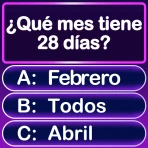
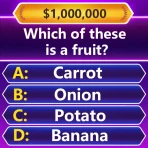
The gameplay is straightforward: you answer multiple-choice questions, usually by selecting one option from several possible answers. Correct responses help you progress and may contribute to your score, streak, or ranking, depending on the mode available. The simple controls make the game easy to understand, although some questions become increasingly difficult and require careful reading rather than quick guessing.
Can I play General Knowledge Quiz Game offline?
Offline availability may depend on the specific version of the app and the features being used. Basic quiz sessions may work without a continuous internet connection if the required question content is already stored on the device. However, online rankings, advertisements, updates, daily challenges, or synchronized progress may require internet access. It is best to check the app’s store description before relying on it while traveling.
Is General Knowledge Quiz Game suitable for children?
The game can be appropriate for older children and teenagers because it encourages learning through short, interactive quizzes. However, suitability depends on the question categories, reading level, advertisements, and any in-app purchase options included in the version you download. Parents should review the store rating and privacy information, and younger players may benefit from playing with an adult when questions involve advanced topics.
Does the game include ads or in-app purchases?
Many free quiz games support development through advertising, and General Knowledge Quiz Game may display ads between rounds or after certain actions. Some versions can also offer optional purchases, such as removing advertisements, unlocking categories, receiving hints, or accessing additional content. These purchases are generally not necessary to try the core gameplay, but users should review the payment details before confirming any transaction.