Kill Shot Bravo: 3D Sniper FPS
For Android
I approached Kill Shot Bravo as a newcomer rather than as someone already comfortable with mobile shooters. That matters here because the game looks immediately familiar—a modern military action game built around firearms, targets, and online competition—but its best moments come from learning how to read each situation instead of simply tapping as quickly as possible. I found it easy to begin, while also discovering that steady progress asks for more patience than the first few missions suggest.
Developed by Supercharge Mobile, this free action game combines a sniper-focused shooting experience with multiplayer player-versus-player battles, army-themed maps, and different modes. It is rated Mature 17+, so it is aimed at adults and older players who are comfortable with violent combat imagery. The game has been available since November 16, 2015, and its long presence is reflected in a large player base: it has passed 50 million installs, with an average rating of 4.4 from roughly 635 thousand ratings.
What the first session feels like
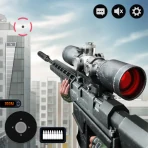
The opening impression is that this is a game about controlled shots rather than constant running and close-range chaos. You are generally looking for a target, lining up the view, making a decision, and dealing with the result. That slower rhythm gives the action a different character from arena shooters where movement and rapid weapon switching dominate every second.
I like that distinction for short sessions. If I have only a few minutes, I can focus on a specific objective instead of needing a long uninterrupted match to feel that I have done something worthwhile. The sniper perspective also makes small mistakes obvious: a rushed shot, a poor angle, or a failure to notice danger can turn a promising attempt into a restart.
The wider package is not limited to a solitary shooting routine. Its online PVP side gives the game a competitive layer, while the collection of army maps and modes helps prevent every session from feeling identical. Still, I would not install it expecting a fully open battlefield or a realistic military simulation. The appeal is structured mobile action, with quick encounters and clear shooting goals.
One important expectation is that “free” describes the download, not necessarily the entire long-term experience. Optional purchases range from $0.99 to $94.99 per item. I would begin without spending anything and first decide whether the aiming style, mission rhythm, and progression feel satisfying. That approach is especially useful for a first-time player because the early excitement can make any action game seem more essential than it really is.
Who is likely to enjoy it
I would recommend it to someone who likes mobile shooting games but wants more emphasis on precision than on nonstop movement. It also suits players who enjoy alternating between goal-based action and competitive matches. A person who likes checking in for several focused attempts during a commute break or after work may find the format convenient.
It is less suitable for anyone looking for a calm, nonviolent game, a story-heavy adventure, or a shooter built around deep team communication. The Mature 17+ rating is not a detail to ignore, particularly if the device is shared with younger players. I would also steer away from it if you dislike games where improvement depends on repeating a scenario and adjusting your timing.
Getting through the first setup without overthinking it
On a compatible device, the current version is 14.6.1 and the minimum operating system is Android 6.0. Once installed, I would keep the first session simple: launch the game, observe the opening instructions, and resist the temptation to explore every available option before learning the basic aiming flow. The initial goal is not to understand the whole game; it is to become comfortable with looking, aiming, firing, and recovering from a miss.
Touch controls can feel less natural than a physical controller, especially when a target appears quickly. My practical advice is to hold the phone securely and use small movements rather than dragging across the screen as if you were steering a character in a racing game. Large corrections often carry the reticle past the target. Fine adjustments are slower, but they are more reliable once the target is in view.
I also recommend treating the first few attempts as calibration. Notice how much finger movement changes the sight picture, how quickly targets become unavailable, and whether you tend to fire before the reticle has settled. Those observations are more valuable than chasing a perfect result immediately. The game becomes less frustrating when you see each early miss as information about your own control habits.
Do not assume that a successful first shot means you have mastered the game. Early encounters can teach the basic loop, but later situations and PVP matches demand better awareness. The useful setup is mental as much as technical: decide whether you prefer careful precision or faster reactions, then adjust your play rather than blaming every miss on the controls.
You may also like

Amazon Kindle: Revolutionizing Digital Reading

Why OLX: Compras Online e Vendas Captivates Shoppers Worldwide

Unpacking the Strategy of Yalla Ludo's Jackaroo Mode

Why eBay's Mobile App Stands Out in Online Shopping

How Fishdom's Puzzle Mechanics Transform Your Aquarium Experience

Block Blast! The Perfect Puzzle for Busy Lives
How I reached the first meaningful success
My first satisfying success came from slowing down before firing. Instead of following the target with a large sweeping motion, I moved the sight near the expected path, waited for the target to enter a comfortable position, and then made a short correction. That method feels less dramatic than snapping toward a target, but it produces more consistent results.
A second helpful habit is to separate observation from action. For the first moment of a new encounter, I look at the scene and identify what appears to be the immediate objective. Then I aim. This prevents the common beginner mistake of tapping the instant anything moves on screen. In a sniper-oriented game, the urge to shoot quickly is often exactly what makes the shot fail.
When a mission goes wrong, I try to identify one cause rather than replaying it blindly. Was the reticle moving too much? Did I fire before the target was clearly lined up? Did I spend too long watching one area? A single adjustment per attempt makes improvement easier to notice. Changing everything at once can make a lucky success impossible to repeat.
For a realistic everyday scenario, imagine opening the game during a short evening break. I would play one or two focused attempts, stop after a frustrating miss, and return later with a specific goal such as keeping the sight steady or waiting an extra moment before firing. That is a better use of the game than launching it while distracted and then concluding that the controls are unreliable.
What often confuses new players
The biggest confusion is the difference between a sniper-style encounter and a conventional mobile shooter. A player accustomed to constant movement may initially feel that the game is too deliberate. That is not necessarily a problem with the design; it means the important skill is visual control and timing. The game rewards restraint more than frantic tapping.
Another point of friction is the shift between goal-based play and online PVP. A method that works when the situation is predictable may not transfer cleanly to a competitive match. Against human opponents, hesitation can be punished, but rushing can be just as costly. I treat PVP as a separate learning step rather than assuming that success in the early action content automatically makes me competitive online.
Players can also misunderstand the role of purchases. Because the game is free to download, it is easy to imagine that every improvement should arrive naturally and immediately. The available in-app items, priced from $0.99 to $94.99 each, make it sensible to set a personal spending limit before playing. I would never make a purchase simply because a difficult attempt feels disappointing. First decide whether the underlying game is enjoyable without it.
There is also a practical difference between a short-term win and a dependable skill. A lucky shot may complete an encounter, but it does not teach you why it worked. I get more value from repeating a reliable aiming routine than from chasing spectacular results. That mindset helps keep the competitive side enjoyable instead of turning every loss into a reason to spend or quit.
Small techniques that make a noticeable difference
My first non-obvious tip is to use the environment as a timing reference. Rather than staring only at the reticle, I watch nearby movement and fixed visual points to anticipate where attention should go next. This reduces the delay caused by searching the entire screen after every event. It is particularly useful when the scene contains several possible distractions.
Second, I avoid treating every visible target as equally urgent. In a crowded situation, the most obvious object is not always the one that deserves immediate attention. I look for the objective implied by the encounter and commit to it. Splitting attention between several possibilities makes the touch controls feel far less precise than they actually are.
Third, I use failed attempts to refine the opening seconds rather than only the final shot. If I begin each replay with the same rushed movement, I am repeating the mistake before the meaningful part of the encounter even starts. A calmer opening gives me more control over the rest of the attempt.
In PVP, I would add a fourth rule: do not measure your ability by one match. Human opponents introduce variables that are not present in a predictable mission. If you lose, note whether the problem was awareness, timing, or overconfidence. Then change one behavior in the next match. This turns online play into practice instead of a sequence of unexplained defeats.
Where it stands beside other mobile shooters
Compared with fast arena shooters, this game feels more focused on deliberate aiming and individual shots. Those alternatives are usually better for players who want continuous movement, rapid engagements, and a stronger emphasis on navigating a space under pressure. I prefer the slower structure here when I want a compact challenge that revolves around precision.
Compared with tactical team shooters, it is also a different kind of experience. A team-based alternative may offer richer communication, coordinated roles, and more strategic positioning between several players. Kill Shot Bravo is more approachable when I want to play alone for a while, although its PVP component still provides competition for players who want it.
Against casual target games, it offers a more developed action setting through its military presentation, maps, modes, and online battles. The trade-off is that it asks more attention from the player and may feel less relaxing. I would choose it when I want a shooting challenge, not when I simply want to pass time with minimal concentration.
Progression, patience, and spending decisions
The most sensible way to approach progression is to let your own enjoyment lead. Play enough to learn whether completing missions and improving your aim feels rewarding. If the game becomes a routine you genuinely look forward to, optional purchases can be considered carefully. If the only appealing part is the idea of becoming stronger quickly, spending is unlikely to fix the underlying mismatch.
I also think patience matters because precision games expose uneven performance. A player can make a clean series of shots and then struggle with a situation that changes the timing or demands faster decisions. That inconsistency is normal. Instead of expecting a smooth upward line, I look for repeatable habits: steadier touch movement, better target prioritization, and less impulsive firing.
The large player community and average rating of 4.4 suggest that the formula has broad appeal, but popularity does not remove the personal trade-offs. Some players will enjoy the focused shooting loop for years; others will find the repetition or competitive pressure tiring. I would use the early free experience to decide which group I am in rather than relying on the game’s popularity alone.
My recommendation after settling into the game
After spending time with it, I see Kill Shot Bravo as a good choice for adults who want a free mobile action game built around sniper-style precision, structured encounters, and optional online competition. Its strongest quality is the clear feeling that a better result usually comes from better timing and control, not merely from tapping faster.
I would skip it if you want a story-first campaign, nonviolent entertainment, or a shooter where movement and team coordination are the central attractions. I would also avoid starting with purchases. Learn the controls, complete enough content to understand the rhythm, and try PVP only after the basic aiming process feels comfortable.
For a first-time user, the path is reassuringly straightforward: install the game on a device running Android 6.0 or later, learn the touch response, slow down your first shots, and treat each failed attempt as a specific lesson. Once that foundation is in place, the different modes and competitive side have a better chance of feeling like meaningful additions rather than confusing distractions.
My final view is positive but measured. This is not a universal shooter, and its Mature 17+ presentation, optional spending range, and precision-heavy controls will not suit everyone. For the right player, though, it delivers a satisfying loop: observe, line up the shot, act with purpose, and improve through repetition. That is enough to make it worth trying for anyone who enjoys focused mobile gunplay and wants a clear first step toward competitive action.
Pros
- Large variety of sniper rifles and upgradeable weapons.
- Many missions offer different objectives beyond simple target elimination.
- Smooth controls make aiming and shooting comfortable on touchscreens.
- Regular events provide extra challenges and rewards.
- Offline play is available for some single-player missions.
Cons
- Energy limits can interrupt longer play sessions.
- Weapon upgrades often require significant time or premium currency.
- Ads may appear frequently between missions.
- Some later levels feel repetitive despite changing locations.
- Online features may require a stable internet connection.
FAQ
What is Kill Shot Bravo: 3D Sniper FPS?
Kill Shot Bravo: 3D Sniper FPS is a military-themed first-person shooting game focused on long-range sniper missions. You take the role of an elite operative, travel through different combat environments, eliminate targets, and complete objectives with a variety of rifles and weapons. The game combines aiming, stealth, mission progression, equipment upgrades, and cinematic action sequences in a mobile-friendly format.
Can Kill Shot Bravo be played offline?
Some missions and basic gameplay elements may be available without a continuous internet connection, but the game is designed around online features and may require connectivity for certain content. Internet access can be needed for downloading updates, synchronizing progress, viewing advertisements, participating in events, and accessing competitive or connected features. Availability may also vary depending on your device and installed version.
Is Kill Shot Bravo: 3D Sniper FPS free to download?
Kill Shot Bravo is generally free to download and play, allowing users to begin the campaign without purchasing the game upfront. However, it includes optional in-app purchases that can provide weapons, upgrades, resources, or other gameplay advantages. Progress can be made without spending money, although some players may encounter waiting periods, limited resources, or advertisements designed to encourage optional purchases.
Does the game contain advertisements or in-app purchases?
Yes, players should expect both advertising and optional in-app purchases in Kill Shot Bravo. Advertisements may appear between missions or be offered as a way to receive additional rewards, while purchases can help obtain currency, equipment, upgrades, or other useful items more quickly. Parents should review the device’s purchase settings, especially if children will be playing the game.
What devices are recommended for playing Kill Shot Bravo?
Kill Shot Bravo features detailed 3D environments, animated enemies, weapon effects, and cinematic mission scenes, so performance depends on the device. A relatively modern Android phone or iPhone with sufficient free storage, updated system software, and stable graphics performance is recommended. Older or entry-level devices may experience longer loading times, reduced visual quality, overheating, or occasional frame-rate problems.