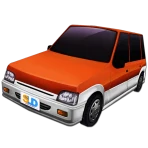
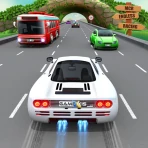
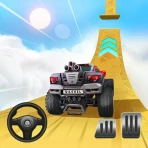
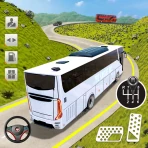
Go Speed: Street Rider
For Android
Go Speed: Street Rider is a free racing game from SoftAIO that aims for a simple promise: get you moving quickly and keep the focus on the road. I approached it as a decision rather than assuming every racing fan wants the same kind of experience. Some players want deep vehicle tuning, long career systems, and realistic handling. Others want something they can open for a short burst of driving without first learning a complicated control scheme. This game makes more sense for the second group.
My first impression is that its appeal depends less on a large feature checklist and more on how comfortable you are with a straightforward mobile racing format. The store summary, “Feel the Speed. Own the Streets.”, sets an energetic tone, while the shorter message, “Go Speed”, is even more direct. That simplicity is useful: you know immediately that this is meant to be about getting into motion, not managing a full racing simulation.
I would consider it for someone who wants a free game for occasional play, especially if their phone runs Android 7.0 or later. I would be more cautious with a player who expects a highly detailed racing career, extensive customization, or the depth normally associated with premium console-style racers. The important question is not whether it is “the best” racing game, but whether its lighter approach matches the way you actually play.
What to consider before choosing it
Pick the kind of racing session you really want
Before installing any racing game, I try to identify the session I am looking for. If I have only a few spare minutes, a game that gets me into a race quickly is more useful than one that asks me to work through several menus, upgrades, and progression screens. Go Speed: Street Rider appears designed around that kind of immediate appeal. Its identity is easy to understand, and the racing category tells you more than a complicated genre label would: this is a driving game first.
That does not automatically make it suitable for everyone. A player who enjoys comparing vehicle statistics, adjusting individual handling settings, or building a long-term garage may find a simpler street-racing game limited. I would also separate casual racing from simulation. In a simulation, the pleasure often comes from precision and learning a car over time. Here, the attraction is the feeling of moving through a street-focused setting with less preparation.
My practical test would be simple. Ask yourself whether you want a game that supports short, repeatable sessions or one that becomes a major hobby. If you usually play while waiting for transport, taking a break, or relaxing before bed, the first category is probably the better fit. If you are looking for a serious substitute for a dedicated racing platform, you should compare more carefully before committing your time.
Device compatibility matters more than the free label
The game is free to download, but that should not be confused with being completely free of spending decisions. It includes in-app purchases ranging from $0.99 to $19.99 per item. That range makes the game accessible at the starting point while still leaving room for optional purchases. I would begin without spending anything and first decide whether the driving itself feels satisfying enough to justify continued play.
The minimum operating system is Android 7.0, which gives the game a broad compatibility window for Android users. Even so, compatibility is only the first check. A phone that technically runs the required system may still deliver a less comfortable experience if storage is tight, the battery is already under strain, or the device struggles with other games. I would close unnecessary apps, keep some free storage available, and test the controls before deciding whether it deserves a permanent place on the phone.
The age guidance is Everyone 10+, so parents should still consider whether the style of racing and any purchase options suit the child using the device. The rating is not a substitute for supervision around spending. If a younger player will use it, I would set purchase protections before handing over the phone, rather than trying to solve that problem after an accidental transaction.
What I would test during the first session
I would not judge the game only by its first few seconds. Racing games often feel attractive at the beginning because speed creates instant excitement, but the real test is whether the controls remain understandable after the novelty fades. I would focus on three things: how quickly I can begin driving, whether steering feels predictable, and whether I can tell what I am meant to do without repeatedly leaving the race to search through menus.
One useful habit is to play the first session with sound at a comfortable level and the phone held in the position I normally use. A control layout that feels fine while sitting at a desk may be awkward when playing one-handed on a sofa. I would also try both a short session and a longer one. The short test reveals accessibility; the longer test reveals whether the game has enough variety or satisfaction to avoid feeling repetitive.
Another overlooked point is attention. Street-racing games can demand more concentration than their simple presentation suggests. I would avoid playing while walking, crossing roads, or doing anything else that requires visual awareness. The game is entertainment, not something to combine with real-world driving.
You may also like

Amazon Kindle: Revolutionizing Digital Reading

Why OLX: Compras Online e Vendas Captivates Shoppers Worldwide

Unpacking the Strategy of Yalla Ludo's Jackaroo Mode

Why eBay's Mobile App Stands Out in Online Shopping

How Fishdom's Puzzle Mechanics Transform Your Aquarium Experience

Block Blast! The Perfect Puzzle for Busy Lives
Where the game is most convincing
The strongest case for Go Speed: Street Rider is its clear purpose. It does not need to persuade me that it is a full racing simulator before I can enjoy it. The street-racing framing gives it an immediate mood, and the direct presentation lowers the barrier for someone who is curious about racing games but does not want a complicated introduction.
Its biggest practical strength is low commitment. You can try it without paying an entry fee, and the Android requirement is not aimed only at the newest devices. That combination makes it reasonable for a spare-time player who wants to explore a racing game before deciding whether to invest more attention.
I also like the way the game can serve as a middle ground between a tiny time-killer and a demanding racing title. A very basic arcade game may feel disposable after a few minutes, while a more elaborate alternative can feel like homework when I only want a quick drive. Go Speed: Street Rider has a chance to occupy the space between those extremes, provided its handling and replay value work for the individual player.
A realistic everyday use case
Imagine finishing a short break at work with a few minutes left before the next task. I would not want to start a game that requires a long setup or a major commitment. I would open this one, play a brief race, and stop when the break ends. The free starting price makes that experiment easy, and the street-racing theme fits a quick burst of action better than a slow, management-heavy racing experience.
There is a second use case for families sharing an Android tablet. A parent could install the game for occasional entertainment, check the purchase settings, and let a child try it under the Everyone 10+ guidance. I would still keep expectations realistic: the game should be treated as one option in a shared library, not automatically as a complete long-term activity.
For commuters, I would add one caution. A racing game may be suitable while waiting, but not while operating a vehicle or moving through busy public spaces. The best use is stationary and focused. That sounds obvious, yet games built around speed can encourage distracted play precisely when the player is in a hurry.
Small decisions that improve the experience
My first tip is to delay purchases until you know what keeps you playing. Because individual items can cost from $0.99 to $19.99, the sensible approach is to treat every purchase as a response to a demonstrated need, not as part of the installation process. If the basic experience stops being enjoyable, paying more will not solve the underlying problem.
My second tip is to judge progress by enjoyment rather than by the desire to unlock everything. In many free racing games, players can slip into a cycle of chasing the next improvement even when the actual driving has become routine. I would set a simple limit: play for a few sessions, then decide whether the races themselves remain fun. This prevents the purchase system from becoming the reason you continue.
My third tip is to compare the game with your own habits rather than with promotional expectations. If you prefer quick sessions, keep it available as a lightweight option. If you regularly play for an hour or more, examine whether the game gives you enough changing goals to support that pattern. The same design can feel efficient to one player and shallow to another.
Where competing racing categories may fit better
Go Speed: Street Rider is not automatically a replacement for every racing alternative. Players who want realistic physics may be happier with a simulation-focused title. Those who enjoy building a collection, tuning vehicles, or following a structured career should look toward games that make those systems central. I am not treating those categories as inferior; they simply answer different questions.
An arcade racer with a large selection of events may be a better choice if variety is your main reason for playing. A multiplayer-centered game may suit you more if racing other people is the essential part of the experience. A premium game may also be preferable if you would rather pay once than navigate optional purchases. The right alternative depends on the trade-off you care about most: simplicity, depth, competition, or spending control.
The advantage of choosing this game over those alternatives is that the decision is less intimidating. You can start for free and find out whether the basic style works for you. The disadvantage is that a lower commitment can also mean lower long-term ambition. I would not install it expecting it to replace a favorite deep racer without first testing how much substance it offers beyond its immediate speed-focused appeal.
How the developer and current release affect the decision
SoftAIO is the developer behind the game, and the current version is 1.0.2. That version label suggests a relatively early point in the product’s life, so I would approach it as a game that may still be establishing its identity. For a new player, that can be appealing because the experience may feel focused rather than overloaded. For a player who wants a mature ecosystem with years of accumulated content, it is a reason to keep expectations measured.
The game was released on Aug 4, 2026, and has reached over 50 thousand installs. That gives it a meaningful starting audience without making popularity the deciding factor. Install numbers cannot tell me whether the controls suit my hands or whether the replay loop will hold my attention. They are useful context, but personal testing remains more important for a racing game.
I would also keep the version number in mind when troubleshooting. If something feels awkward, I would first check that the installed copy is current and then consider whether the issue is a genuine design choice rather than a fault. Early versions can change, so I would avoid spending heavily until I had used the game long enough to understand its stable strengths.
The cost of switching from another racer
Switching to this game is inexpensive in money because the entry price is free, but it still has a time cost. You may need to learn a new control feel, adjust to a different pace, and decide whether its progression is satisfying enough to replace your current game. If you already have a racer that offers deep customization or a strong competitive community, the switch may not be worthwhile unless you specifically want something lighter.
The easiest transition is to keep your existing favorite and use this as a secondary game. That approach lets you test whether its street-focused style works during short breaks without giving up the systems you already enjoy. I would only make it my main racing game if I found myself choosing it naturally, not because it was free or because I felt pressure to justify installing it.
There is also a spending-switching cost. Starting with optional purchases can make it harder to compare the free experience fairly with another game. I would play without buying anything, decide what I actually miss, and then compare that missing element with the price and structure of alternatives. This keeps the decision based on value rather than momentum.
Who should install it
I recommend trying Go Speed: Street Rider if you want a free Android racing game with an uncomplicated starting point, enjoy the idea of street-focused driving, and are comfortable evaluating optional purchases cautiously. It is especially suitable for casual players who prefer short sessions and for newcomers who do not want their first racing game to feel overloaded.
I would recommend skipping it, at least for now, if your priority is simulation accuracy, extensive tuning, a deep career, or a racing community built around serious competition. Those needs call for a different category of game. I would also skip it if you know that optional purchase systems make it difficult for you to stop spending once you become invested.
My recommendation after weighing the trade-offs
My final view is positive but deliberately modest. Go Speed: Street Rider is worth a free trial when you want quick street-racing entertainment and do not need a complete simulation or a long-term garage project. Its strongest selling point is not a promise of endless depth; it is the chance to start simply and decide for yourself whether the driving loop fits your routine.
I would install it, test the controls in several short sessions, and avoid purchases until the basic game has earned more of my time. If it becomes the racer I open whenever I have a spare moment, then its free entry and accessible Android requirement have done their job. If I begin wishing for deeper systems, more structured goals, or a different competitive format, I would move to an alternative designed around those priorities rather than trying to force this game into a role it may not be meant to fill.
In short, Go Speed: Street Rider is a sensible low-risk choice for casual racing fans, but not a universal answer for the genre. I would recommend it as an easy game to try, a useful secondary racer, and a possible fit for short focused sessions. I would not recommend buying into it immediately or treating it as a substitute for a more specialized racing experience until your own play sessions prove that its straightforward approach is enough.
Pros
- Fast
- arcade-style races are easy to pick up and play.
- Short events suit quick gaming sessions on mobile.
- Street-racing theme gives the game an energetic atmosphere.
- Vehicle upgrades add a sense of progression over time.
- Simple controls work well for touchscreen play.
Cons
- Progress may become repetitive after playing the same tracks often.
- Some upgrades can require considerable time or in-game currency.
- The game may feel too easy for experienced racing players.
- Visual quality can vary across older or less powerful devices.
- Ads may interrupt gameplay or appear frequently between events.
FAQ
What is Go Speed: Street Rider, and what can I expect from its gameplay?
Go Speed: Street Rider is an arcade-style mobile driving game focused on fast street races, traffic dodging, and short, action-packed challenges. After trying the game, the main appeal is its simple controls and quick progression rather than a highly realistic simulator experience. Players can drive through busy roads, avoid obstacles, improve their performance, and work toward unlocking or upgrading vehicles as they advance.
Is Go Speed: Street Rider free to download and play?
Go Speed: Street Rider can generally be downloaded and played without an upfront purchase, making it easy to try before spending money. However, free mobile games may include advertisements, optional in-app purchases, or paid items connected with vehicles, upgrades, or progression. Before downloading, users should check the current store listing and in-game purchase information, especially if children will be using the device.
Does Go Speed: Street Rider require an internet connection?
The game is designed around quick driving sessions, so some basic gameplay may work without a constant internet connection, depending on the version installed and the device being used. Nevertheless, online access may be needed for advertisements, updates, purchases, backups, or certain features. If offline play is important to you, test the game in airplane mode after installation rather than assuming every mode will remain available.
Is Go Speed: Street Rider suitable for children and casual players?
Go Speed: Street Rider is relatively easy to understand because its gameplay centers on steering, accelerating, avoiding traffic, and completing straightforward objectives. That makes it approachable for casual players and younger audiences who enjoy fast arcade games. Parents should still review the age rating, advertising behavior, privacy disclosures, and purchase settings, since the appropriate experience can vary by platform, region, and the version currently available.
What are the main advantages and possible drawbacks of Go Speed: Street Rider?
The strongest advantages are its accessible controls, quick races, and pick-up-and-play format, which work well when you only have a few minutes available. It can also be entertaining for players who enjoy improving reaction times and chasing better results. On the other hand, users looking for deep simulation physics, extensive customization, or a large competitive multiplayer system may find the experience simpler than expected, while advertisements or repetitive challenges could affect long-term enjoyment.