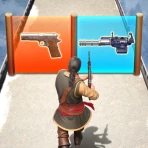
City of Crime: Gang Wars
For Android
I spent time with City of Crime: Gang Wars expecting a quick crime-themed strategy game, but its appeal is more specific than that. It is built around the pressure of making choices while the city keeps moving: you are not simply tapping through fights, but deciding where to spend attention, which upgrades deserve priority, and how much risk is worth taking when progress and competition pull in different directions. That constant tension gives the game its identity.
It is a free strategy game from CrushGameTechnologyLimited, aimed at a mature audience with a 17+ content rating. The game has reached over 10 million installs and holds a 4.4 average from around 294 thousand ratings, which suggests it has found a substantial audience beyond people who only try it for a few minutes. I can understand why. The presentation is direct, the theme is easy to grasp, and the early flow gives you enough activity to feel that your decisions matter quickly.
At the same time, this is not the right choice for everyone. The crime setting, competitive pressure, repeated development tasks, and in-app purchase range from $0.99 to $199.99 per item will not suit players who want a quiet, self-contained strategy experience. I found it most enjoyable when I treated it as a long-term planning game rather than a title to rush through in one sitting.
How the city turns small choices into strategic problems
Planning is more important than simply winning the next fight
The first useful shift in mindset is to stop judging every action by its immediate result. A successful fight feels satisfying, but the more important question is what that victory enables afterward. A choice that improves your position now may leave you short of the resources, time, or flexibility needed for the next stage. I often found myself weighing a modest improvement against the temptation to push for a more ambitious objective.
That makes the game more interesting than a simple sequence of battles. The city is presented as a place where conflict can appear suddenly, so reacting quickly has value, but preparation usually decides whether the reaction is effective. I learned to look at the next few decisions instead of spending everything whenever I had enough for an upgrade. That habit reduced the number of moments where I felt strong for one encounter and underprepared immediately afterward.
A practical approach is to divide your attention into three horizons. The short horizon is the action in front of you. The medium horizon is the next improvement or challenge you are preparing for. The long horizon is the kind of position you want your account to have after several play sessions. Even without turning the game into a spreadsheet, thinking this way makes the choices clearer.
Attention becomes a resource of its own
One of the less obvious trade-offs is that City of Crime: Gang Wars can consume attention even when it is not demanding fast reflexes. There is always a reason to check progress, review what has changed, or decide whether to continue investing in a particular direction. That suits players who enjoy returning to a developing strategy, but it can feel tiring if you prefer games that are completely finished after each session.
I recommend deciding before opening the game what kind of session you want. If I had only a few minutes, I focused on one clear objective and avoided making broad changes. When I had more time, I could compare several possible improvements and think about how they affected later choices. This simple separation prevented the game from becoming a stream of disconnected taps.
That is also why it works better on a regular schedule than as a once-a-week game. Returning often enough to remember your priorities helps preserve the sense of continuity. If you leave it for too long, the number of decisions waiting for attention can make the city feel less like a plan and more like a backlog.
Where the strategy feels different from a standard mobile battler
Compared with a straightforward action game, the main satisfaction here comes from arranging progress rather than controlling every second of a fight. Compared with a traditional turn-based strategy title, the experience feels more persistent and more connected to the idea of building influence over time. It sits between those styles, which is useful if you want strategic choices without a slow board-game presentation.
The trade-off is that the game does not always provide the clean closure of a conventional match. In a typical competitive strategy game, a round ends and you can assess the result. Here, progress is part of a continuing structure, so one decision can remain relevant long after the excitement of the original conflict has passed. I liked that continuity, although players who want a clear beginning and ending may prefer a match-based alternative.
Making risk understandable before committing
The most useful habit I developed was to treat every major commitment as a question of recovery. If the decision works, what does it unlock? If it fails, how difficult will it be to rebuild? This is more helpful than asking only whether an action looks powerful. A high-reward move is not automatically good if it leaves no room for the next problem.
You may also like

Amazon Kindle: Revolutionizing Digital Reading

Why OLX: Compras Online e Vendas Captivates Shoppers Worldwide

Unpacking the Strategy of Yalla Ludo's Jackaroo Mode

Why eBay's Mobile App Stands Out in Online Shopping

How Fishdom's Puzzle Mechanics Transform Your Aquarium Experience

Block Blast! The Perfect Puzzle for Busy Lives
I also became more cautious about spending resources simply because the game made them available. Saving a reserve gave me room to respond when circumstances changed. That reserve did not guarantee success, but it reduced the feeling that one poor choice had ruined an entire session. For new players, this is probably the single most useful lesson: do not confuse having enough for one purchase with having enough for a complete plan.
Another worthwhile technique is to compare improvements by the situations they solve. An upgrade that helps in many different circumstances is usually easier to justify than one that only matters in a narrow scenario. I would not ignore specialized improvements, but I delayed them until I understood what kind of pressure I was actually facing. That made my progress feel less random.
Why rushing can make the game less enjoyable
The free-to-play structure naturally creates moments where spending can appear attractive. The available purchases range from small amounts to $199.99 per item, so the game clearly gives players different ways to accelerate or extend their progress. I did not find the best experience in trying to remove every delay. The more I rushed, the less satisfying the planning became, because the consequences of my choices were harder to feel.
My advice is to decide on a personal boundary before you get invested. If you are comfortable paying for convenience, treat that as a way to support your preferred pace rather than as a solution to every obstacle. If you want to spend nothing, the game is still available at no cost, but you should expect to value patience and selective investment more highly. Either approach works better when chosen deliberately.
This is also where the mature rating matters. The game’s criminal setting and conflict-oriented tone will appeal to some players, but it is not something I would casually recommend to a child or to anyone looking for a lighthearted city builder. The theme is central to the experience, not a decorative skin placed over an otherwise neutral strategy game.
Adapting when the first plan stops working
A strong plan in the opening part of a session may become inefficient later. I found that sticking stubbornly to one route was less effective than keeping a clear priority while remaining willing to adjust. That does not mean changing direction after every setback. It means recognizing when the original reason for a choice no longer applies.
For example, if I had been preparing for a particular kind of pressure and the situation changed, continuing to invest in the old answer could leave me with a polished solution to yesterday’s problem. The better response was to pause, identify what was now limiting progress, and redirect the next few decisions. This kind of adaptation is where the strategy becomes more thoughtful than simple accumulation.
Players who enjoy experimenting should keep informal notes about what caused a setback. I found it useful to remember whether a failure came from poor timing, weak preparation, or spending too much in one area. Without that distinction, it is easy to repeat the same mistake while blaming the wrong part of the plan.
Long-term depth comes from remembering consequences
City of Crime: Gang Wars becomes more engaging when I remember that progress is not only about the strongest option available today. It is about building a position that remains flexible. That gives the game a longer strategic arc than its immediate fights might suggest. A session can be successful even if it does not end with a dramatic victory, provided it leaves the next session in better shape.
The current version is 1.2.176, and the game supports devices running Android 6.0 or later. Those details make it accessible to a wide range of Android users, including people who are not using a recent phone. Still, accessibility should not be confused with simplicity. The game may be easy to start, but its long-term decisions require more patience than the initial introduction suggests.
I would especially recommend it to players who enjoy checking a developing account, making incremental improvements, and revisiting earlier assumptions. It is less suitable for someone who wants a complete story campaign, a purely reflex-based challenge, or a strategy game where every session can be finished cleanly before putting the phone down.
A realistic everyday way to play
Imagine opening the game during a commute with only a short window available. Instead of trying to solve everything, choose one task: review your current position, make one carefully selected improvement, and stop before spending resources that you may need later. On a longer evening session, return to the broader plan and decide whether your earlier choice still fits the situation.
This routine worked well for me because it separated maintenance from experimentation. Short sessions were about preserving momentum. Longer sessions were about testing a different direction and learning from the result. It also reduced the temptation to make hurried purchases or commitments simply because I wanted to end the session with a visible change.
For a group of friends comparing progress, the game can provide an easy topic for discussing choices, but I would not approach it as a pure contest of who advances fastest. The more interesting comparison is why two players made different decisions and which trade-offs they accepted. That is where the strategy has room to breathe.
Who should choose it, and who should skip it
I think this game is a good fit for players who like crime-themed settings, persistent progression, and decisions that reward planning across several sessions. It is also suitable for people who enjoy a mobile game that can be checked in short bursts but still offers enough continuity for longer play. The combination of immediate conflict and gradual development gives it a distinct rhythm.
I would skip it if you dislike free-to-play pressure, have no interest in a mature gangland theme, or want strategy without ongoing resource decisions. I would also point players toward a conventional turn-based game if they prefer clearly defined matches and a slower, more transparent decision structure. Those games may offer a better sense of control for someone who does not enjoy persistent progression.
Likewise, action-focused players may find the strategic layer too demanding if they mainly want direct control and quick victories. Here, the satisfying moment often comes later, when an earlier decision proves useful. If that delayed payoff sounds rewarding, the game has a fair chance of holding your attention. If it sounds like unnecessary waiting, its central design may frustrate you.
My verdict after weighing the trade-offs
City of Crime: Gang Wars is more enjoyable when approached as a planning game with conflict, not as a fight game with a few upgrades attached. Its best moments come from choosing a direction, protecting enough flexibility to recover from mistakes, and noticing how one decision changes the next set of possibilities. That is meaningful depth for a mobile strategy title.
Its limitations are equally clear. The persistent structure can feel demanding, the mature theme narrows its audience, and the broad in-app purchase range means players should think about spending before the pressure of progress influences them. It also asks for patience: rushing through every obstacle can weaken the very decision-making that makes the game interesting.
For me, the strongest way to play is cautiously and consistently. Keep a reserve, compare improvements by the problems they solve, and treat setbacks as information rather than invitations to spend immediately. If you enjoy that kind of measured progress, this free strategy game is worth trying. If you want a self-contained campaign or a purely skill-based experience, I would choose a different category of game instead.
Overall, I would recommend it to a friend who likes persistent mobile strategy and does not mind returning to the same city with a changing plan. The game’s appeal is not that every decision is dramatic. It is that ordinary decisions accumulate, and with enough attention, they begin to shape the kind of position you have built.
Pros
- Large open-world map with plenty of areas to explore and activities to complete.
- Frequent missions provide a steady sense of progression and new objectives.
- Gang battles and territory contests add competitive variety to the gameplay.
- Character and vehicle upgrades offer meaningful ways to improve your gang.
- Stylized visuals and dramatic effects create an engaging crime-game atmosphere.
Cons
- Progress can slow considerably without spending premium currency.
- Many missions involve repetitive driving
- combat
- or resource-collection tasks.
- Online features may require a stable connection and can consume mobile data.
- The interface can feel crowded with notifications
- offers
- and upgrade menus.
- Device performance may suffer during busy fights or in larger city areas.
FAQ
What is City of Crime: Gang Wars about?
City of Crime: Gang Wars is a strategy and role-playing game centered on building a criminal empire in a dangerous urban environment. You recruit gang members, develop buildings, collect resources, complete missions, and compete with rival players. The gameplay combines city management, tactical combat, character upgrades, alliances, and real-time events, so progress involves both careful planning and regular activity.
Is City of Crime: Gang Wars free to download and play?
Yes, City of Crime: Gang Wars can generally be downloaded and played for free, but it includes optional in-app purchases. These purchases may provide premium currency, resources, speed-ups, or progression advantages. You can enjoy the main systems without paying, although free players may need more patience, especially when upgrading buildings, training units, or competing against highly developed players in events and alliance activities.
Does the game require an internet connection?
An active internet connection is normally required to play City of Crime: Gang Wars because many of its features depend on online servers. Your progress, alliance interactions, competitive battles, events, and account data are managed online. As a result, the game is not a suitable choice for completely offline play, and unstable Wi-Fi or mobile data may cause loading problems or interruptions.
Is City of Crime: Gang Wars suitable for children?
Parents should review the game’s age rating before allowing children to play. City of Crime: Gang Wars presents crime-themed stories, gang conflicts, weapons, violence, and mature urban situations. It also includes online interaction and optional purchases, which may require supervision. The game is primarily designed for a more mature audience, particularly because of its themes and competitive monetization systems.
What should new players focus on first in City of Crime: Gang Wars?
New players should concentrate on completing the tutorial, following the main missions, upgrading important production and command buildings, and improving their strongest characters before spending premium currency. Joining an active alliance early is also valuable because alliances can provide assistance, rewards, and protection. Avoid wasting resources on every available upgrade, and save speed-ups and special items for meaningful events or important progression milestones.