Block Buster - No Timer
For Android
I spent time with Block Buster - No Timer as a casual puzzle game, and my first impression was that it understands the appeal of fitting colorful blocks into a board without adding a countdown clock. That small choice changes the mood considerably. Instead of rushing through every move, I could look at the available pieces, consider the gaps, and decide whether a placement helped the current board or merely solved an immediate problem.
It is a free game from Lion Studios Plus, aimed at the broadest audience with an Everyone content rating. The store presents it as a colorful block puzzle focused on clearing bricks and exercising logic, but that description only tells part of the story. The real attraction is the quiet decision-making between moves: every piece can look useful, yet a careless placement can leave awkward spaces that restrict the next few turns.
On Android, the game requires version 6.0 or later. It was released on June 27, 2025, and the current version is 1.8.0. Its average rating is 4.4 from roughly 21 thousand ratings, while the game has passed 500 thousand installs. Those figures suggest that it has already found an audience, but I would still judge it mainly by how well its no-timer format fits your habits.
How the no-timer format changes the puzzle
The absence of a timer is more important than it may sound. In many block puzzle games, pressure comes from the clock, falling pieces, or both. Here, the central pressure comes from the board itself. I could pause before committing to a move, but the board did not become easier simply because I waited. The challenge was to use the space intelligently while keeping future options open.
That makes each turn feel like a small planning exercise. A large piece may fit perfectly in the moment, but placing it too early can divide the board into narrow pockets. A smaller piece may appear less valuable, yet it can preserve a useful lane for a later shape. I found myself thinking less about clearing one line immediately and more about maintaining flexibility for the next several placements.
The game works particularly well in short sessions. I could play while waiting for an appointment, during a quiet break, or at the end of the day when I wanted something interactive without a complicated story to follow. Because there is no countdown demanding constant attention, it is also easier to stop between decisions. That makes it more relaxed than timed alternatives, although relaxed does not mean consequence-free.
One practical habit improved my results: I stopped placing pieces simply because they fit. Before touching a block, I looked for the move that removed the most awkward space from the board. A placement that creates a clean area for several future shapes is often more useful than one that fills a large visible gap. This is the kind of lesson that the short store summary does not explain, but it becomes clear after several boards.
Reading the board instead of chasing quick clears
My most reliable approach was to treat the board as a collection of future options. I tried to avoid building isolated holes that only one unusual shape could fill. Open areas are valuable because they accept more possibilities, while cramped corners can become liabilities even when they look nearly complete.
Another useful adjustment was delaying a tempting clear. If one move completed a line but left the remaining board fragmented, I considered whether another piece could create a better arrangement first. This is not always the correct choice, since leaving a nearly completed line can also waste space. The point is to compare the immediate reward with the shape of the board afterward.
I also learned to inspect all available pieces before making the first move. The order in which I used them could matter more than the individual pieces. A long shape might fit now, while a compact shape could fit almost anywhere later. Using the flexible piece too early sometimes left me with a difficult combination, so I began reserving adaptable placements until the board gave me a clearer reason to use them.
That workflow gives the game more depth than a simple drag-and-drop pastime. It does not turn the experience into a complex strategy title, but it rewards patience and spatial awareness. Players who enjoy gradually improving their decisions will probably get more from it than players who only want instant, predictable clears.
Where progress feels satisfying and where it can feel repetitive
The satisfaction here comes from rescuing a crowded board or finding a placement that suddenly opens several possibilities. A good sequence can feel almost like tidying a messy desk: the visual clutter reduces, the available space becomes easier to read, and the next move feels earned rather than lucky.
You may also like

Amazon Kindle: Revolutionizing Digital Reading

Why OLX: Compras Online e Vendas Captivates Shoppers Worldwide

Unpacking the Strategy of Yalla Ludo's Jackaroo Mode

Why eBay's Mobile App Stands Out in Online Shopping

How Fishdom's Puzzle Mechanics Transform Your Aquarium Experience

Block Blast! The Perfect Puzzle for Busy Lives
At the same time, the basic interaction remains familiar throughout. If you are looking for a campaign with characters, a changing story, or a wide range of puzzle rules, this is not the kind of game that promises that experience. Its appeal depends on whether arranging blocks remains enjoyable after the novelty of the colorful presentation fades.
I would describe the progression as personal improvement rather than a narrative journey. You become better at recognizing dangerous gaps, protecting open areas, and judging when a line clear is genuinely useful. That can be rewarding, but it also means the game may feel repetitive to anyone who needs frequent new mechanics to stay interested.
For an everyday example, imagine having five minutes before a train arrives. A timed puzzle might make that break feel hurried, while this format lets you make a move, put the phone away, and return when you have another quiet moment. The trade-off is that a single board can remain mentally unfinished in a way a quick arcade round does not. For me, that was mostly a benefit, but players who prefer clean, fast endings may feel differently.
Spending, fairness, and what I would check before playing regularly
The game is free to download, with in-app purchases listed from $1.99 to $199.99 per item. That range is the most important spending detail to understand before installing. A low entry cost makes it easy to try, but the presence of high-priced individual purchase options means I would approach any optional spending carefully and use device-level purchase protections if children share the phone.
I did not treat the existence of purchases as proof that the puzzle itself is unfair. The available facts establish that paid items exist and show the listed price range, but they do not establish how those items affect play, how often purchase prompts appear, or whether progression can be accelerated. I would therefore separate two questions: is the core board enjoyable without paying, and do optional purchases create pressure during normal use?
From a fairness perspective, the no-timer design is a positive starting point. Without a clock forcing rushed decisions, the player has more opportunity to solve a difficult position through thought rather than reacting under pressure. That does not automatically guarantee balanced progression, but it does make the central puzzle easier to evaluate on its own terms.
I also appreciate that the game’s main skill is visible. The useful decisions are about space, order, and future flexibility. If you enjoy improving through observation, you can identify why a board became difficult instead of blaming every failure on speed. That clarity is valuable when comparing it with alternatives that depend more heavily on rapid reactions or repeated attempts.
Still, I would not recommend spending simply because a board feels frustrating. A poor placement can create a difficult position, and the natural response may be to look for an easier way forward. Before buying anything, I would replay the board with a different strategy and decide whether the problem was the puzzle or my earlier choices. That pause is especially sensible with a purchase range that extends from a small optional payment to a much larger one.
How it compares with familiar block puzzle choices
Compared with falling-block games, this is calmer because the pieces do not create the same immediate descent pressure. Falling-block formats test rapid recognition and timing, while this game gives more room to examine the board. If you enjoy speed, chain reactions, and the tension of pieces arriving continuously, a traditional falling-block alternative may be a better fit.
Compared with match-three games, the appeal is more spatial than pattern-based. Match-three play usually asks you to notice combinations among existing symbols, whereas this game asks you to manage the geometry of empty and occupied areas. I found it more deliberate and less dependent on spotting a special combination at a glance.
Compared with minimalist offline-style block puzzles, the main question is not whether the rules are easy to learn; they are. The question is how much variety and long-term structure you want around those rules. Someone seeking a pure, quiet board exercise may prefer a simpler alternative with fewer distractions. Someone who likes a colorful presentation and a familiar mobile-game format may find this version more approachable.
The no-timer structure also separates it from puzzle games built around daily speed challenges. Those games can create a stronger sense of competition against the clock or against other players. Here, my attention stayed on the board in front of me. That is a strength for thoughtful solo play, but a weakness if your main motivation is comparing fast scores with a community.
Who should play, and who should skip it
I would recommend it to people who like compact logic games, visual organization, and puzzles that reward thinking ahead. It is a good candidate for a short daily routine, especially if you want something more engaging than scrolling but less demanding than a competitive action game. The Everyone rating also makes it broadly accessible as a style of puzzle, though adults should still supervise spending on shared devices.
It may suit beginners because the basic idea is immediately understandable: place blocks, manage space, and clear the board. Yet beginners should not mistake the simple controls for a completely effortless experience. The difficult part is not learning how to move a piece; it is learning which apparently legal move leaves the healthiest board.
I would skip it if you need a strong story, character development, multiplayer competition, or a steady stream of radically different mechanics. I would also look elsewhere if you dislike repeating a core puzzle loop or if you find open-ended boards less satisfying than clearly defined levels with a fixed solution.
Players who are especially sensitive to optional purchase prompts should make their decision with care. The game costs nothing to start, but the listed in-app purchase range means it is worth setting a firm personal rule before playing: enjoy the free experience first, and never use a purchase to solve a moment of impatience.
What I would keep in mind before installing
The most useful expectation is that this is a board-management game, not a reflex test. Give yourself permission to pause. When the board looks crowded, do not automatically select the piece that fills the largest hole. Look for the placement that leaves the widest range of future moves.
I would also use a simple three-step check: inspect every available piece, identify the most restrictive shape, and decide whether the current move preserves a place for it. This method does not guarantee a clear board, but it reduces impulsive choices. It is especially helpful when several pieces appear to fit equally well.
Keep an eye on the difference between a visually neat board and a strategically healthy one. A board can look organized while containing a single unusable pocket. Conversely, a slightly uneven arrangement may be stronger if it leaves broad open areas. That distinction is where the game’s better decisions usually happen.
The current version is 1.8.0, and the game is available for devices running Android 6.0 or later. Those details matter if you are installing on an older phone. I would also check the purchase controls on the device before handing it to a child, since the game is free to begin but includes optional items across a wide listed price range.
My trust verdict after playing
My overall view is positive, with a clear condition: Block Buster - No Timer is strongest when you want a patient spatial puzzle, not a feature-heavy game. The no-clock format gives every move room to breathe, and the board gradually teaches useful habits about flexibility, order, and empty space. I enjoyed the moments when a careful sequence turned a cramped position into a workable one.
I also think the game is honest about its basic appeal. It does not need a complicated premise to be enjoyable, and its colorful block arrangement is easy to understand within moments. The main limitation is equally straightforward: the experience can become repetitive if the core loop does not hold your attention. Its free entry point helps with that decision because you can judge the puzzle personally before considering any optional purchase.
My spending advice is simple. Treat the free game as the test, not as a demonstration that you should eventually buy something. Since individual in-app purchases range from $1.99 to $199.99, I would avoid impulsive decisions and use purchase restrictions where appropriate. The available purchase information supports caution, but it does not justify claiming that paid items damage fairness; that question should be judged from your own experience with the board and any prompts you encounter.
In the end, I would suggest giving it a try if you like quiet logic challenges and want a puzzle that does not hurry you. I would choose a different game for fast competition, narrative progression, or constant novelty. For the right player, this is a pleasant way to train patience in small doses: inspect the board, protect your options, and make the move that helps the next move as much as the current one.
Pros
- Relaxed gameplay with no countdown pressure
- Simple controls are easy for beginners to understand
- Short sessions work well for quick breaks
- Offline play is convenient when traveling
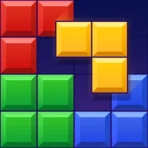
- Colorful block designs make the board easy to read
Cons
- Limited variety may make the gameplay feel repetitive
- Progression can seem slow after extended play
- Some levels require careful planning to avoid dead ends
- Ads may interrupt the experience in the free version
- The game offers little depth for competitive players
FAQ
What is Block Buster - No Timer?
Block Buster - No Timer is a casual block puzzle game focused on relaxed, untimed gameplay. You place different-shaped blocks on a board, complete horizontal or vertical lines, and clear them to earn points and create space. Because there is no countdown, the game is designed for players who prefer planning each move at their own pace rather than reacting quickly.
How do you play Block Buster - No Timer?
Gameplay is straightforward: choose the available block pieces and drag them onto the board, fitting them into open spaces. Completing a full row or column removes those blocks and gives you more room for future moves. The main challenge is arranging pieces efficiently, creating multiple clears when possible, and avoiding a board with no legal placement options.
Does Block Buster - No Timer require an internet connection?
The core puzzle experience is generally suitable for offline play, which makes it convenient for travel, commuting, or moments when you do not have reliable mobile data. However, features such as advertisements, analytics, updates, leaderboards, or other online services may require an internet connection. Availability can also vary depending on the version installed on your device.
Is Block Buster - No Timer free to download and play?
The game is typically available as a free download, allowing you to try its main puzzle mechanics without paying upfront. Like many free mobile games, it may support itself through advertising and could include optional purchases or extra features, depending on the platform and release version. Check the store listing carefully for in-app purchase details before downloading.
Who will enjoy Block Buster - No Timer, and are there any drawbacks?
This game is a good choice for casual players, puzzle fans, and anyone looking for a calm experience without time pressure. It is easy to learn but still rewards careful planning and long-term board management. Players seeking competitive multiplayer, complex progression, or fast action may find it repetitive, while advertisements or limited variation could reduce the appeal during longer sessions.