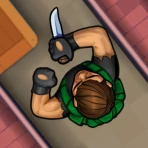
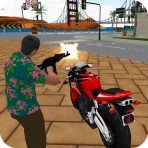
Gang Wars : Street Crime
For Android
Gang Wars: Street Crime is an action game built around a simple promise: put together a crew, take control of contested areas, and try to outplay the opposition. I found that its appeal is less about a long story campaign and more about the quick satisfaction of making a decision, seeing whether it works, and adjusting before the next clash. It is free to download, aimed at a Teen audience, and developed by Skyloft Yazılım Bilişim ve Anonim Şirketi.
That basic setup makes it easy to understand, but not necessarily easy to master. The important part is learning how to use your squad as a coordinated group instead of treating every encounter as a rush toward the nearest objective. If you enjoy action games where positioning and timing matter, there is a good chance this will hold your attention. If you prefer a carefully scripted crime story or a slower tactical game with extensive explanations, its direct approach may feel too thin.
What to expect when you enter the battlefield
The first thing I noticed is that the game asks me to think in terms of territory rather than simple eliminations. Capturing an area can be more valuable than chasing an opponent, especially when the other side is trying to pull me away from an objective. That changes the rhythm of a match: a flashy confrontation is not always the best move, and a quiet reposition can sometimes create the bigger advantage.
The action category is a useful description, although the zone-focused structure gives it a more tactical edge than a straightforward arcade shooter. I still get the immediate pressure of a fight, but I also have to watch the wider situation. A player who only reacts to whatever is directly in front of them can lose ground without realizing it.
I would approach each round with three questions in mind. Which area matters most right now? Where can my squad reach safely? What will the opponent gain if I leave this position? These questions are more useful than trying to win every encounter by force. They also give the game a clearer identity than its short “Gang Wars” label suggests.
The game is best suited to short sessions in which I can focus on one objective at a time. It does not require me to understand a complicated fictional universe before I can begin enjoying it. Instead, the learning comes from seeing how movement, squad placement, and timing affect control of the battlefield. That makes it approachable for a first-time user, while still leaving room for better decisions after several matches.
Its audience size also suggests that it has already attracted a substantial group of players: the listing shows over 500 thousand installs, with an average rating of 4.6 from around 12 thousand ratings. I would not treat those figures as a guarantee that every player will enjoy it, but they do indicate that the central loop is connecting with many people.
Starting without overthinking the first match
My advice to a new player is to resist the urge to search for a perfect opening move. The first meaningful success should be modest: secure one useful area, keep the squad together long enough to support the objective, and learn what causes a push to succeed or fail. That gives you information you can use immediately, rather than leaving the first session feeling like a blur of movement and attacks.
Before committing to a fight, take a moment to identify the route that lets your group arrive with options. A direct path may be faster, but it can also make your intentions obvious. Moving with a purpose is more important than moving constantly. I found that the difference between an organized attack and a scattered one often comes down to whether the squad reaches the objective together.
Another useful habit is to treat a retreat as a decision rather than a defeat. If an area is heavily contested and your squad is arriving in pieces, continuing forward can waste the opportunity to challenge a different location. The game becomes more readable once I stop measuring success only by how many confrontations I win.
First setup and the route to a meaningful success
Gang Wars: Street Crime is free, so the initial barrier is low. The current version is 0.6.10, and it supports devices running Android 7.0 or later. For someone installing it on an older Android phone, checking that operating-system requirement before starting is a sensible first step. It avoids the frustration of preparing for a session only to discover that the device is not compatible.
Once the game is ready, I recommend giving the opening sequence your full attention instead of tapping through it automatically. Early instructions in a territory game often explain more than buttons; they establish what the game considers valuable. If the tutorial points you toward capturing an area, follow that objective carefully and notice what changes when control is established. That observation is more useful than simply completing the prompt.
You may also like

Amazon Kindle: Revolutionizing Digital Reading

Why OLX: Compras Online e Vendas Captivates Shoppers Worldwide

Unpacking the Strategy of Yalla Ludo's Jackaroo Mode

Why eBay's Mobile App Stands Out in Online Shopping

How Fishdom's Puzzle Mechanics Transform Your Aquarium Experience

Block Blast! The Perfect Puzzle for Busy Lives
The most reliable first-session workflow is straightforward:
Look at the battlefield before moving the squad and identify the nearest practical objective.
Approach with the group rather than sending members forward without a clear reason.
Commit to the capture only when you can respond to pressure from the opposing side.
Advertisements After gaining control, pause briefly and decide whether defending it or moving onward is the better choice.
This process gives a new player a concrete target: not merely surviving an encounter, but completing a full objective while keeping enough control to make the next decision. That is the point where the game began to feel less random to me.
One detail worth paying attention to is the difference between visible activity and useful progress. A busy fight can be distracting, while an uncontested zone may quietly become the key to the round. I like to check the objective state before following an opponent. This prevents the common mistake of abandoning a valuable position just because another character has appeared nearby.
For an everyday scenario, imagine having a short break between errands and wanting one focused session. I would start by choosing a single goal, such as taking a zone and holding it long enough to understand the response. If the first attempt fails, I would change one thing on the next try—arrival timing, route, or squad grouping—instead of changing everything at once. That makes the session feel productive even when the result is not a win.
How to read a failed push
When an attack fails, I would not immediately blame the strength of the squad. Ask whether the group arrived together, whether the target was actually worth contesting, and whether the opponent was able to force you into a bad position. Those questions reveal whether the problem was tactical or simply a poor choice of objective.
A useful trade-off appears here. Staying together makes the squad more dependable around a contested area, but it can also reduce the number of places you influence at once. Splitting attention may create pressure in multiple locations, yet it makes each individual move easier to punish. I prefer cohesion while learning, then experiment with wider pressure only after I understand how quickly the game can turn against an isolated group.
This is also where the game differs from a typical run-and-gun alternative. In a conventional action match, personal reflexes may dominate the outcome. Here, reflexes still matter, but they do not replace choosing the right objective. A player who enjoys constant close-range action may find the territorial layer slows the pace; I see that layer as the feature that gives the battles their shape.
Common confusion and the friction behind the action
The most likely confusion for a newcomer is assuming that capturing a zone automatically means the work is finished. Control is better understood as a temporary advantage that must support the next move. If I celebrate the capture by stopping my decision-making, I can lose the initiative almost immediately.
Another point that takes time is knowing when not to chase. An opponent moving away may be trying to draw the squad out of a useful position. Following can feel natural, particularly in an action game, but the better response may be to protect the objective or pressure another area. I found it helpful to ask whether the chase improves my position or merely gives the other player control over my movement.
New players may also confuse activity with coordination. Having several characters on screen does not automatically mean they are supporting one another effectively. Before starting a confrontation, I look for a clear reason for each movement. If one part of the squad is advancing while another is left too far behind, the formation may be weaker than it appears.
The free entry point is welcome, but the game includes in-app purchases priced from $1.99 to $49.99 per item. That range is important to keep in mind before spending. I would first learn whether the core loop is enjoyable without buying anything, then decide whether an optional purchase genuinely improves my experience rather than making up for a tactic I have not learned yet. Players who want a completely purchase-free environment should approach with that limitation in mind.
The Teen content rating also makes it a better fit for older players than for young children. I would consider that rating when deciding whether to install it on a shared family device. It is not just a label to ignore: the street-crime theme and action presentation are part of the game’s identity.
There is a further practical consideration for people who want polished, fully settled systems. Version 0.6.10 indicates an actively evolving product rather than something I would approach as a finished, unchanging package. That can be exciting if you like watching a game develop, but it can also mean that the balance or feel may change over time. I would recommend it to players comfortable with that kind of ongoing experience, not to someone demanding a perfectly final form from the first session.
When another type of game may suit you better
I would skip this game if my main goal were a deep single-player crime narrative with memorable characters and carefully staged missions. The territory-focused action loop is a different kind of pleasure: it comes from control, pressure, and adaptation rather than from following a detailed story.
I would also look elsewhere if I wanted a purely reflex-driven game where the objective is secondary. Gang Wars: Street Crime asks me to make choices about space, and that can feel less immediately satisfying than a match built around constant combat. On the other hand, players who find ordinary action games repetitive may appreciate having a reason to reconsider every engagement.
Compared with a slower strategy game, this one is more immediate and easier to enter. I do not need to spend a long time planning before seeing a result. The trade-off is that the strategic layer is tied closely to active battlefield decisions, so it may not satisfy someone who wants extensive preparation, resource management, or a calm turn-based pace.
For players who enjoy mobile action but dislike being rushed into complicated systems, the first-time path is reassuring: start with one zone, keep the squad coherent, and use each attempt to isolate one improvement. That approach lets the game teach through play instead of demanding that a new user understand every possibility at once.
Taking the next step beyond the first capture
After the first successful objective, I would stop trying to win through repetition alone. The next improvement should come from reviewing what made the capture possible. Did the opponent arrive late? Did the route keep the squad together? Did you choose a location that was easier to defend than another option? Identifying the cause is more valuable than simply celebrating the result.
A practical progression is to change only one variable per match. Try a different approach route while keeping the same objective, then try the same route with a different timing choice. This creates a personal understanding of the battlefield. If several decisions change at once, it becomes difficult to tell which one helped.
I also recommend setting a stopping point for each session. Because the loop is built around another attempt, it is easy to keep playing after attention has faded. A short break after a frustrating loss can be more useful than immediately queuing again with the same habits. When I return with a clear question—such as whether I can hold a captured zone more efficiently—the next match has a purpose.
Spending should be treated with the same patience. The available purchases range from a small amount to a much larger amount, so I would avoid buying simply because a difficult match feels unfair. First decide whether the game’s basic decisions are enjoyable. If they are not, an extra purchase is unlikely to fix the underlying mismatch between the game and your preferences.
For a friend installing it for the first time, my recommendation would be to play several focused attempts before forming an opinion. Do not judge the game solely by the opening rush, and do not assume that every loss means the squad is inadequate. Watch how objectives change your priorities, learn to abandon unhelpful chases, and see whether that style of action feels rewarding.
My overall impression is positive, with a clear qualification. The strongest part is the combination of immediate action and territory decisions; it gives each encounter a reason beyond simply defeating whoever is closest. The weaker side is the potential friction for players who want a fully settled experience, a deep narrative, or a game untouched by purchase considerations. The current version and evolving feel make it more suitable for curious action fans than for people seeking a definitive, story-led package.
For the right player, Gang Wars: Street Crime is an approachable way to explore squad-based, zone-focused action. I would begin by aiming for one clean capture, learn from the response, and only then worry about dominating the whole battlefield. That path makes the first session clearer, the losses more informative, and the game’s central idea much more enjoyable.
Pros
- Easy-to-learn controls make the game accessible to casual players.
- Short missions fit well into quick gaming sessions.
- Street-themed visuals create a recognizable crime-game atmosphere.
- Character upgrades give progression a clear sense of purpose.
- Offline play may be convenient when you have no internet connection.
Cons
- Repeated mission objectives can make the gameplay feel predictable.
- Some upgrades may require considerable grinding to unlock.
- The crime-focused theme may not be suitable for younger players.
- Touch controls can feel imprecise during fast-paced encounters.
- Performance may vary noticeably across older Android and iOS devices.
FAQ
What is Gang Wars: Street Crime about?
Gang Wars: Street Crime is an action-focused mobile game built around urban gang conflicts, territory battles, missions, and street-level progression. Players typically complete objectives, fight rival groups, collect resources, and improve their character or gang. The game combines combat, crime-themed storytelling, and upgrade systems, so it is best suited to players who enjoy fast-paced action with a criminal underworld setting.
Is Gang Wars: Street Crime free to download and play?
Gang Wars: Street Crime can generally be downloaded without an upfront purchase, but the exact business model may depend on the Android or iOS version available in your region. Free games of this type may include optional in-app purchases, advertising, or paid items that speed up upgrades and progression. Check the store listing before installing, especially if children use the device or purchases are not restricted.
Does the game require an internet connection?
Whether Gang Wars: Street Crime works offline can vary according to the version and the feature you are using. Basic missions may sometimes be available without a constant connection, while advertisements, cloud saves, events, rankings, or online rewards may require internet access. Before downloading large additional files, open the store description and review the developer’s requirements, because offline support may not cover the complete game.
Is Gang Wars: Street Crime suitable for children?
Gang Wars: Street Crime is aimed more at teenagers and adults because its setting involves gangs, crime, violence, weapons, and confrontational missions. The age rating may differ between Google Play and the App Store, and the game could also contain advertising or purchase options. Parents should review the official rating, privacy information, and available parental controls before allowing younger players to install it.
What devices are compatible with Gang Wars: Street Crime?
Compatibility depends on the specific release, operating system version, and device hardware. Players should check the current Google Play or App Store listing for the required Android or iOS version, available storage, and regional availability. Since action games can use considerable graphics and memory resources, older phones may experience longer loading times, reduced performance, or crashes even when the game technically installs.