Solitaire Zen - Cards Master
For Android
I spent time with Solitaire Zen - Cards Master as a simple card game for short breaks, and its central appeal became clear quickly: it turns a familiar solitaire format into a calmer, more deliberate way to occupy the mind. The store summary describes it as a way to train your brain and relax, but what matters in daily use is how easily a round fits between other tasks. I can open it when I have only a few quiet minutes, focus on the layout, and stop without feeling that I have committed to a long session.
That makes it different from many mobile games that compete for attention with constant events, rapid action, or complicated progression. This is a card game from FelicityGames, available free of charge for everyone, and it is aimed at players who want a familiar puzzle rather than a demanding new system to learn. Its average rating is 4.8 from around 600 ratings, while its install count has passed 10 thousand, which suggests that its strongest quality is approachable, low-pressure play rather than spectacle.
Why the relaxing solitaire approach works
The capability I noticed most is not a flashy feature but the way the game makes traditional solitaire feel suitable for decompression. A card layout gives me a small problem with a clear boundary. I am not asked to remember a large map, follow a long story, or react to opponents. I simply look for useful moves, expose hidden cards where possible, and decide whether a safe move now will create better options later.
That structure has a useful mental effect. When I am distracted, the cards give my attention somewhere specific to go. At the same time, the rules are familiar enough that I do not spend the first several minutes learning controls. The result is a gentle form of concentration: enough decision-making to prevent the session from becoming passive scrolling, but not so much pressure that a mistake ruins the mood.
I would not describe this as a substitute for a serious strategy game or a formal brain-training program. Its value is more modest and more practical. It gives me repeated opportunities to notice patterns, weigh a move, and accept that some layouts will not resolve perfectly. That makes the “train your brain” idea most convincing when understood as light mental exercise during ordinary downtime, not as a measurable training plan.
The card format also helps with stopping. In a competitive game, leaving halfway through a match can feel inconvenient. Solitaire has a natural pause point after a round or a decision. I can play while waiting for an appointment, during a quiet commute, or at the end of the evening without needing to coordinate with anyone else. That independence is one of the most important reasons I would recommend it to someone who wants a game that respects their schedule.
What a typical round feels like
In practice, I approach each layout by first checking which cards are immediately available and which moves might uncover something underneath. The early part of a round is usually straightforward, but the interesting decisions appear when several legal moves compete for the same space. Moving a card because it is available is not always the best choice; sometimes preserving an option matters more than making visible progress.
This is where the game becomes more engaging than an automatic card filler. I find myself asking whether I should clear a column now, expose a hidden card, or hold a move until another sequence opens. Those small choices are easy to understand but still give the round texture. They also make a useful difference between playing attentively and tapping through whatever move looks obvious first.
My practical tip is to avoid treating every available move as equally valuable. I look for moves that reveal information or create space, then consider whether they reduce future flexibility. When I am playing to relax, I do not restart immediately after a poor decision. Continuing often turns the round into a calm exercise in recovery, and that is more satisfying than chasing a perfect result.
Another good habit is to use the game as a short reset rather than letting it become an automatic time sink. I decide before starting whether I want one round or a longer break. Because solitaire can feel harmless, it is easy to keep going simply because another layout is available. The same simplicity that makes the game comfortable can also make it easy to lose track of time.
A realistic everyday use case
My favorite setting for this kind of game is the gap between work and the rest of the evening. After finishing a task, I may not have the energy for a demanding game, but I also do not want to fall into endless social feeds. A short solitaire round gives me a defined activity. I can concentrate on arranging the cards, finish or abandon the attempt, and return to the evening with my attention feeling less scattered.
It also works well for people who dislike games that require sound, fast reactions, or a stable group of players. Someone waiting for a train can play quietly. A person taking a short break can stop after a single layout. A newcomer to mobile gaming can understand the basic purpose without reading a long tutorial. These are not minor advantages; they explain why a conventional card game can remain useful even beside more ambitious mobile releases.
You may also like

Amazon Kindle: Revolutionizing Digital Reading

Why OLX: Compras Online e Vendas Captivates Shoppers Worldwide

Unpacking the Strategy of Yalla Ludo's Jackaroo Mode

Why eBay's Mobile App Stands Out in Online Shopping

How Fishdom's Puzzle Mechanics Transform Your Aquarium Experience

Block Blast! The Perfect Puzzle for Busy Lives
For an older relative who already knows solitaire, the familiarity may be especially valuable. There is no need to learn a fictional world or a complex control scheme before enjoying the first round. For a younger player, the game can provide a slower alternative to action-heavy titles, although anyone looking for competition, social interaction, or a strong progression system may find it too restrained.
I would also use it when I want a break that is mentally active but emotionally neutral. Puzzle games with countdowns or limited lives can add pressure, while story games may demand a larger time commitment. This style of solitaire sits between those extremes. It asks me to think, but it does not make the break feel like another obligation.
The trade-offs behind the calm design
The same focused simplicity that makes the game accessible also limits its appeal. If I want dramatic variety, a deep campaign, or a sense of building a character, this will not be my first choice. Traditional solitaire depends on repetition, and even a pleasant presentation cannot remove that basic fact. The game is best enjoyed as a dependable routine, not as a constantly surprising adventure.
There is also a difference between relaxation and stimulation. Some players relax by chasing difficult goals or competing with others. For them, a quiet card layout may feel too slow. I would choose a more competitive card game when I want head-to-head decisions, visible rankings, or a reason to improve against another person. I would choose a larger puzzle game when I want themed challenges and a stronger sense of progression.
The free entry point is convenient, but in-app purchases range from $0.49 to $99.99 per item. That broad range is worth keeping in mind before spending. I would treat optional purchases carefully and decide in advance whether I am happy with the free experience. A calming game should not turn an unplanned break into an impulsive purchase, so checking the purchase flow and keeping a personal limit is sensible.
Another trade-off is that the game’s usefulness depends heavily on what I expect from the word “brain.” It can encourage attention, planning, and pattern recognition during play, but I would not use its description as evidence of a guaranteed cognitive benefit. The honest reason to play is that it gives the mind a small, repeatable task that many people find soothing. That is enough; it does not need exaggerated claims to justify its place on a phone.
Device compatibility is straightforward for supported users: the current version is 3.13.4 and requires Android 10 or later. That requirement is reasonable for many modern phones, but anyone using an older device should check compatibility before planning around it. I would not replace a working older solitaire app solely for this title if the phone cannot run it smoothly or install it at all.
Small habits that improve the experience
I get more from the game when I slow down during the first few moves. Rushing can make a layout feel random, while a brief scan reveals which cards are blocked and which sequence might open space. This is a simple adjustment, but it changes the tone from tapping through cards to making intentional choices.
I also recommend separating “relaxation play” from “challenge play.” During a stressful day, I allow myself to make imperfect moves and continue. When I want more mental engagement, I examine the consequences of each move and try to improve my planning. The same card game can serve both purposes, but the experience depends on whether I am seeking calm or concentration.
A third useful approach is to use a round as a transition ritual. I might play before starting study, after closing a work session, or while waiting for an activity to begin. The fixed structure helps mark the change between tasks. This is more useful than playing continuously in the background, because the game then becomes a deliberate pause rather than another source of fragmented attention.
Finally, I would avoid judging the game only by whether every round ends in success. Some of the value comes from analyzing why a position became difficult. Did I use a flexible card too early? Did I overlook a way to expose a hidden card? Thinking through those questions adds depth without requiring a separate tutorial or a competitive opponent.
Who is likely to enjoy it most
This is strongest as a low-pressure, familiar card break. I would recommend it to someone who wants solitaire with a calmer purpose, especially if they prefer independent play and short sessions. It suits people who already understand the basic card format, but it is also approachable for newcomers because the central objective is easy to grasp.
It is a good fit for players who want to reduce mindless scrolling without committing to a large game. It can also suit anyone who enjoys sorting, sequencing, and making small plans. The free price makes trying it easy, and the Everyone age rating keeps the audience broad. I would still remind younger users and families that optional purchases exist, particularly because the individual purchase range extends from less than a dollar to nearly a hundred dollars.
I would skip it if my priority is multiplayer competition, rich narrative, constant novelty, or a substantial progression system. In those cases, a competitive card title, a larger puzzle game, or a story-driven release will probably offer more lasting motivation. I would also skip it if I already have a solitaire app whose layout, controls, and presentation I strongly prefer; the basic format alone is not enough to justify changing tools.
For me, the deciding question is simple: do I want a quiet game that gives my attention a manageable task? If the answer is yes, FelicityGames has made a sensible choice by keeping the focus on solitaire rather than burying the card play under unnecessary complexity. If I want excitement, rivalry, or a long-term game project, I would look elsewhere.
My closing recommendation
After using it as a small daily escape, I see Solitaire Zen - Cards Master as a focused card game rather than an all-purpose entertainment app. Its strength is the meeting point between familiarity and attention: I know what kind of game I am opening, yet the choices still give me enough involvement to feel present instead of merely passing time.
The rating of 4.8 and the community of more than 600 ratings make it look well received, while the 10K-plus installs show that it has found an audience without needing to be framed as a massive gaming platform. Released on September 12, 2025, it is a relatively recent option for players who want a straightforward solitaire experience from FelicityGames.
My recommendation is positive with clear expectations. Try it for short, intentional sessions, pay attention to the difference between a relaxing round and a perfectionist one, and keep the optional purchase range in mind. If that sounds like the kind of break you need, this free card game is worth installing. If you are looking for competition, narrative, or constant surprises, its calm simplicity will probably feel more like a limitation than a benefit.
Pros
- Relaxing gameplay suited to short or extended sessions.
- Clean card layouts make suits and values easy to recognize.
- Multiple solitaire variations add variety beyond classic Klondike.
- Gentle visual style creates a calm
- low-pressure experience.
- Helpful hints can assist players when they get stuck.
Cons
- Some features may be locked behind ads or in-app purchases.
- Repeated levels can feel familiar for experienced solitaire players.
- Hints may reduce the challenge for users seeking pure strategy.
- Background music and effects may become repetitive over time.
- Performance can vary on older devices with limited memory.
FAQ
What is Solitaire Zen - Cards Master?
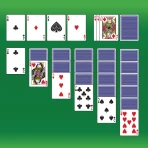
Solitaire Zen - Cards Master is a relaxing card game based on the classic Klondike Solitaire format. It combines familiar card-matching and stacking rules with a calm visual style, gentle presentation, and a low-pressure pace. Players can complete individual deals whenever they have a few spare minutes, making it suitable for casual sessions, daily relaxation, or anyone who enjoys traditional solitaire on a mobile device.
How do you play Solitaire Zen - Cards Master?
The main objective is to move all cards to the foundation piles, arranging each suit in ascending order from Ace to King. On the tableau, cards are generally placed in descending order while alternating colors, allowing hidden cards to be revealed and moved. The game provides a familiar solitaire experience, although available moves, scoring, hints, undo options, and deal types may vary depending on the version installed.
Is Solitaire Zen - Cards Master suitable for beginners?
Yes, the game is generally accessible to beginners because Solitaire rules are easy to understand and each round can be played at the user’s own pace. New players can learn by experimenting with card movements and using available assistance features when they become stuck. Experienced solitaire fans may also enjoy the straightforward controls, quick rounds, and relaxing design without complicated progression systems.
Does Solitaire Zen - Cards Master require an internet connection?
Solitaire Zen - Cards Master is designed as a casual mobile card game, so many of its basic solitaire rounds may be playable without a constant internet connection. However, certain features can depend on online access, including advertisements, optional rewards, synchronization, updates, or promotional content. It is best to open the game once while connected and check which functions remain available when your device is offline.
Is Solitaire Zen - Cards Master free to download and play?
The application can generally be downloaded without an upfront purchase, allowing users to try its core solitaire gameplay freely. As with many free mobile games, the experience may include advertising, optional purchases, or extra features that differ by platform and region. Before downloading, review the store listing for current pricing, in-app purchase details, permissions, age guidance, and the developer’s privacy information.